

Throughput
Throughput Definition
Throughput is the amount of data a system can successfully process or transfer over a given time. It shows real performance by measuring how much information, such as bits or bytes per second. It also indicates how efficient and capable a system like a network, device, or computer is.
How Throughput Is Measured
Throughput is measured by tracking how much data successfully transfers from one point to another over a set period of time. It is usually expressed as a bit rate in bits per second, such as Mbps or Gbps. Tools like speed tests calculate throughput by sending and receiving data, then measuring how much arrives correctly within a few seconds. This provides a practical view of real network performance under current conditions.
Types of Throughput
- Processor throughput: Measures how many instructions a CPU can complete in a set time. It’s often expressed in instructions per second (IPS) or FLOPS for floating point tasks.
- Memory throughput: Shows how quickly data moves in and out of system memory. It’s usually measured in bytes per second.
- Disk throughput: Describes how fast a drive can read or write data. This is typically measured in bytes per second.
- Storage throughput: Focuses on data transfer speed across storage systems like SSDs or HDDs, also measured in bytes per second.
- Application throughput: Indicates how much data an application can process over time, often measured in transactions per second.
- Network throughput: Refers to how much data is successfully transmitted across a network within a given time. It’s commonly tested using tools like iPerf or Speedtest.
- Goodput: Measures only the useful data that reaches its destination, excluding retransmissions and protocol overhead.
Throughput vs. Bandwidth
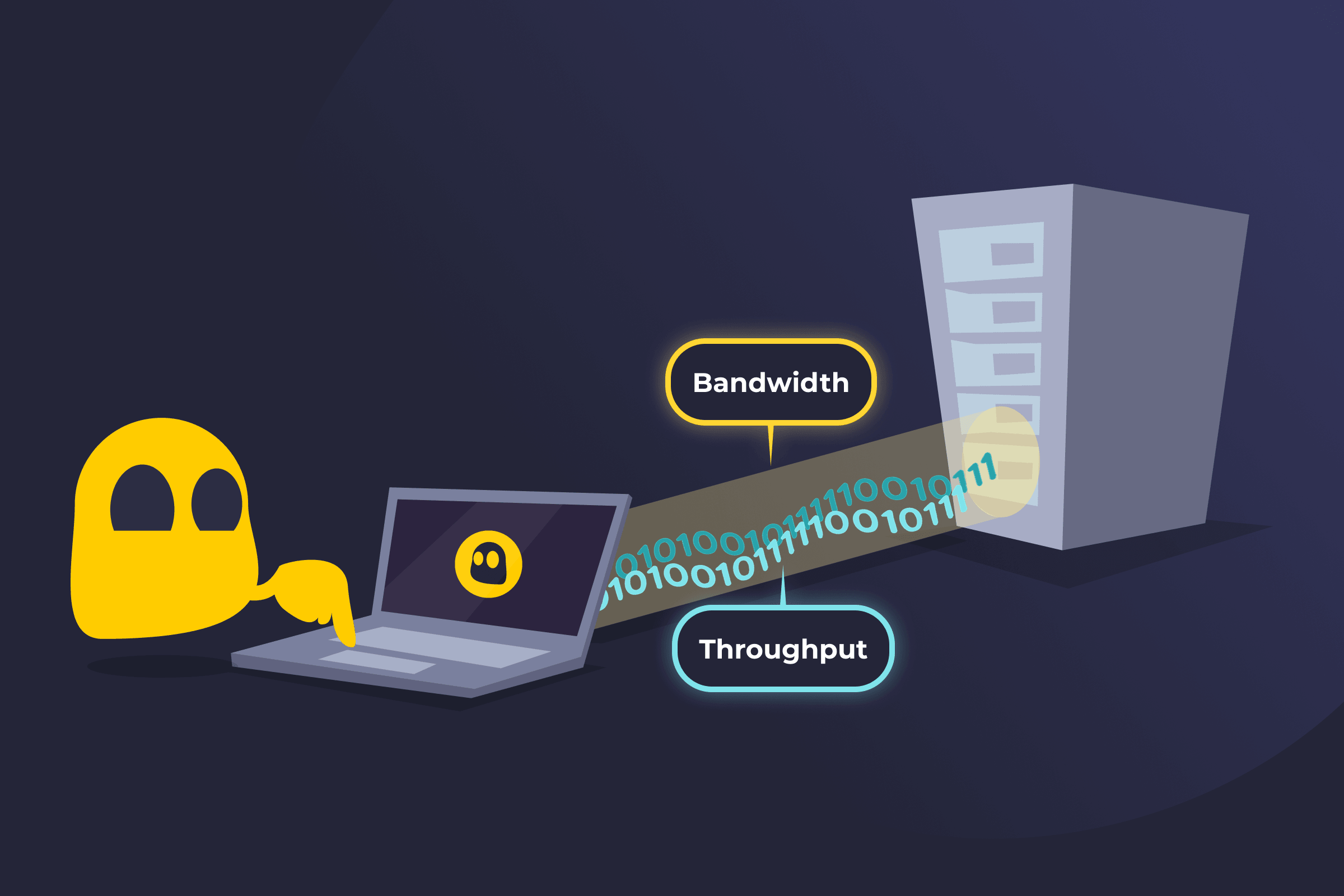
Bandwidth is the maximum data capacity a network can support, while throughput is the actual amount of data that is successfully transferred over that network. Bandwidth shows the limit, but throughput shows the real performance after factors like congestion, latency, and data loss affect the connection.
Read More
FAQ
A good throughput speed depends on what you are doing online. For basic tasks like browsing or email, a few Mbps is enough, while streaming HD video or gaming usually requires at least 5 to 25 Mbps. Higher throughput is better for activities like 4K streaming, large downloads, or multiple users on the same network.
No, throughput can’t be improved indefinitely. It’s limited by factors like network capacity, hardware performance, and physical constraints such as bandwidth and latency. Even with optimization, throughput can only reach a certain maximum based on these limits.
Throughput affects how quickly an application can send and receive data. Higher throughput means faster load times, smoother streaming, and more responsive features, while low throughput can cause delays, buffering, and slow performance.

 45-Day Money-Back Guarantee