

Transposition Cipher
Transposition Cipher Definition
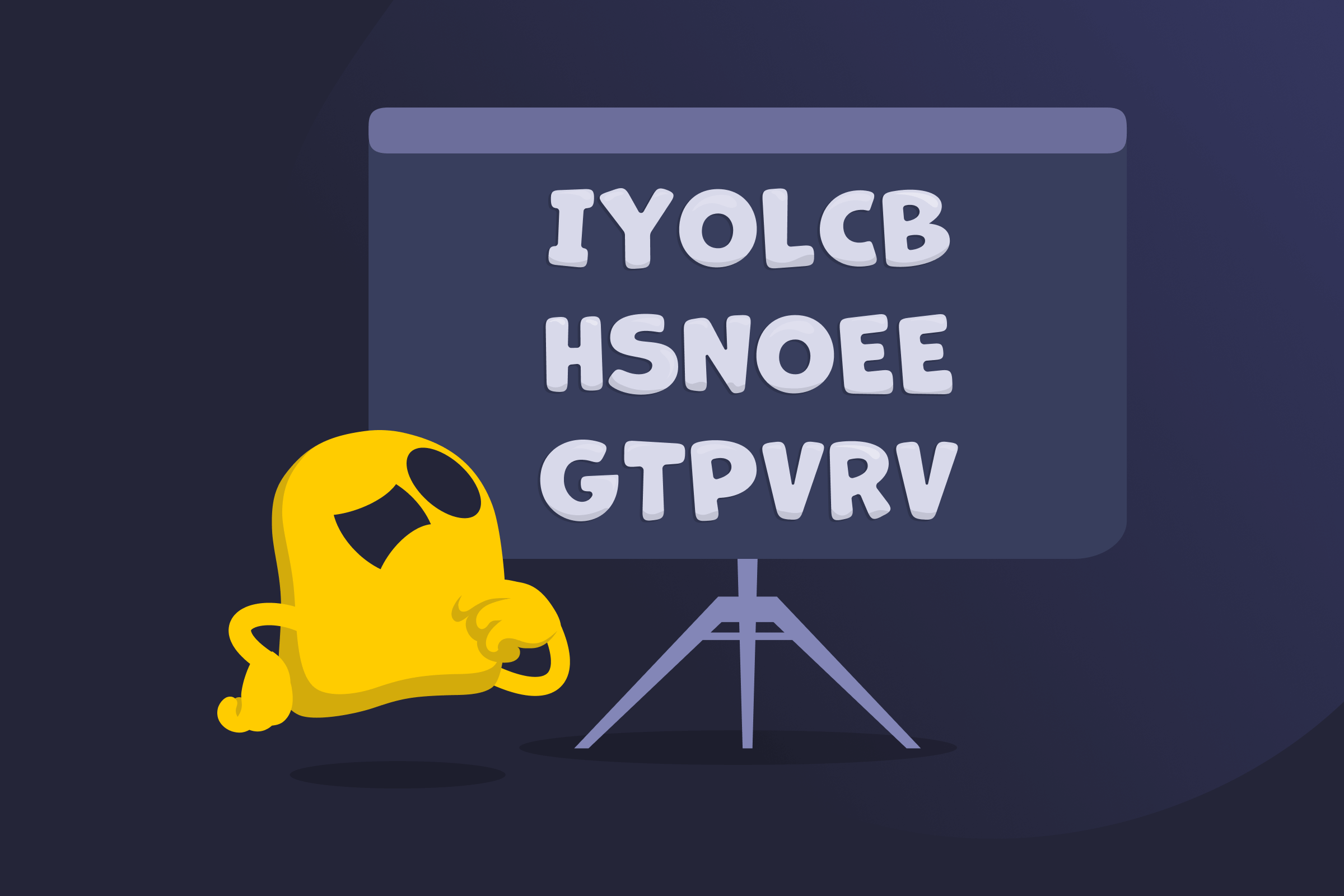
A transposition cipher is an encryption method that hides a message by rearranging its letters rather than replacing them. It does this by changing the order of characters in the original text (plaintext) to create a jumbled version called a ciphertext. While the letters stay the same, their position changes, making the message difficult to read.
How the Transposition Cipher Works
Transposition ciphers follow a specific rule for mixing up characters. The sender scrambles the message using a pattern both sides have agreed on, and the receiver reverses that pattern to read it. It’s like writing the same words but shuffling the letters into a new sequence. While clever, this method on its own isn’t secure by modern standards because the same letters and frequencies remain, just rearranged.
Common Transposition Cipher Types
Most variations of the transposition cipher involve arranging the plaintext into a two-dimensional grid with rows and columns, and then rearranging it in a new pattern.
- Scytale: Used a ribbon wrapped around a cylinder to align letters correctly. One of the oldest examples from ancient Greece.
- Rail fence cipher: Arranges the plaintext downwards and diagonally across the grid (“rails”) in a zigzag pattern, then reads the ciphertext one “rail” at a time.
- Route cipher: Writes the message in a grid of preset dimensions, and then reads it back by following a predetermined path or route.
- Columnar transposition: Places the text in rows of the same length, then rearranges the columns based on a cryptographic keyword.
- Double transposition: Applies columnar transposition twice. The keywords can be identical, have the same length, or be completely different.
- Disrupted transposition: Adds blank or dummy characters into the plaintext according to a predetermined pattern, then applies columnar transposition.
Transposition Cipher Uses
On their own, transposition ciphers are considered obsolete in modern cryptography. They’re vulnerable to cryptanalysis methods (like frequency analysis) and brute-force attacks, making them easy to break.
However, the concept of transposition ciphers is used in many modern cryptographic algorithms. Many block ciphers, like the Rijndael algorithm used in AES encryption, rely on transposition as part of their process to strengthen data protection.
Read More
FAQ
No, AES isn’t a transposition cipher. It’s a complex block cipher that works on bytes of data, not text characters. However, it does include a transposition-like step, called ShiftRows, which rearranges bytes within a data block as part of its multi-layered encryption process.
Not on their own, as they’re too simple to stand up to modern cryptanalysis methods. However, they’re used as a part of many modern cryptographic algorithms. One example is the AES block cipher, which is used by many VPNs for encryption.
The oldest known example of a transposition cipher is the ancient Greek scytale, a cylinder of fixed width with the text written on a coiled ribbon. More types of transposition ciphers were created over time, such as columnar transposition, developed in the 17th century.

 45-Day Money-Back Guarantee