

Beaconing
Beaconing Definition
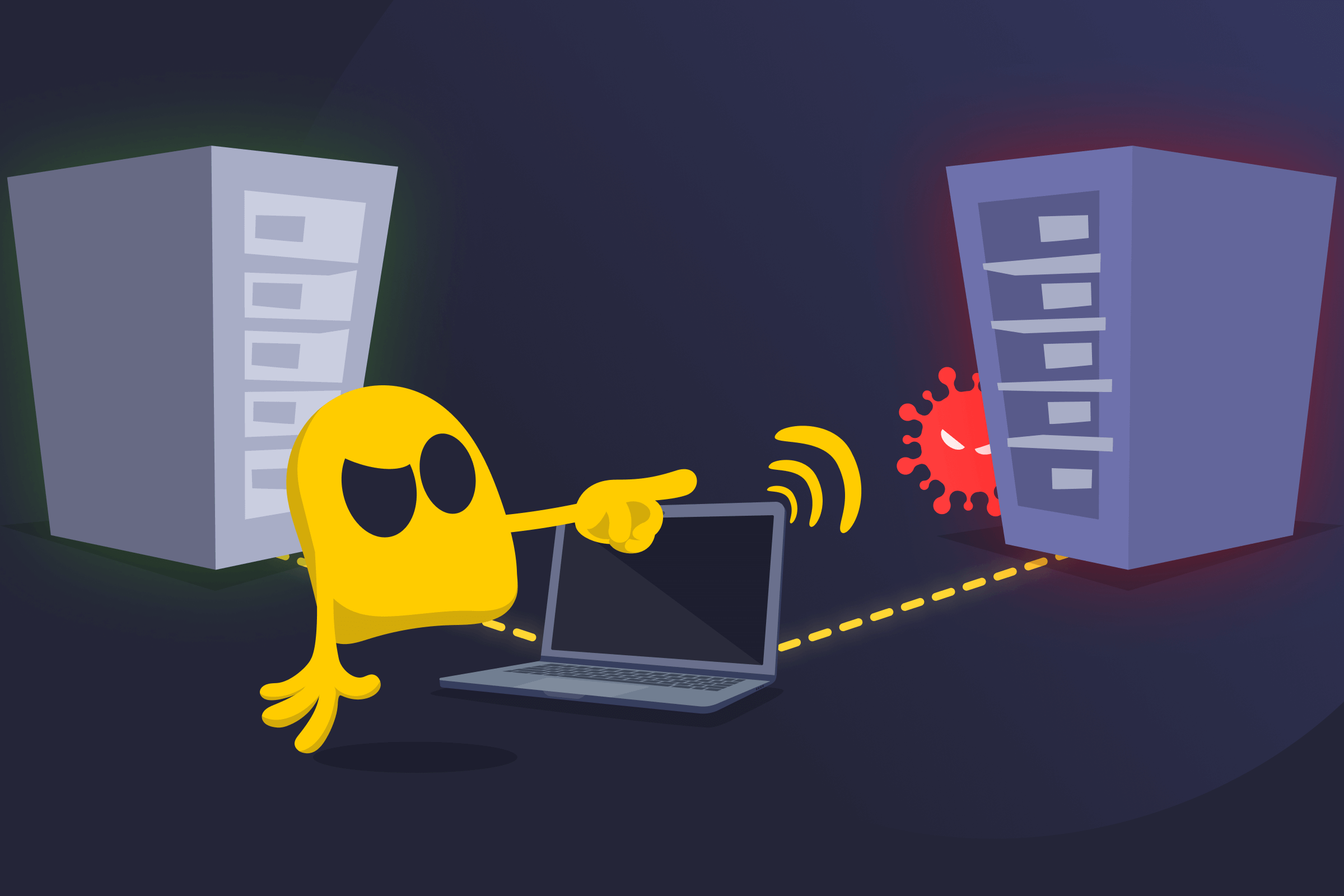
Beaconing is a communication technique in which malware sends small, regular signals from an infected device to a command-and-control (C2) server. These messages confirm that the system is active and ready to receive new instructions.
Attackers use beaconing to quietly maintain control over compromised devices, often before launching larger attacks. Because the traffic looks normal and uses small amounts of data, beaconing can go unnoticed for long periods, making it an early warning sign of a hidden intrusion.
Examples of Beaconing in Cybersecurity
- Trojans: Send regular signals to a C2 server to confirm the device is still reachable.
- Ransomware: Reports back to attackers before encrypting files or demanding ransom.
- Spyware: May beacon periodically and transmit small packets of stolen data, like login details or browsing history.
- Botnets: Coordinate large groups of infected devices by sending timed check-ins to a central controller.
- Advanced persistent threats (APTs): Keep long-term access through low-frequency beacons that blend in with regular traffic.
Risks of Beaconing
- Hidden communication: Lets attackers stay in contact with infected systems without raising alerts.
- Data theft: Includes sending stolen information, such as passwords or financial records, back to a C2 server.
- Network mapping: Helps attackers study the network layout to plan future attacks.
- Dormant attacks: Leave malware inactive until it receives a specific trigger.
- Lateral movement: Allows attackers to move between systems once initial access is secured.
Common Beaconing Detection Methods
- Traffic monitoring: Identifies devices contacting the same external server at regular intervals.
- Log analysis: Reviews system and network logs to spot repeated patterns that suggest hidden communication.
- Anomaly detection: Flags unusual activity, such as small, timed data transfers to unknown domains.
- Threat intelligence: Uses updated indicators of compromise (IOCs) to identify known beaconing behavior.
- Network segmentation: Limits how far beaconing can spread by separating critical systems from general traffic.
Beaconing Prevention Tips
- Keep up to date with security updates to reduce the chance of malware infections.
- Use antivirus and EDR tools, which can detect beaconing behavior before it spreads.
- Employ firewalls to help block outbound traffic to suspicious or unknown servers.
- Regularly monitor the network to spot unusual patterns.
- Limit user access to stop malware from moving freely across systems.
- Train employees to lower the risk of anyone downloading or opening infected files.
Read More
FAQ
Beaconing is when malware sends short, regular signals to a control server to show it’s active and waiting for instructions. Data exfiltration happens later, when attackers use that connection to remove stolen files or information from the network. Beaconing keeps contact; data exfiltration moves the data out.
A VPN can lower the risk of beaconing by encrypting internet traffic and blocking access to suspicious servers. It hides network activity from attackers and prevents direct communication with malicious domains. While a VPN can’t remove malware, it adds an extra layer of protection against hidden connections.
Yes. Personal devices infected by malware can send beacon signals just like a company system. This lets attackers monitor activity or prepare other attacks. Using antivirus tools and keeping software updated helps lessen the risk.

 45-Day Money-Back Guarantee