
Autonomous Intelligence
Autonomous Intelligence Definition
Autonomous intelligence is a type of artificial intelligence (AI) that can make decisions and take actions with minimal human input. Unlike basic automation, which follows fixed instructions, it can evaluate situations, choose between options, and respond within defined limits. It operates using trained models, decision policies, and safety constraints rather than only pre-programmed rules.
How Autonomous Intelligence Works
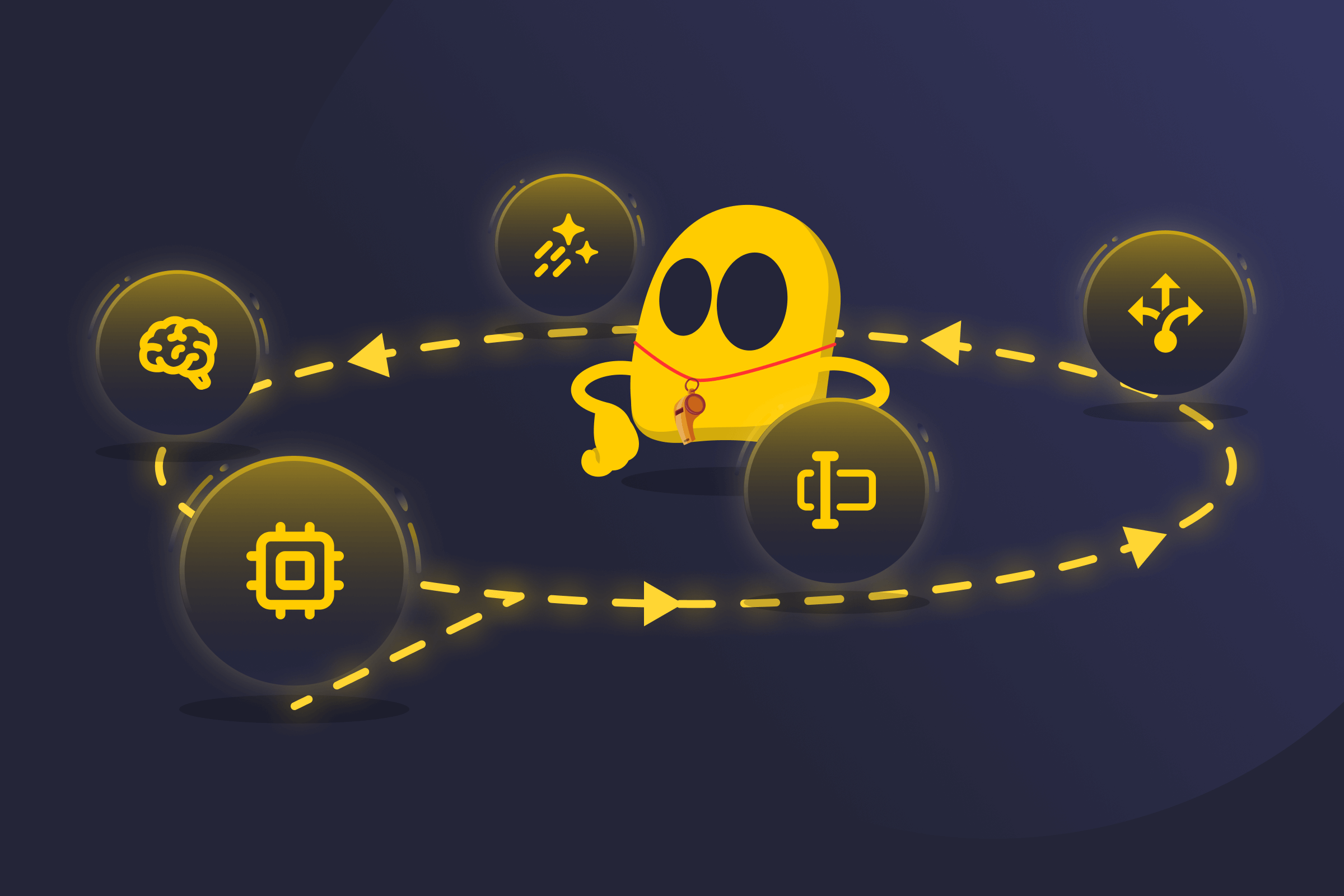
Autonomous intelligence follows a continuous cycle:
- Input: It collects data from sensors, systems, or digital environments. This data can be structured (like logs or metrics) or unstructured (like images or text).
- Decision: It analyzes the data using trained models or policies to determine the best action within set boundaries and safety limits.
- Action: It carries out the chosen step in software or hardware, such as adjusting a system setting or moving a robotic component.
- Learning: It improves future decisions using feedback, performance data, or reinforcement learning methods.
This loop allows the system to adapt over time without constant human instruction.
Where Autonomous Intelligence Can Be Used
- Autonomous vehicles: Adjust steering, braking, and routing based on road and sensor data.
- Industrial robots: Assemble, inspect, and adapt movements based on vision and feedback.
- Warehouse automation: Sort, route, and manage inventory based on demand and location data.
- Cloud management: Scale computing resources and balance workloads automatically.
- Logistics planning: Optimize delivery routes and schedules as conditions change.
- Security and risk tools: Detect anomalies and trigger automated responses based on risk signals.
Pros of Autonomous Intelligence
- Faster response times: Analyzes data and reacts in seconds, reducing delays in time-sensitive environments.
- Continuous monitoring: Operates 24/7 without fatigue, helping systems stay responsive at all hours.
- Improved decision consistency: Applies the same logic and policies every time, limiting human error and variability.
- Scalable automation: Handles growing workloads without requiring equivalent growth in staffing.
- Real-time adaptation: Adjusts behavior based on new data instead of relying only on fixed rules.
- Reduced operational overhead: Automates repetitive or high-volume tasks so human teams can focus on strategic work.
- Stronger risk detection: Identifies subtle patterns across large datasets that manual review might miss.
Cons of Autonomous Intelligence
- Bias and errors: Biased or low-quality training data can produce flawed decisions.
- Privacy exposure: Large-scale data collection increases the risk of misuse or exposure.
- Security compromise: Systems can be misused, manipulated, or taken over if poorly protected.
- Edge-case failures: Performance can break down in rare or unexpected conditions.
- Oversight gaps: Clear boundaries, monitoring, and human review are still required.
Read More
FAQ
Artificial intelligence is a broad term that includes systems that analyze data, recognize patterns, or assist with decisions. Autonomous intelligence is a narrower category of AI that can take action on its own within defined limits, rather than only providing recommendations.
A self-driving car is a good example of autonomous intelligence. It collects data from cameras, radar, and sensors, analyzes road conditions in real time, decides when to brake, accelerate, or turn, and carries out actions without human input. The system evaluates its surroundings continuously and adapts its behavior based on traffic, pedestrians, weather, and road signals.
No. Autonomous systems perform best in structured environments with defined goals and boundaries. They struggle with complex judgment, creative thinking, and nuanced ethical decisions. In most cases, they support human decision-making rather than fully replacing it.
 45-Day Money-Back Guarantee