
Cisco IOS
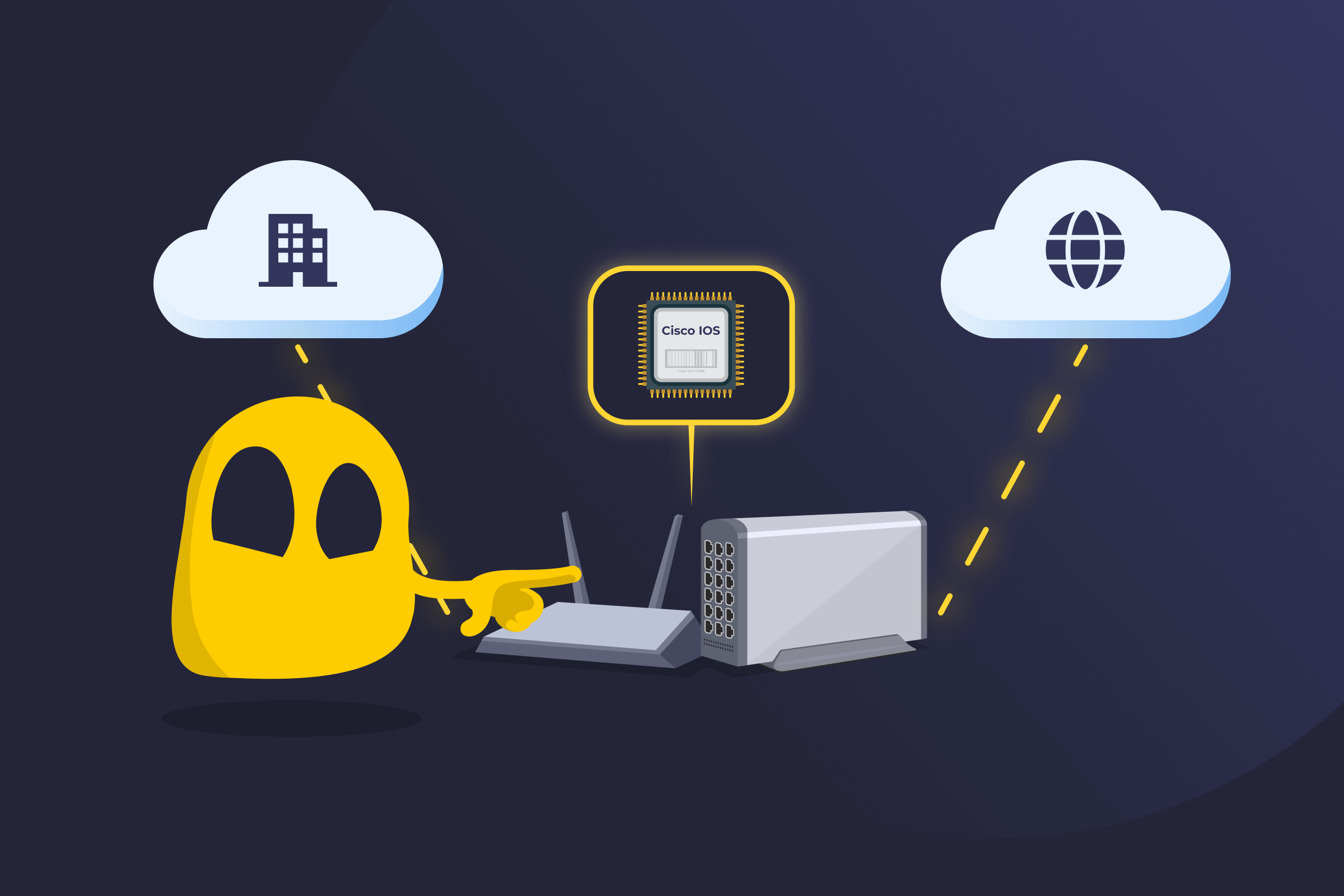
Cisco IOS Definition
Cisco IOS is the operating system used in many routers and network switches made by Cisco Systems. It’s the core system that tells the device how to transmit data across a network and how to respond to commands from network administrators. Much like Windows or macOS controls a computer, the Cisco IOS controls the hardware, routing, switching, and security functions of Cisco networking equipment.
How Cisco IOS Works
Cisco IOS runs directly on the networking device and manages how data moves through it. It sits between the hardware and the network traffic, controlling how packets are forwarded, filtered, and prioritized. Network administrators configure Cisco IOS using a command-line interface (CLI) to set rules, manage connections, and monitor performance. Cisco IOS decides where data should go, how fast it should move, and whether it’s allowed through at all based on configuration settings. It runs continuously in the background of most Cisco routers and switches, handling routing, security checks, and device coordination.
Services Cisco IOS Provides
- Routing: Directs traffic between different networks.
- Switching: Forwards traffic to the right destination inside a network.
- Security controls: Applies access rules and filters traffic.
- Quality of service (QoS): Prioritizes time-sensitive traffic such as voice and video.
- NAT: Translates private addresses so devices can reach the public internet.
- VLANs and trunking: Separate network segments and carry multiple VLANs across links.
- Protocol support: Supports common networking protocols so devices can communicate consistently.
Benefits of Cisco IOS
- Centralized control: Allows administrators to manage network behavior from one operating system.
- Reliable traffic management: Uses defined rules to route and filter data efficiently.
- Built-in security features: Provides tools to reduce unauthorized access and misuse.
- Flexible configuration: Supports networks ranging from small offices to large enterprises.
Limitations of Cisco IOS
- Steep learning curve: Requires networking knowledge and familiarity with Cisco commands.
- Configuration complexity: Can affect performance or security if set up incorrectly.
Read More
- What Is a Load Balancing Router?
- What Is a Cloud Operating System?
- What Are Computer Network Operations?
FAQ
Cisco IOS runs on many Cisco routers and switches, particularly those used in enterprise, campus, and service provider networks. Some newer Cisco platforms use related operating systems, but traditional Cisco IOS remains widely deployed.
Cisco IOS is a type of firmware because it runs directly on networking hardware. However, it functions more like a full operating system, since it actively manages routing, switching, security policies, and device configuration rather than simply starting the hardware.
No, but a strong understanding of networking concepts is important. Administrators interact with Cisco IOS through a command-line interface, so familiarity with networking commands and configuration practices is typically needed. Many professionals learn it through formal training or certification programs.
 45-Day Money-Back Guarantee