
Data Key
Data Key Definition
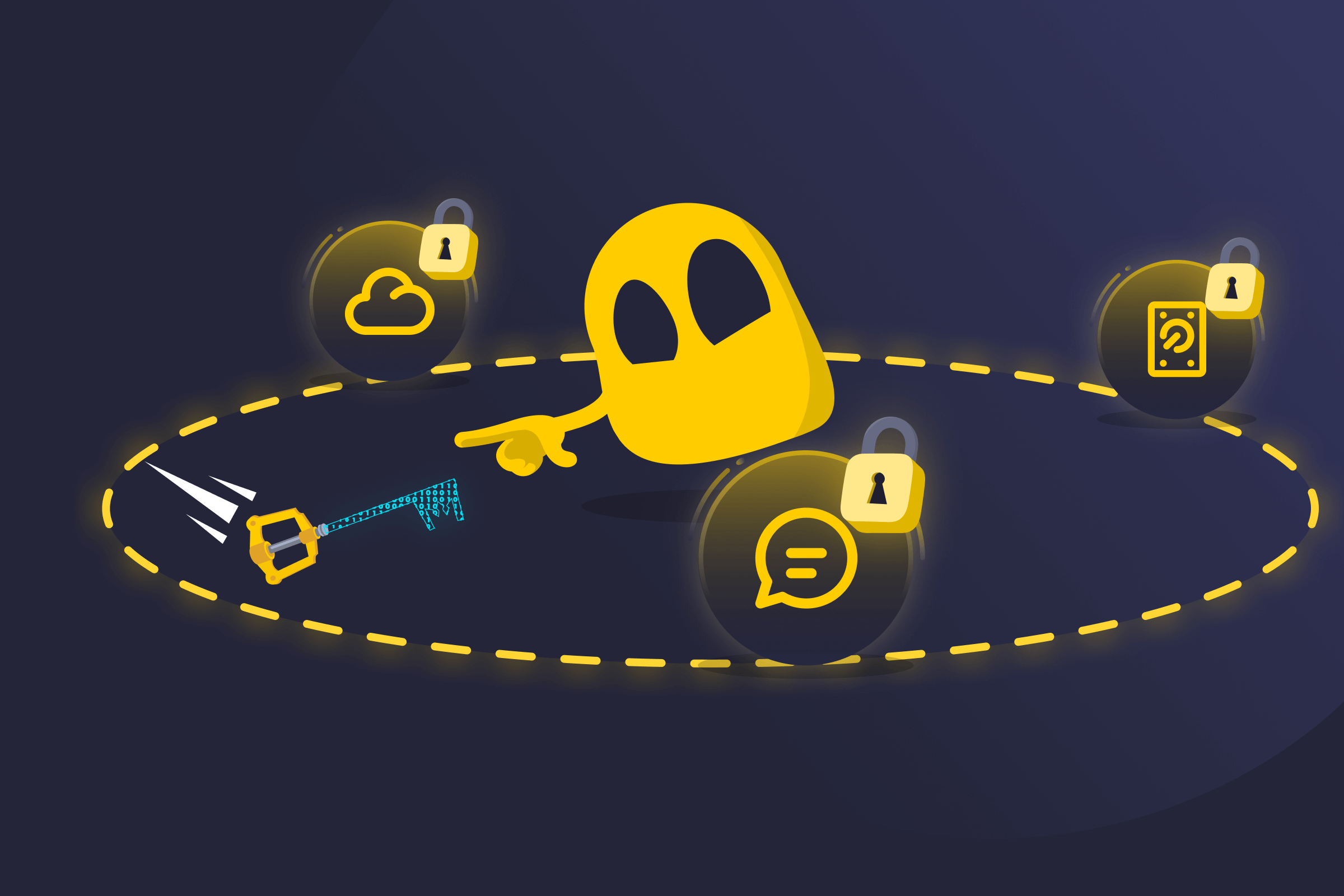
A data key is a string of randomly generated characters or bytes used in cryptographic algorithms to encrypt and decrypt digital information. It acts like the secret mechanism that locks data when it’s stored or being transmitted and unlocks it again for authorized parties. Only systems or users with access to the correct key can read the protected data.
How Data Keys Work
When using a secure service (for example, a VPN or an encrypted website), the systems involved agree on a session data key. This key is used to scramble readable data into an encrypted form before it’s transmitted or stored.
The encrypted data is sent to its destination, where it’s decrypted using the appropriate key so it can be read again. A key management system (KMS) is often responsible for creating, storing, rotating, and securely providing data keys when they are needed.
In many systems, data keys are short-lived. A new key may be generated for each session or even rotated multiple times during a single connection. This limits the damage if a key is ever exposed and supports security features such as perfect forward secrecy (PFS).
Types of Data Keys
- Symmetric keys: The sender and receiver use one secret key to encrypt and decrypt information. This approach is fast and efficient, which makes it well-suited for encrypting large amounts of data. Security depends on keeping the secret key known only to the authorized parties.
- Asymmetric keys: Use a key pair made up of a public key and a private key. The public key is shared openly and used for encryption, while the private key is kept secret and used for decryption. This method is commonly used for secure key exchange and authentication and is often combined with symmetric encryption rather than used on its own.
Where Data Keys Can Be Used in Cybersecurity
- VPNs and virtual private servers: Use data keys to provide secure, encrypted access to the internet, networks, and remote work platforms.
- Web browsers: Rely on data keys to protect communication between the browser and websites over HTTPS.
- Online banking and payment systems: Secure transaction data and protect customer information with data keys.
- Encrypted messaging apps: Apply data keys to deliver end-to-end encryption for chats on platforms like WhatsApp and Signal.
- Secure storage devices: Protect stored files on hard drives and cloud platforms with data keys.
Read More
FAQ
A password is usually created by a user and is meant to prove identity or unlock access. A data key is generated by a system and is used specifically for encryption and decryption. Data keys are typically random, machine-generated, and often short-lived, while passwords are human-chosen and reused more often.
Data keys are considered secure when strong algorithms and proper key management practices are used. Modern encryption standards, like Advanced Encryption Standard (AES), use keys that are extremely difficult to break. However, keys can still be exposed if they’re stored insecurely, reused improperly, or handled by vulnerable software.
Yes, but only under the right conditions. Public keys are designed to be shared openly. Secret or private keys must be protected and shared only through secure, encrypted channels, often using a key management system. Sending sensitive keys in plain text or over unsecured connections creates a serious security risk.
 45-Day Money-Back Guarantee