
Digital Switch
Digital Switch Definition
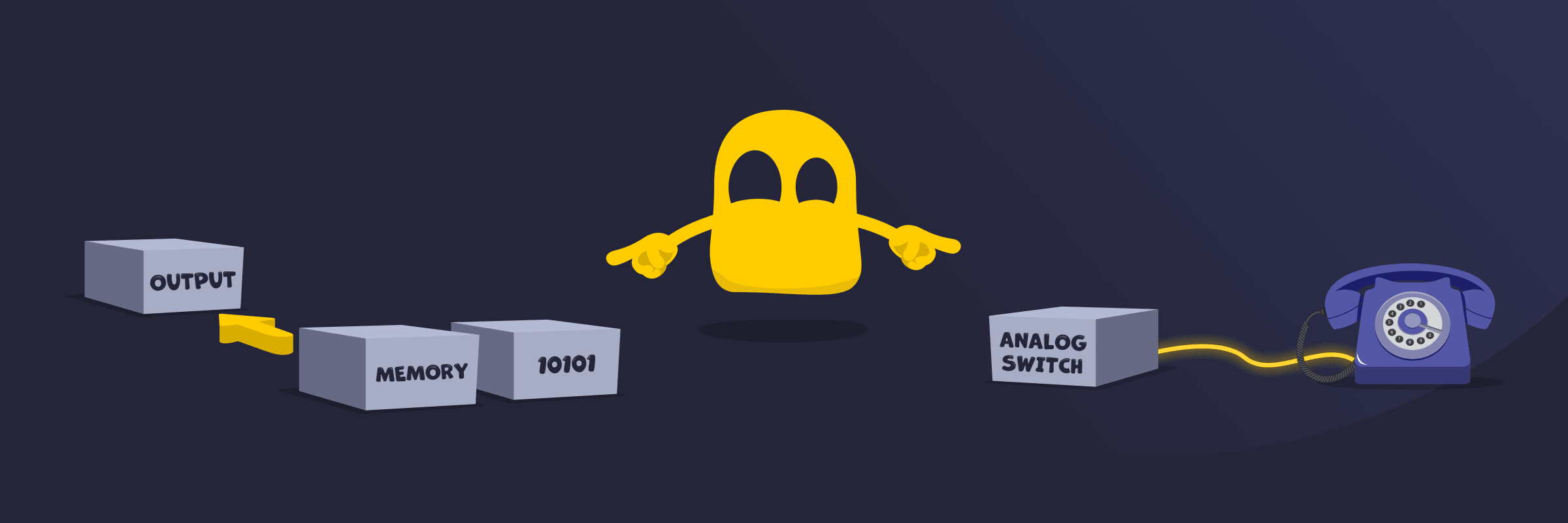
A digital switch is a specialized hardware component used in telephone networks to manage and route data signals to their intended destinations. Unlike older analog systems, it processes information as binary data (0s and 1s), allowing multiple calls or data streams to be managed at the same time. Digital switches enable communication by receiving, processing, and forwarding signals through techniques like time-division multiplexing and digital switching methods. They play a key role in modern networks by supporting fast and reliable connections between users.
How a Digital Switch Works
A digital switch processes communication signals as binary data. When a call or data request is made, the switch receives the signal, determines its destination, and routes it through the network. Digital switches use memory and precise timing to manage traffic. Data can be briefly stored and transmitted at the correct moment, allowing multiple signals to share the same communication channels efficiently.
Most Common Types of Data Switching
- Time switching: Moves a signal from one time slot to another on the same physical line using memory (RAM) to temporarily store the data until its new time slot arrives.
- Space switching: Routes a signal from one physical input line to a different output line without changing its time slot, using switching logic for fast data transfers.
Common Examples of Digital Switches
- Telephone exchanges: Used in public telephone networks to connect calls between users.
- Mobile networks: Help route voice and data traffic between mobile devices and network infrastructure.
- Enterprise PBX systems: Manage internal and external calls within organizations.
- Legacy or specialized data networks: Route digital data between servers, storage systems, and network devices.
Legacy Digital Switching Systems
Some well-known early digital switching systems include:
- EWSD (Siemens): A digital switching system widely used in Europe and international telecommunications networks.
- AXE (Ericsson): A widely used digital switching system introduced in the 1970s and deployed globally.
- System X (Marconi): A digital switching system developed for use in the United Kingdom’s public telephone network.
- E10 (Alcatel): One of the early time-division multiplexing (TDM) switches that helped transition networks from analog to digital.
Pros of Digital Switches
- High speed: Process signals much faster than traditional analog systems.
- Efficient bandwidth use: Allows multiple signals to share the same channel through time-division techniques.
- Improved signal quality: Reduces noise and interference compared to analog transmission.
Cons of Digital Switches
- Limited to digital signals: Analog input must be converted into digital form before processing.
- Complex infrastructure: Depends on advanced hardware and software to manage switching operations.
Read More
FAQ
A digital switch processes signals as binary data (0s and 1s) and routes them using electronic methods, while an analog switch handles continuous signals and often relies on physical switching paths. Digital switches are more efficient, support multiple connections at once, and provide better signal quality with less noise.
Digital switches are faster because they use electronic processing, memory, and precise timing instead of physical switching mechanisms. This allows them to handle multiple signals simultaneously, reduce delays, and make more efficient use of network resources compared to analog systems.
Digital switches are widely used in telecommunications networks, including telephone exchanges, mobile networks, and enterprise communication systems. They also play a role in routing data within network infrastructure, helping manage both voice and data traffic in modern digital communication systems.
 45-Day Money-Back Guarantee