
Extranet
Extranet Definition
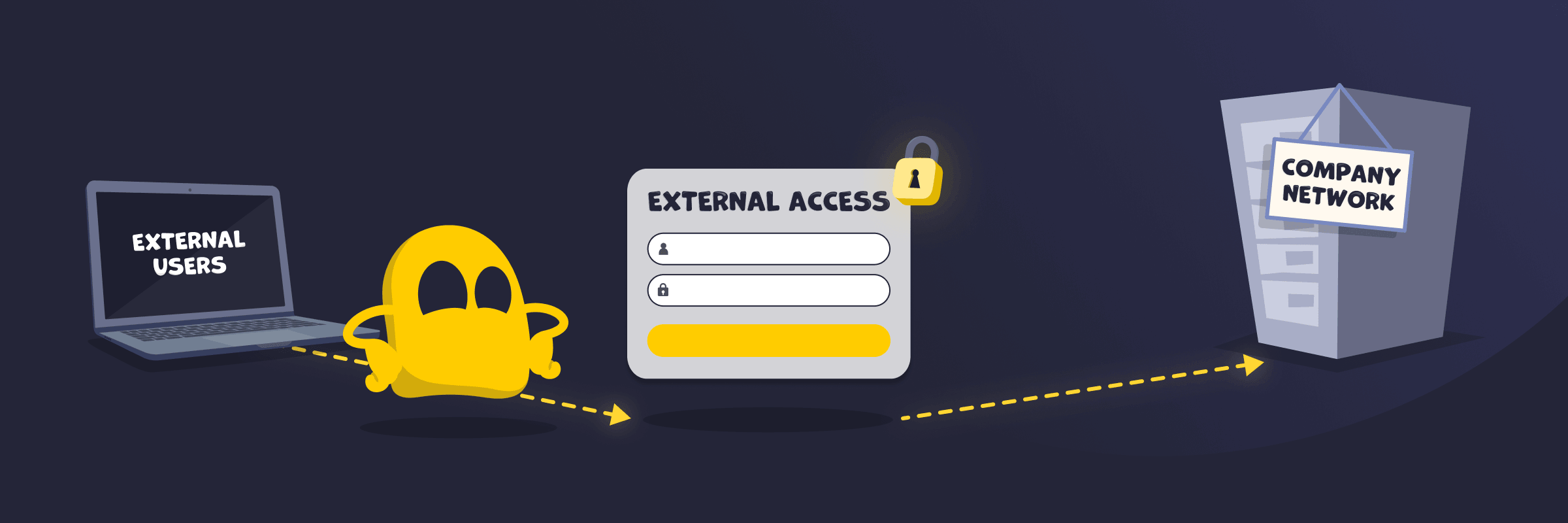
An extranet is a private network or access system that allows organizations to securely share selected resources with trusted external users such as partners, suppliers, or customers. It provides controlled access to specific systems or data without exposing the full internal network.
How an Extranet Works
An extranet gives authorized external users controlled access to specific company resources through a secure connection. The company hosts its systems or data on internal servers or cloud platforms and manages access with user accounts, permissions, and authentication. When a user logs in through a secure portal, the system verifies their identity and grants access only to approved areas.
Technologies like encryption, firewalls, and identity-based access controls protect data between users and company resources. Traditional extranets often use VPNs to give external users controlled network access, while newer systems increasingly use Zero Trust Network Access (ZTNA), which limits users to only the specific applications or resources they’re authorized to access.
Common Uses of Extranets
- Document sharing: Lets organizations securely exchange files and information with partners.
- Supplier and vendor collaboration: Supports communication, ordering, and workflow coordination with external businesses.
- Customer portals: Provides customers with secure access to accounts, support tools, or self-service resources.
- Supply chain management: Helps companies track shipments, inventory, and logistics across connected partners.
- Joint project support: Enables external teams to collaborate on shared projects and resources.
Risks and Limitations of Extranets
- Unauthorized access: Weak security controls can expose sensitive data or systems.
- Data breaches: Poor protection or misconfigured access can lead to leaks or data theft.
- Complex management: Setting up and maintaining an extranet can require significant administration and oversight.
- Higher costs: Infrastructure, support, and security management can increase operational expenses.
- Access control challenges: Managing permissions for many external users can become difficult over time.
- Third-party security risks: Organizations have limited control over the security of external user devices and networks.
Extranet vs Intranet and Internet
An extranet is a private network that gives trusted external users limited access to specific company resources over the internet. An intranet is a private network used only by employees within an organization for internal communication and work. The internet is a public global network that anyone can access to share and receive information.
Read More
FAQ
Extranets can be secure when they use strong measures like authentication, access controls, encryption, and firewalls to protect data and limit access to authorized users. However, their security depends on proper setup and maintenance, as weak controls or poor user management can increase the risk of unauthorized access or data breaches.
Access to an extranet is controlled through user authentication and permissions that limit what each person can see or do. Users must log in with verified credentials, and the system assigns access based on roles or specific rights set by the organization. Additional measures like multi-factor authentication, encryption, and monitoring help ensure that only authorized users can access approved resources.
Yes, remote teams can use an extranet to securely access company resources from any location. As long as users have internet access and the proper login credentials, they can connect to the system, view shared information, and collaborate with others while security measures like authentication and encryption protect the data.
 45-Day Money-Back Guarantee