
Facebook Stalking
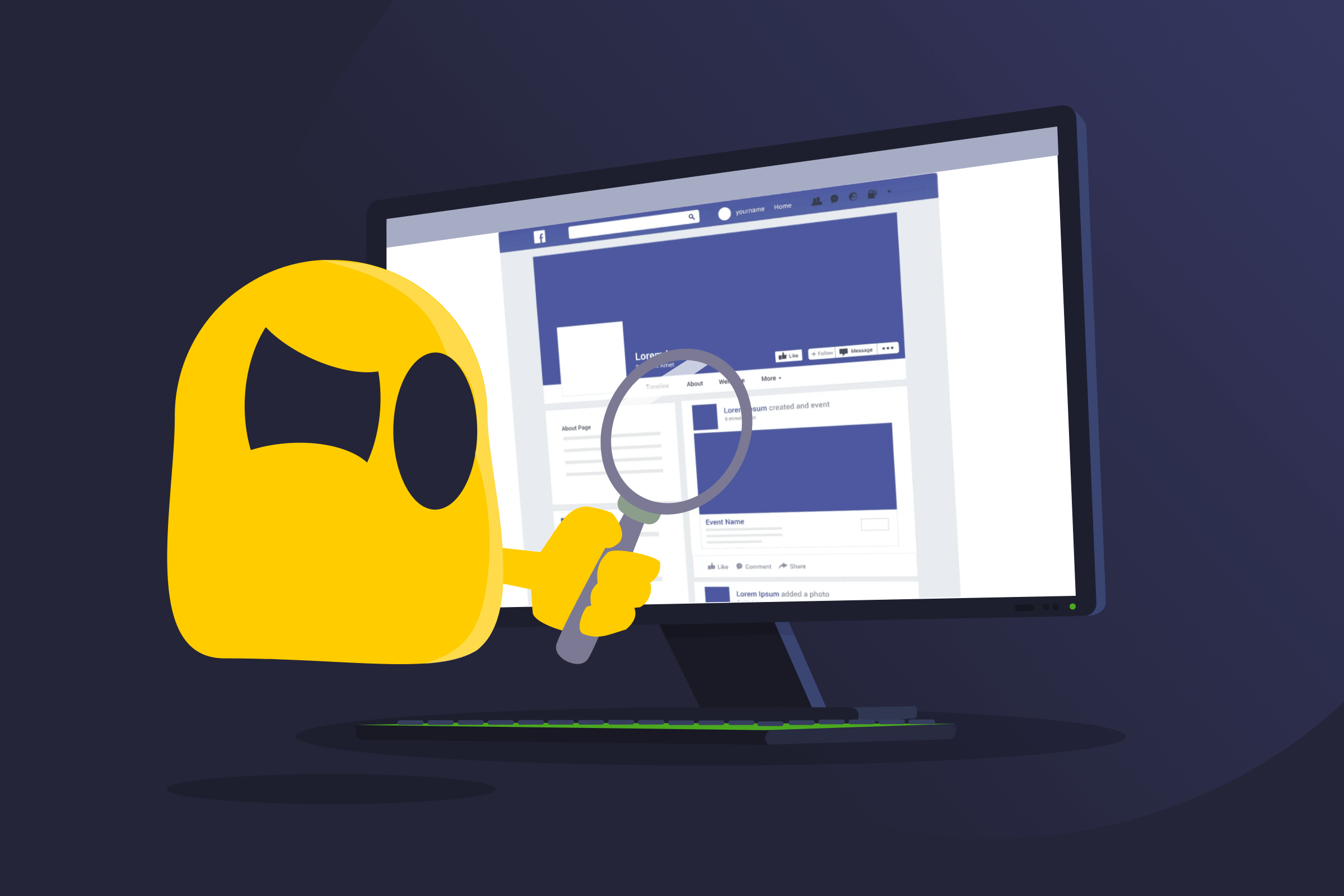
Facebook Stalking Definition
Facebook stalking is the act of closely watching and monitoring someone’s activity on Facebook to learn more about them, often without their knowledge. This can include viewing photos, posts, stories, tagged content, locations, friend lists, and other details to learn more about a person’s habits, relationships, and daily life.
Facebook doesn’t notify users when someone clicks on their profile or how often it’s viewed. Since profile views aren’t visible, monitoring activity can happen quietly, especially when information is shared publicly or with a wide audience.
How Facebook Stalking Works
Facebook stalking usually begins with information that is already visible on a profile. A stalker may return to the same profile many times, scrolling through older posts, examining photos and comments, and checking stories or tagged content.
Friends lists, tagged people, and location check-ins also reveal useful clues. Small details, like photo backgrounds, timestamps, captions, or repeated interactions, can point to routines, relationships, or frequent locations. Over time, these pieces can be combined to form a clearer picture of someone’s life.
This kind of activity relies on publicly available information and is sometimes compared to open-source intelligence gathering. While casual browsing is common on social media, focused and repeated monitoring can become problematic if it’s misused for harassment, manipulation, or intimidation.
Risks of Facebook Stalking
- Unwanted attention: Repeated monitoring can lead to intrusive or uncomfortable behavior.
- Harassment and intimidation: Collected details may be used to send threats, pressure someone, or cross personal boundaries.
- Impersonation: Public information can be used to create fake profiles or pose as someone else, leading to potential identity theft.
- Reputation damage: Posts, photos, or personal details may be taken out of context and shared to destroy someone’s public image.
- Potential cyberstalking: Ongoing, targeted monitoring can cross into cyberstalking when it causes fear, distress, or emotional harm.
Read More
FAQ
No, Facebook doesn’t provide a feature that shows who views your profile or how often it has been visited. Any app or tool claiming to do this is usually misleading. These tools often rely on guesses, fake data, or engagement tricks, and some may even collect personal information or introduce security risks. Facebook has repeatedly confirmed that profile-view tracking isn’t supported.
Simply viewing public information isn’t illegal. Social media platforms are designed for browsing, and casual viewing is a normal part of how they work. However, Facebook stalking can become a legal issue if it turns into repeated, targeted behavior that involves harassment, threats, impersonation, or actions meant to cause harm or fear. Laws vary by location, but once monitoring crosses into cyberstalking or harassment, it can have legal consequences.
You can limit how much information is visible on your profile. This includes reviewing privacy settings, controlling who can see your posts, friend lists, and tagged content, and removing unnecessary personal details, like locations or routine updates. You should also be selective about friend requests and regularly check older posts to reduce how much information someone can collect over time.
 45-Day Money-Back Guarantee