
SSL Stripping Attack
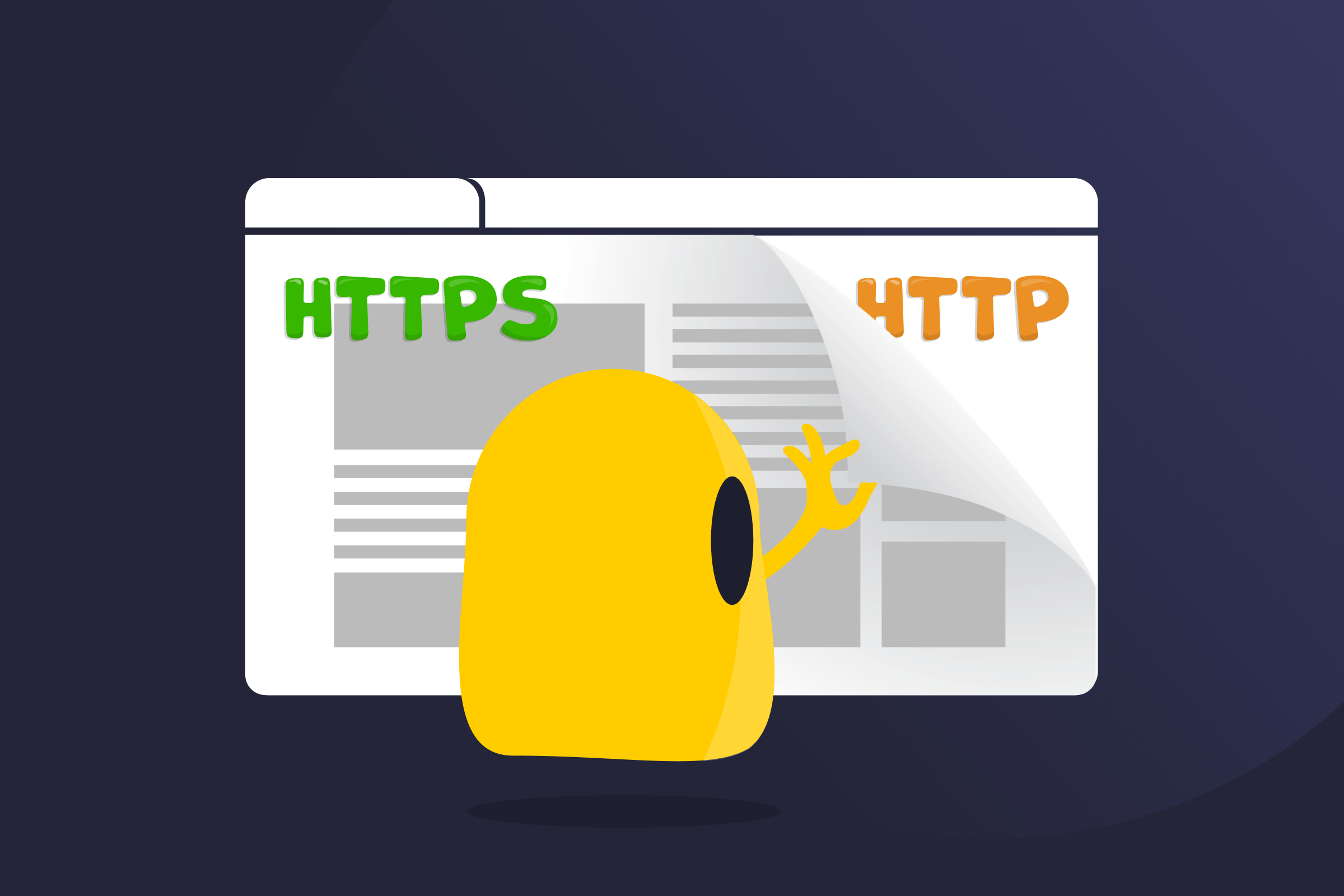
SSL Stripping Attack Definition
An SSL stripping attack is a type of cyberattack where an attacker weakens a secure website connection to spy on or interfere with the traffic. Secure websites use HTTPS, which encrypts data so it can’t be easily read or intercepted during transmission. In an SSL stripping attack, that secure HTTPS connection is quietly downgraded to unencrypted HTTP.
Because the downgrade often happens without visible warnings, it can be hard to notice. Once the connection is no longer encrypted, information sent between the device and the website can be read, modified, or redirected. This technique is commonly used as part of a man-in-the-middle (MITM) attack, where the attacker positions themselves between the user and the website to intercept or manipulate traffic.
How an SSL Stripping Attack Works
An SSL stripping attack usually begins on an unsafe or shared network, such as public Wi-Fi. An attacker connects to the same network and positions themselves between a device and the internet, allowing them to intercept traffic.
When a user tries to visit a secure website, the attacker blocks the secure HTTPS access and diverts the connection to HTTP instead. While the website itself may still support secure communication with its local server, the connection between the device and the attacker stays on HTTP, leaving data exposed.
Because the page often looks normal and may still load correctly, the user typically doesn’t realize something is wrong with their connection. During this process, unencrypted data moves through the attacker’s system, allowing them to capture sensitive metadata, modify data, or redirect the user to fake pages.
Risks of SSL Stripping Attacks
- Exposed sensitive data: Login details, form inputs, and other information can be read in plain text without HTTPS encryption.
- Account compromise: Stolen credentials may be used to access a user’s email, social media, or financial accounts.
- Content manipulation: Attackers can alter web pages in transit, inject malicious code, or display fake messages.
- Silent interception: The attack often happens without obvious warnings, making it easy to miss.
- Redirection to fake sites: Traffic can be rerouted to look-alike pages designed to collect credentials or spread malware.
Read More
FAQ
SSL stripping attacks are hard to spot because they’re designed to look normal. One of the easiest things to check is the browser address bar. If a page that usually uses HTTPS loads without a lock icon or shows “http://” instead, that can be a warning sign. You might also see browser security alerts or notice login pages that don’t behave the way you expect. That said, some SSL stripping attacks leave no obvious clues at all.
Yes. Even secure websites can be affected if the attacker interferes before the HTTPS connection is fully established. SSL stripping works by blocking the switch to HTTPS at the start of the connection. The website itself may still be secure, but the data traveling between you and the attacker is no longer encrypted.
Yes. Public and unsecured Wi-Fi networks are common places for SSL stripping attacks because many people share the same connection. This makes it easier for attackers to intercept traffic and interfere with your connection. That’s why public Wi-Fi is generally riskier for logging in to accounts or sending sensitive information.
HTTPS greatly reduces the risk, but it doesn’t guarantee complete protection on its own. Websites that force HTTPS from the start make SSL stripping much harder. However, if a connection begins over plain HTTP, an attacker may still be able to interfere before encryption kicks in.
Yes, though it’s less common than it used to be. Modern browsers and websites use stronger protections by default, which limits how effective SSL stripping can be. However, the attack can still happen on insecure networks, outdated systems, or sites that don’t strictly enforce encrypted connections.
 45-Day Money-Back Guarantee