
VPN Gateway
VPN Gateway Definition
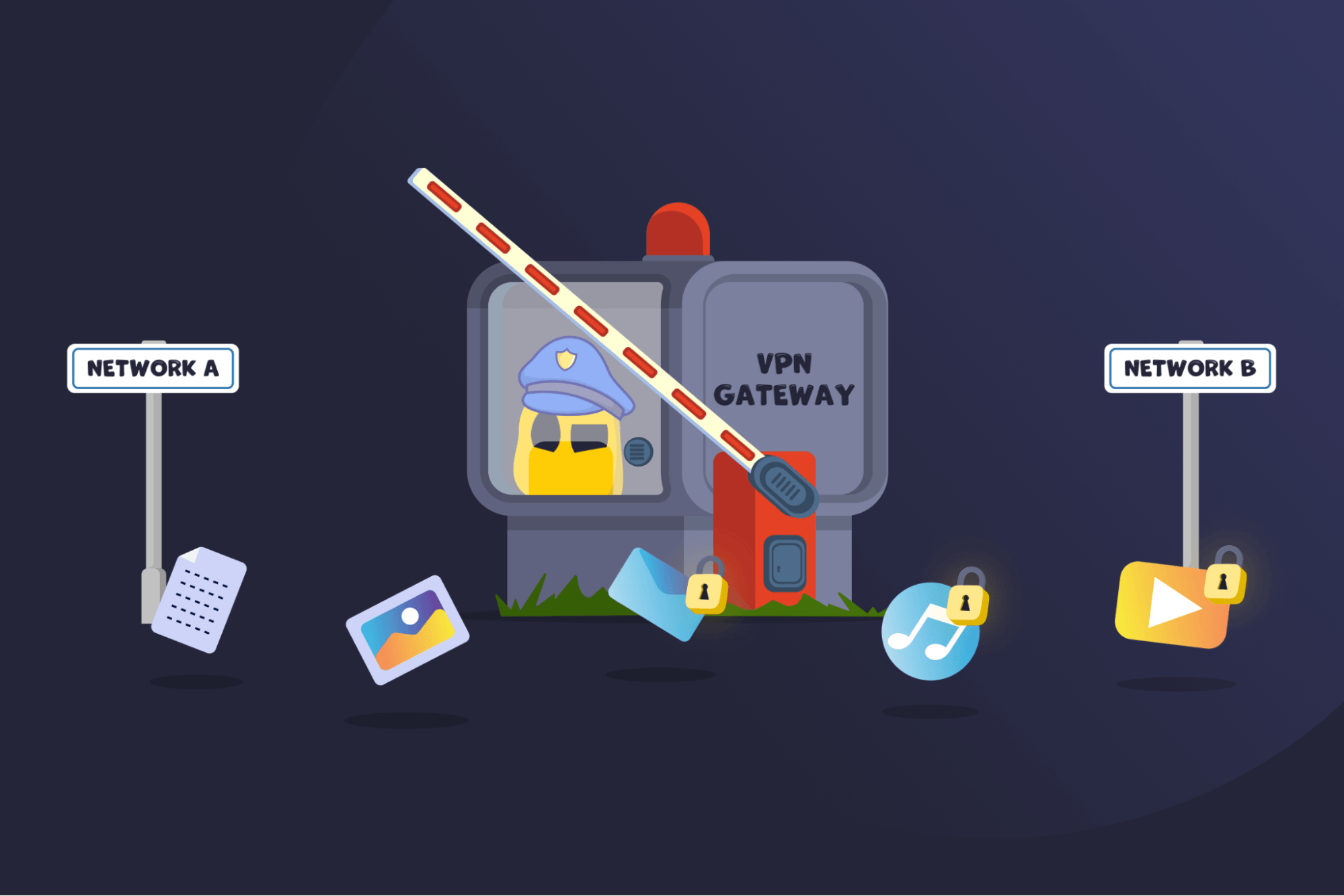
A VPN gateway is the point in a network that connects devices or systems to a VPN and handles secure communication. It encrypts data and sends it through a protected connection to another network or server. It also decrypts incoming data and delivers it to its destination. A VPN gateway manages the connection, verifies access permissions, and ensures data moves more securely between networks.
How a VPN Gateway Works
A VPN gateway works by creating and managing a secure connection between two points over the internet. It starts by checking the identity using login details, certificates, or security keys to confirm permission to connect.
After that, it sets up an encrypted tunnel using a VPN protocol. This tunnel protects data while it travels across the internet. The gateway also assigns the network settings needed for the connection, such as an IP address.
When data is sent, the VPN gateway encrypts it and sends it through the tunnel to the destination. The receiving gateway or server decrypts the data, decrypts it, and forwards it to its final destination. When data returns, the same process happens in reverse. The VPN gateway keeps the connection active and ensures configured traffic passes through the encrypted tunnel from start to finish.
Types of VPN Gateways
- Remote access VPN gateway: Connects individual users to a private network securely over the internet.
- Site-to-site VPN gateway: Links two separate networks together over the internet as if they were one.
- Cloud VPN gateway: Manages secure connections between cloud environments and other networks or devices.
- On-premises VPN gateway: Works as a physical or virtual gateway installed and managed within an organization's own infrastructure.
Benefits of Using a VPN Gateway
- Secures data in transit: Encrypts data that passes through the VPN connection, making data more difficult to intercept as it travels over the internet.
- Controls access to the network: Verifies users and devices before allowing connections, which helps block unauthorized access.
- Enables safe remote access: Lets users connect to a network from anywhere while keeping the connection more private and secure.
- Adds a layer of security between networks: Links different networks together over the internet without exposing data to public access.
- Centralizes security management: Manages access and protection from a single point.
Read More
FAQ
A VPN gateway is used to create and manage secure connections between devices or networks over the internet. It encrypts data, controls access, and routes traffic through a protected tunnel to keep communication private and secure.
Yes. A VPN gateway can be used for personal use, but it’s usually built into consumer VPN services rather than set up separately. When using a VPN app, the connection is handled through a VPN gateway managed by the provider.
In many setups, a VPN gateway and VPN server are part of the same system, but the gateway focuses on managing connections while the server provides network access. The gateway handles authentication, encryption, and routing of traffic, while the server receives the decrypted data and delivers it to its destination.
Yes. A VPN gateway can connect two networks over the internet by creating a secure, encrypted link between them. It allows systems in both networks to communicate as if they were on the same private network, while encrypting data as it travels between them.
 45-Day Money-Back Guarantee