
Web Server Security
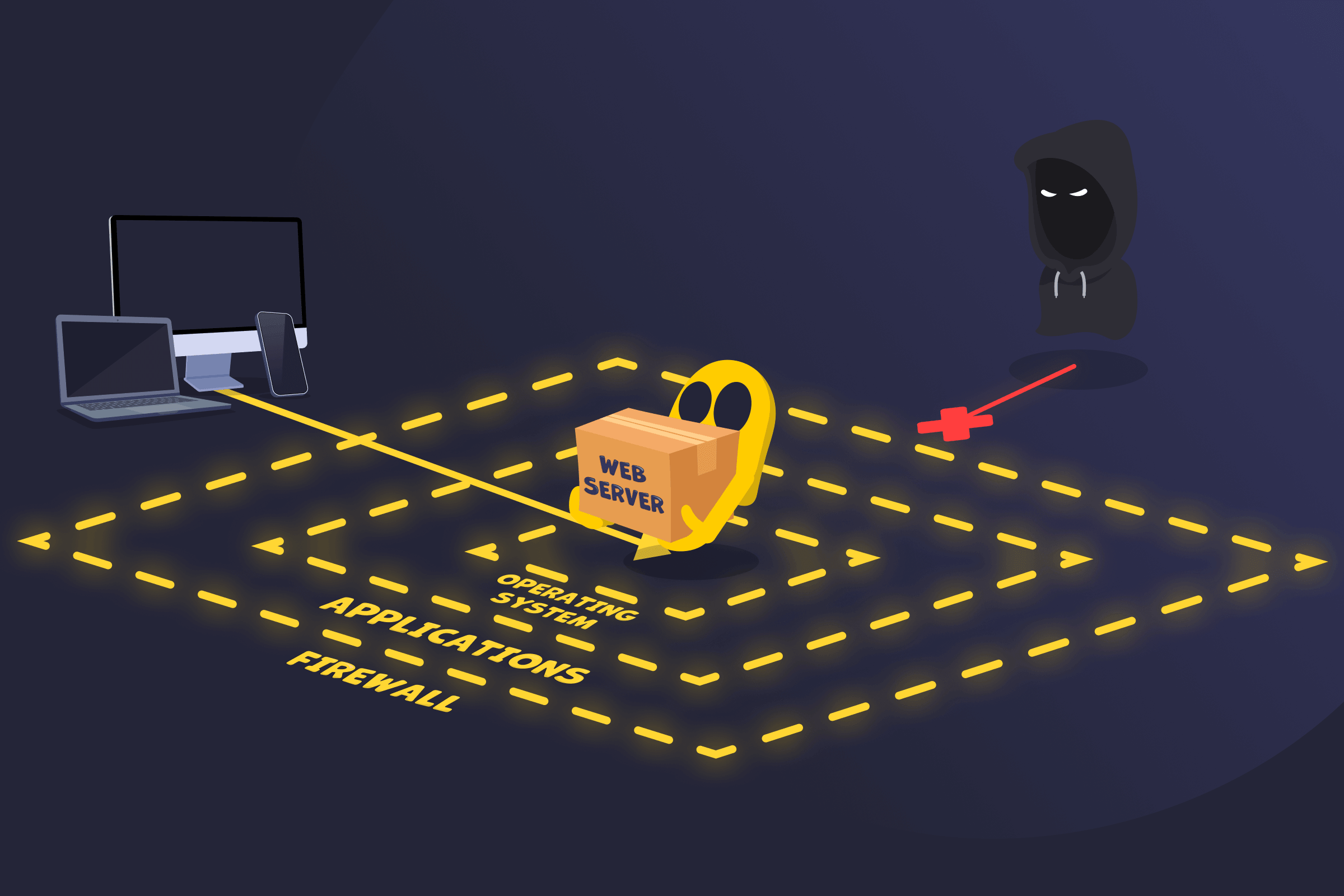
Web Server Security Definition
Web server security refers to the practices and technologies used to protect a web server and the websites it hosts from unauthorized access, misuse, and cyberattacks. A web server stores website files, processes visitor requests, and delivers content over the internet, which means it’s constantly exposed to public traffic.
Because web servers often handle sensitive data such as customer information or login credentials, security measures must protect the operating system, network services, and web applications running on the server.
How Web Server Security Works
Web server security relies on multiple layers of protection working together. These safeguards help detect threats, restrict unauthorized access, and reduce vulnerabilities.
- Network protection: Firewalls and traffic filtering monitor incoming connections and block suspicious activity before it reaches the server.
- Encryption: Protocols such as HTTPS encrypt data sent between the server and users to prevent interception.
- Access controls: Authentication and permission settings restrict who can access server resources or administrative tools.
- Regular updates and patching: Keeping server software and operating systems updated helps fix known vulnerabilities.
- Monitoring and logging: Security tools track server activity and detect unusual behavior that could indicate an attack.
Benefits of Web Server Security
- Protects sensitive data: Safeguards customer records, login credentials, financial data, and other confidential information stored on the server.
- Reduces the risk of cyberattacks: Strong security controls make it harder for attackers to exploit vulnerabilities or gain unauthorized access.
- Prevents malware infections: Security measures help detect and block malicious software that could compromise the server or connected systems.
- Maintains website availability: Proper protection reduces downtime caused by attacks such as denial-of-service (DoS) incidents or unauthorized disruptions.
- Supports legal and industry compliance: Many industries require strict security practices to protect user data and meet legal or regulatory standards.
- Protects business reputation: Preventing breaches or website defacement helps maintain trust with users and customers.
- Boosts search engine trust: Secure configurations, such as HTTPS, can improve credibility with search engines and browsers.
Common Web Server Vulnerabilities
- SQL injection: Attackers insert malicious database commands into input fields to access or modify stored data.
- Cross-site scripting (XSS): Malicious scripts are injected into web pages and executed in a user’s browser.
- Denial-of-service (DoS) attacks: Attackers flood the server with traffic, overwhelming resources and preventing legitimate users from accessing the site.
- Misconfigured permissions: Incorrect access settings may allow unauthorized users to modify files or access sensitive areas of the server.
- Outdated software: Unpatched server software can contain vulnerabilities that attackers exploit.
Read More
- What Is a Dedicated Server?
- What Is a Cross-Site Requested Forgery?
- What Is a Cybersecurity Ecosystem?
FAQ
The primary goal of web server security is to protect the server, the website it hosts, and the data it processes from unauthorized access or disruption. This includes preventing attackers from stealing information, altering website content, or taking the server offline while ensuring legitimate users can access the site reliably.
Web servers are frequent targets because they are publicly accessible and often store valuable information. A compromised server can expose customer data, allow attackers to distribute malware, or be used to launch further attacks against other systems.
Web servers should be updated regularly through a process known as patch management. Security updates should be applied as soon as they are tested and available because attackers often exploit known vulnerabilities shortly after they become public.
 45-Day Money-Back Guarantee