
Unicast Address
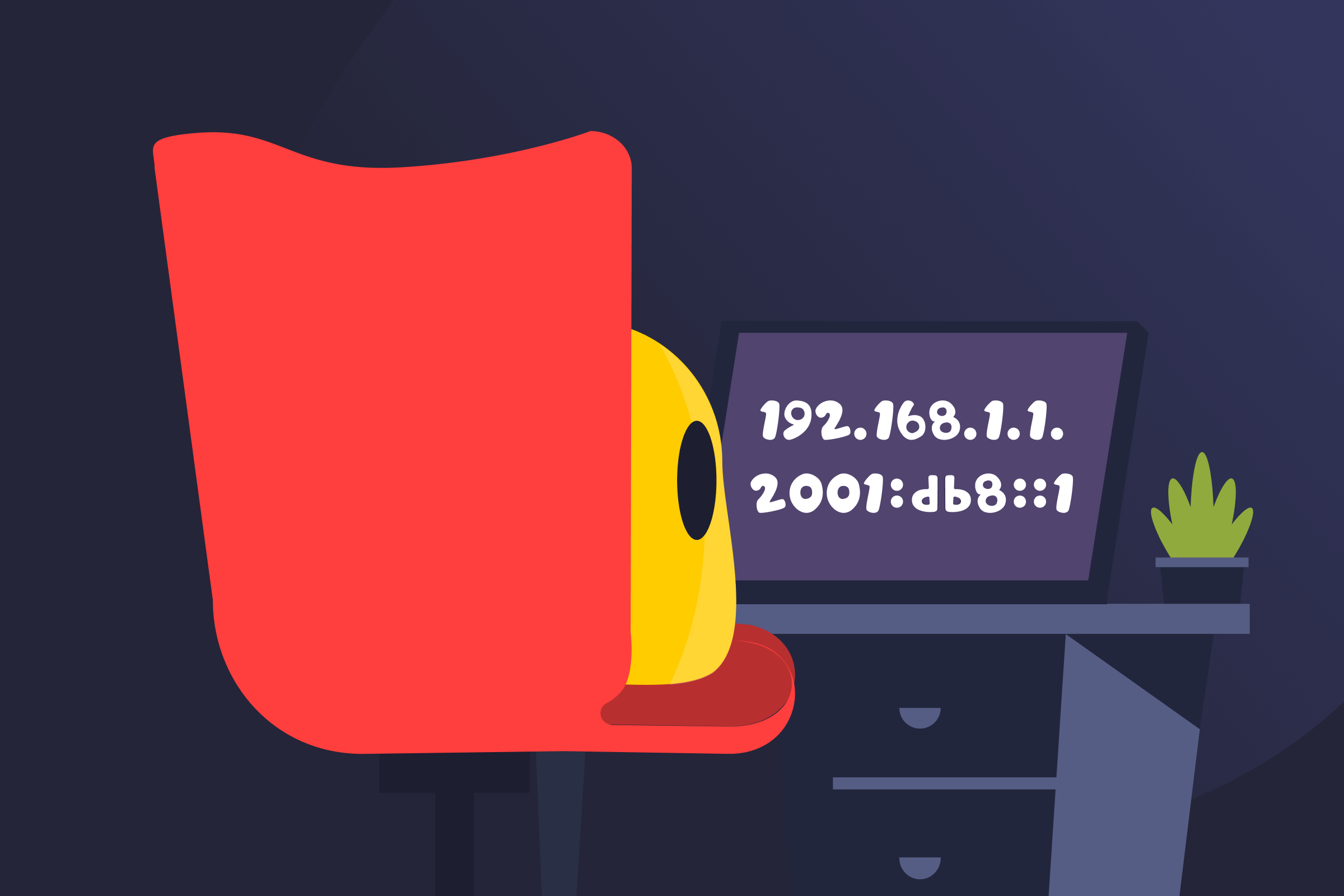
Unicast Address Definition
A unicast address is an IP address that works as a unique identifier assigned to a single network interface on a device, like a computer’s network card or a phone’s Wi-Fi adapter. When another device sends data to a unicast address, the network delivers it only to that network interface. This makes unicast the standard method for one-to-one communication across both local networks and the internet.
The most common examples of unicast addresses include:
- An IPv4 address like 192.168.1.24 assigned to a home computer.
- An IPv6 address like 2001:0db8:85a3::8a2e:0370:7334 assigned to a server.
Unicast addresses send data to one specific recipient at a time, which makes them useful for personalized services. For example, streaming platforms use unicast connections to deliver unique content to each viewer. However, unicast is less efficient when the same data needs to reach many users at once, because the sender must create and send a copy to each individual address. This uses more bandwidth and server resources than group-based methods, like multicast or broadcast.
Unicast Addresses vs Other IP Addresses
- Broadcast address: Sends data to every device on the network (one-to-all communication). Broadcast addresses exist only in IPv4.
- Multicast address: Identifies a group of devices on the network. A packet sent to a multicast address is duplicated and delivered to all members of the group, rather than a single interface.
- Anycast address: Represents more than one interface on the network. A packet sent to an anycast address goes to only one of those interfaces, usually the closest or the one with the best route.
Types of Unicast Addresses
- Global unicast address (GUA): A public, globally unique IP address used for communication over the internet. It’s what most people mean when they refer to an “IP address.”
- Link-local address: A unicast address automatically assigned to devices on the same local network. These don’t reach the internet because routers don’t forward traffic with a link-local source or destination.
- Unspecified address: A placeholder address (with all bits set to 0s) used temporarily by a device that hasn’t yet configured its own IP address. It can’t be assigned to a host or used as a destination.
- Loopback address: An address that returns packets to the same device for troubleshooting or testing. It’s 0:0:0:0:0:0:0:1 in IPv6, and almost always 127.0.0.1 in IPv4.
- IPv4-in-IPv6: An IPv6 address format that embeds the IPv4 unicast address by padding it with 0s. This helps older IPv4 systems communicate with IPv6-only servers.
Managing Unicast Addresses
- Set up a DHCP (Dynamic Host Configuration Protocol) server to automate how the network assigns and tracks unicast addresses.
- Implement an IPAM (IP Address Management) system to keep track of all the subnets and reserved unicast addresses.
- Enable duplicate address detection to automatically check if a unicast address is already in use before assigning it.
- Use multicast or broadcast for traffic that’s meant to go to a large number of destinations.
Read More
FAQ
In IPv4, almost all addresses are unicast except those reserved for multicast (224.0.0.0-239.255.255.255) and the broadcast address of a subnet (all host bits set to 1). In IPv6, any address starting with 2 or fd00 is likely a unicast address.
A global unicast address (GUA) is a type of unicast address. It’s the public, globally unique IP address that identifies a device on the internet. Routers use it to deliver data packets from any source to that specific address. In IPv4, any address that isn’t considered reserved for private or special use is a global unicast address. In IPv6, GUAs typically start with the digit 2.
No, it’s not. A device’s unicast address is its identifier on the local network, like its link-local or global unicast address. These addresses differ from device to device. The loopback address is 0:0:0:0:0:0:0:1 in IPv6 and usually 127.0.0.1 in IPv4. Any device sending data to that address has its packets returned to itself.
 45-Day Money-Back Guarantee