
Gift card scams trick you into buying gift cards, sharing their codes or PINs, or paying for cards that are fake, tampered with, or already drained. A major warning sign is when someone unexpectedly tells you to buy gift cards and send them the card details as payment, particularly if they pressure you to act quickly.
Scammers may impersonate companies, government agencies, employers, friends, or relatives to make the request seem legitimate. Others target gift cards before or during purchase, such as by tampering with physical cards or setting up fake gift card websites.
This guide explains how the most common gift card scams work, how to spot the warning signs, what to do if you’ve already shared a gift card code or lost money, and whether you may be able to recover your funds.
What Is a Gift Card Scam?
Gift card scams are any type of fraud that uses gift cards to steal money or obtain something of value. Scammers may convince you to buy a legitimate gift card and send them the code or PIN, sell you a fake or already-drained card, or tamper with a physical card before you buy it.
Gift cards are useful to scammers because whoever has the necessary card details can often redeem the balance. Once a scammer gets those details, they may spend the funds, use the card to buy goods, or resell it.
The important distinction is that buying or using a gift card isn’t suspicious. The warning sign is when someone manipulates you into buying one, sharing its details, or using it in a situation where a gift card wouldn’t normally make sense.
Why Do Scammers Want Gift Cards?
Scammers target gift cards because they’re easy to buy, quick to redeem, and difficult to recover once someone has used the balance. In many scams, the attacker doesn’t even need the physical card, as the code and PIN may be enough to access its value.
Gift cards are particularly attractive to scammers because they’re:
- Easy to access: Gift cards are available online and in supermarkets, convenience stores, and other retailers.
- Hard to trace: Most gift card vendors don’t require personal information or an existing account to buy one. They also don’t usually track redemptions, making it difficult to trace how a gift card changes hands.
- Difficult to reverse: Gift cards generally don’t offer the same dispute and fraud protections as credit cards and some other payment methods.
- Familiar to victims: Asking someone to buy a common gift card may be easier than convincing them to use an unfamiliar payment method.
- Easy to transfer or resell: Scammers may spend the balance themselves, use it to buy goods, or sell the card or code to someone else.
- Flexible: Depending on the gift card and the scammers’ goals, they can use it to purchase goods without using their own money or use it as bait in future scams.
That combination of speed and limited recovery options is why scammers often create urgency. The faster they can get you to share the card details, the less time you have to verify the request or contact the issuer before the scammer spends the balance.
Small-time grifters aren’t the only ones running these scams, either. The U.S. Immigration and Customs Enforcement Agency (ICE) warns of global crime syndicates using gift card fraud to support illegal drug smuggling, illegal migration, and human trafficking.1
12 Common Gift Card Scams and How They Work
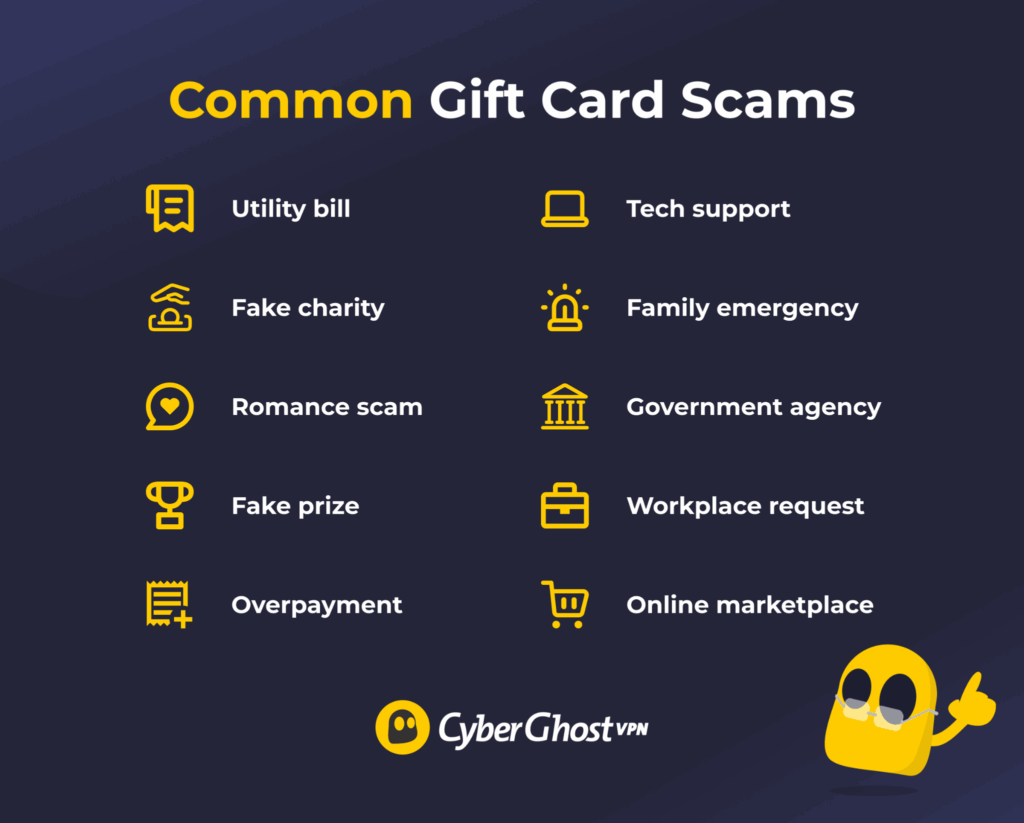
Gift card scams can start with anything from an urgent phone call to a fake online listing, but the goal is often the same: get access to the card’s value before you realize something is wrong. Here are 12 common gift card scams and the warning signs to watch for.
Tech Support Scams
Tech support scammers impersonate legitimate companies and claim there’s a critical problem with your account, device, or security. They may pretend to represent legitimate companies like Microsoft, Apple, or Google, and contact you through a phone call, email, text, pop-up, or fake support website.
Once they have your attention, they may tell you to buy gift cards to pay for support, fix the supposed problem, or complete a verification step. They then ask for the card numbers or PINs so they can redeem the balance.
Be suspicious if an unexpected support contact tells you to buy gift cards. Don’t use the phone number, link, or website they provide to verify the claim. Instead, contact the company through its official app, website, or support channel.
Family Emergency Scams
Scammers may impersonate a relative or friend facing a crisis and claim that a banking issue or emergency means they can’t pay any other way. For example, they may pretend to be a grandchild who needs money or a friend who’s stranded somewhere and can’t access their bank account. Some scammers may even use generative AI tools to clone a contact’s voice or appearance to make the story more convincing.
First, consider what they’re asking and whether the request makes sense. Is this normal for this person to ask you for gift cards? Why can’t they use their usual payment method? Second, contact them using a phone number or account you already know belongs to them. If you can’t reach them, check with another trusted friend or family member before sending anything.
Government Impersonation Scams
Scammers can also impersonate government agencies to raise the stakes and threaten you with serious consequences. For example, they may pretend to be from the Internal Revenue Service (IRS) claiming you owe outstanding taxes, the Social Security Administration (SSA) investigating supposed fraud, or local police accusing you of a crime.
You may face threats designed to catch you off guard, such as fines, arrest, or other legal action unless you pay immediately. The scammer may then tell you to buy gift cards and read the card numbers or PINs over the phone.
Government agencies won’t demand gift cards to settle taxes, fines, or other debts. If you’re unsure whether a request is genuine, don’t use the phone number or link the caller or message provides. Contact the agency through its official website or published contact details instead.
Work-Related Gift Card Scams
Scammers may pretend to be a boss or co-worker and use your professional relationship to pressure you into buying gift cards. To make the request appear critical, they may claim they need gift cards for a client or last-minute company event.
They try to spoof a company contact or messaging from a personal email address or phone number because they’re away from the office. They may even tell you to put the purchase on a company card or expense it later to make the request sound legitimate.
If you receive an unexpected request to buy gift cards for work, verify it with the person through a contact method you already use. Don’t rely on the email address, phone number, or the instructions in the message itself, even if the sender appears to know details about your workplace.
Online Marketplace Scams
Online marketplace scams often involve gift cards. One common version is a seller advertising a gift card they don’t actually have on sites like Facebook Marketplace, eBay, or Etsy. The asking price may be lower than the card’s value to tempt you into buying it, with the seller claiming they simply don’t need or want the card.
You may also receive a real card that someone’s already drained or compromised. In some cases, the seller still has access to the card details and waits until you pay or activate it before spending the balance themselves.
If you’re selling something, be cautious if a buyer wants to pay with a gift card instead of the marketplace’s usual payment methods. Don’t ship an item based on screenshots or other supposed proof of payment, and watch for follow-up requests to pay unexpected shipping or customs fees.
If you’re buying a gift card, purchasing from the issuer or an authorized retailer gives you a clearer route to support if something goes wrong.
Overpayment Scams
This is a specific type of online shopping fraud. An interested buyer contacts you claiming they accidentally paid too much for something you’re selling and asking you to return the difference.
However, instead of asking for a normal refund, the scammer may tell you to buy a gift card for the extra amount and send them the card details. In reality, the original payment may be faked, made with a bad check, or later reversed. Once you send the gift card details, the scammer can redeem the balance and disappear.
In the worst-case scenario, you could lose both the item you’re selling and the value of the gift card. If a buyer claims they’ve overpaid, check the payment through your actual bank, payment provider, or marketplace rather than relying on screenshots or emails they send you. Handle any genuine refund through the original payment method or marketplace.
Utility and Bill Payment Scams
Scammers may claim to be from your utility, cable TV, or internet service provider (ISP), accusing you of missing a payment or threatening to cut off your service unless you pay immediately.
They may tell you that the quickest way to avoid disconnection is to buy a specific gift card and give them the card number or PIN. The threat of losing an essential service can make the request feel pressing, especially if they claim you only have a short time to pay.
If you receive an unexpected payment demand, check your account or recent bills first. You can also contact the provider using the phone number on a previous bill or its website. Don’t use the contact details supplied in the unexpected call, text, or email to verify the claim.
Fake Charities
Scammers may pretend to represent a legitimate charity or NGO, asking you to donate using gift cards. For example, they may claim to be raising money for disaster relief, medical research, animal rescue, or families in need.
They often spread their messages through social media, online ads, emails, or unsolicited messages. Time-sensitive or emotional stories can pressure you to donate quickly, and scammers may take advantage of recent disasters, conflicts, or other reported events to make their appeals seem timely.
Before donating, verify that a charity is a registered nonprofit. Find the charity’s official website rather than following external links in an unexpected message, and use the donation methods it provides. Be especially cautious if someone asks you to buy gift cards and send them the codes as a donation.
Romance Scams
Scammers may build an online relationship with you to get you to buy gift cards. It begins with meeting a stranger online in chat groups, on social media sites, or through dating apps. They may seem interested and affectionate at first, taking time to build your trust before asking for anything.
Some scammers test the waters first by sending you small gifts and asking for ones in return, only to escalate their demands when the time is right. They may ask for increasingly valuable gift cards to buy something they desperately want or need, help them in an emergency, or cover travel costs to “come and see you.”
When you’re emotionally invested in someone, it can be difficult to recognize that their requests are a part of a scam. Repeated excuses for not meeting in person or joining a live video call can be warning signs, but showing their face doesn’t prove someone is genuine either. Watch for patterns such as increasingly expensive requests, repeated emergencies, pressure to send gift cards, or affection that seems tied to whether you give them money.
If someone you’ve met online asks for gift cards, don’t send the card details because you trust the relationship. Take time to verify their story yourself and talk to someone you trust before sending money or anything else of value.
Prize or Giveaway Scams
Scammers may contact you out of the blue claiming you’ve won a sweepstakes, contest, lottery, or giveaway. They often imitate the website, branding, or communications of a legitimate company or promotion, but there are common ways to spot a phishing email or website.
The catch appears when you try to claim your winnings. You may be told to buy a gift card to cover a processing fee, pay taxes, verify your account, or unlock the prize. In other cases, the gift card itself may be the supposed prize, but you have to pay a fee or provide personal information before you can receive it.
Be suspicious if you’re asked to pay with a gift card to claim a prize, especially if you don’t remember entering the competition. Verify the promotion through the organization running it rather than using the links or contact details in the message.
Gift Card Draining
Gift card draining can happen before you even buy the card. Scammers tamper with physical gift cards or their packaging so they can access the balance after someone purchases and activates one. Here’s how it often works:
- Scammer steals card details: A scammer gets access to the card number, PIN, or other information needed to redeem the balance. In rarer cases, criminals may also introduce already-tampered cards into retail supply chains.
- Scammer returns or disguises the card: After copying the original details, the scammer covers them with a fake sticker and puts them back on the store shelf.
- Scammer tracks the card: Scammers keep an eye on the card, waiting for the moment you activate them in-store or add funds to them.
- Scammer drains the balance: Once someone loads funds onto the card, the scammer uses the stolen details to spend the balance.
Another variation involves placing a fake barcode over the card’s original one. When the cashier scans it, the money may be loaded onto a different card controlled by the scammer instead.
Before you buy or activate a gift card, check for signs of damage or tampering. Look for misaligned stickers, torn packaging, or scratched-off PIN covers. Take a gift card from the middle or back, as scammers are more likely to tamper with the front ones. If possible, ask the cashier to confirm the balance or activation status immediately after purchase.
Fake Gift Card Balance-Checking Sites
Scammers may create fake websites that claim to check your gift card balance. You enter the card number and PIN expecting to see your remaining balance, but instead you’ve handed the scammers the information they may need to drain the card.
Be cautious of any site claiming to read gift cards from different vendors or marketplaces – this is almost always a scam. Only use the issuer’s website or marketplace to check your card balance and never enter its details anywhere else online for whatever purpose.
Make sure the site is genuine, as scammers often create convincing copycats. Check the domain URL and design for inconsistencies. If in doubt, go to the issuer’s website instead of following random links or ads.
CyberGhost VPN’s Content Blocker can block some domains associated with malware, trackers, and ads, adding another layer of protection while you browse. It can’t determine whether every gift card website is genuine, so you should still verify the site before entering a card number or PIN.
How to Spot a Gift Card Scam
Gift card scams follow similar patterns to many other online scams. If you notice any of the following, someone may be trying to scam you:
- Unexpected contact: Gift card scams often come out of nowhere or take the form of an unusual request.
- Aggressive language: Urgent, alarmist, or emotional messages to pressure you into acting without thinking clearly.
- Non-standard practices: Watch out for creative excuses to introduce gift cards into situations where you’d use other payment methods.
- Requests for information: Gift card scams employ many tricks to get you to share gift card photos, serial numbers, or PINs, as these may be all they need to spend it.
- Requests to stay on the phone: Scammers often try to walk you through the process to prevent you from backing out or getting outside help.
- Suspicious instructions: Be wary of requests to buy gift cards from specific stores or splitting your purchases across several different ones.
- Too-good-to-be-true deals: Criminals often use bait, such as unrealistically low prices, prizes, or exclusive offers, to initiate gift card scams.
- Suspicious links or websites: Scammers set up pages that use clickbait, flashy ads, unexpected redirects, or mimic legitimate sites to steal your gift card details or personal data.
What to Do if You’ve Fallen for a Gift Card Scam
What you should do depends on the type of scam and how far it went. Act fast, especially if you’ve already shared the gift card number or PIN. The sooner you report it, the better the chance that the issuer can take action before the scammer spends the balance.
- Notify your bank or payment provider: If you’ve paid for a fake or tampered gift card, you may be able to stop or reverse the charges, especially if you paid by credit card. If you also shared card or account details with the scammer, alert your bank and ask them to freeze or monitor your accounts.
- Contact the gift card issuer: The issuer may be able to block the gift card or return the balance to you before the scammer spends it. Keep the card, receipt, packaging, and any messages or other evidence connected to the scam.
- Secure affected accounts: Change any passwords or other credentials you shared with the scammer. If you reused the same password elsewhere, change it on those accounts too.
- Report the scam: Although it’s unlikely you’ll get your money back, repeated reports may help authorities track down criminals and prevent future scams. For example, you could report it to the FBI’s Internet Crime Complaint Center (IC3) or the AARP Fraud Watch Network Hotline.
- Watch for follow-up scams: Scammers may contact you again claiming they can recover your money, investigate the fraud, or return your gift card balance for a fee. Be suspicious of anyone who offers to recover lost funds.
Can You Get Your Money Back?
You may be able to recover money lost in a gift card scam, but there’s no guarantee. Your chances generally depend on the scam method, how you paid for it, whether someone already redeemed the gift card, and how quickly you report what happened.
Here’s what you can try in different situations.
| Scenario | What to Do |
| Gift card/code sent but not yet redeemed | Contact the gift card issuer and ask whether it can freeze or cancel the card before a scammer spends the balance. |
| Tampered/drained card bought from a legitimate retailer | Contact the retailer and issuer with the card and receipt. Ask what replacement or refund options are available under their policies. |
| Fake gift card purchased online | Report the seller or listing to the marketplace and contact the payment provider to ask what dispute options are available. |
| Card purchased by credit card | Contact your bank to see whether the transaction qualifies for a dispute or chargeback. |
| Gift card already redeemed by scammer | Report it to the issuer immediately in case it may be able to investigate the redemption or advise you on any remaining options. |
| Paid for the card by cash or in-store but someone already redeemed the balance | Report it to the issuer and appropriate fraud-reporting authorities, but there may be no payment transaction to reverse without an underlying electronic payment to dispute. |
Buy and Redeem Gift Cards Safely Online
Gift cards are safest when you buy them from trusted sources and use them for their intended purpose, not when someone unexpectedly tells you to buy one and hand over the details. Be cautious of urgent requests, unusual payment instructions, and anyone asking for a card number or PIN. If something doesn’t feel right, verify the request before you spend or share anything.
When buying or redeeming gift cards online, CyberGhost VPN can help keep your connection private by encrypting the traffic routed through the VPN tunnel. Our Content Blocker can also block some domains associated with malware, trackers, and ads. These tools add another layer of protection while you browse, but checking that you’re using the gift card issuer’s genuine website is still essential.
FAQ
Why do scammers ask for payment with gift cards?
Scammers ask for gift card payments because gift card transactions are largely untraceable and irreversible. Gift cards also don’t have the same level of security and fraud checks as bank transfers or credit card payments. Similar to cash, they allow scammers to buy items or redeem gifts without the same risk of identification and law enforcement actions.
Can I get my money back after a gift card scam?
Not always, but you may be able to prevent or reverse a gift card transaction if you act fast enough. The issuer may block the gift card or return your funds if you bought it through an official channel. If you paid for a fake gift card using your bank account, credit card, or e-wallet, you may also be able to stop or reverse the transaction.
What should I do if I gave a scammer a gift card code?
Act immediately. Contact the issuer to report the fraud and ask whether they can help. Depending on whether you also shared sensitive information with the scammer, you may need to take extra steps to secure your online and banking accounts. Over the next few days or weeks, remain watchful for potential follow-up scams.
How can I avoid gift card scams?
Watch for unusual behavior or requests involving gift cards. No legitimate organization accepts gift cards as payment, so a gift card request is almost always a scam. If someone contacts you demanding gift cards, verify their identity, even if they claim to be someone you know.
Which gift cards do scammers most commonly target?
Scammers favor gift cards from recognized brands that are easy to buy, redeem, or resell or can be used to purchase a variety of goods. Common examples include Apple, Google Play, Amazon, Target, Walmart, and gaming platforms such as Steam. However, scammers can use almost any gift card, even preloaded ones that you buy in a physical store.

Leave a comment