
Choosing between a Samsung and an LG TV in 2026 isn’t just about screen size or price. Both brands make some of the most popular TVs on the market, and many of their models deliver excellent picture quality. The biggest differences come down to how the TVs are built and how they handle everyday viewing. Samsung and LG use different display technologies, design philosophies, and Smart TV platforms, which can affect things like brightness, contrast, gaming performance, and ease of use.
This guide breaks down how Samsung and LG TVs compare across several important categories, including picture quality, streaming features, gaming support, and overall usability. The goal is to help clarify where each brand stands and what those differences might mean in real-world use.
Samsung vs LG TV — Brand Overview
Samsung and LG are two of the largest TV manufacturers in the world, and both companies produce a wide range of models, from entry-level TVs to high-end flagship displays. Samsung’s lineup mainly focuses on LED-based technologies like QLED and Mini-LED, which are designed to deliver high brightness and strong color performance. LG offers traditional LED TVs as well, but it’s especially known for its OLED models, which use self-lit pixels to produce deeper contrast.
As the two brands rely on different technologies, their TVs often behave differently depending on the room lighting, the type of content you watch, and the features you care about most.
Samsung vs LG TV: Key Features to Consider
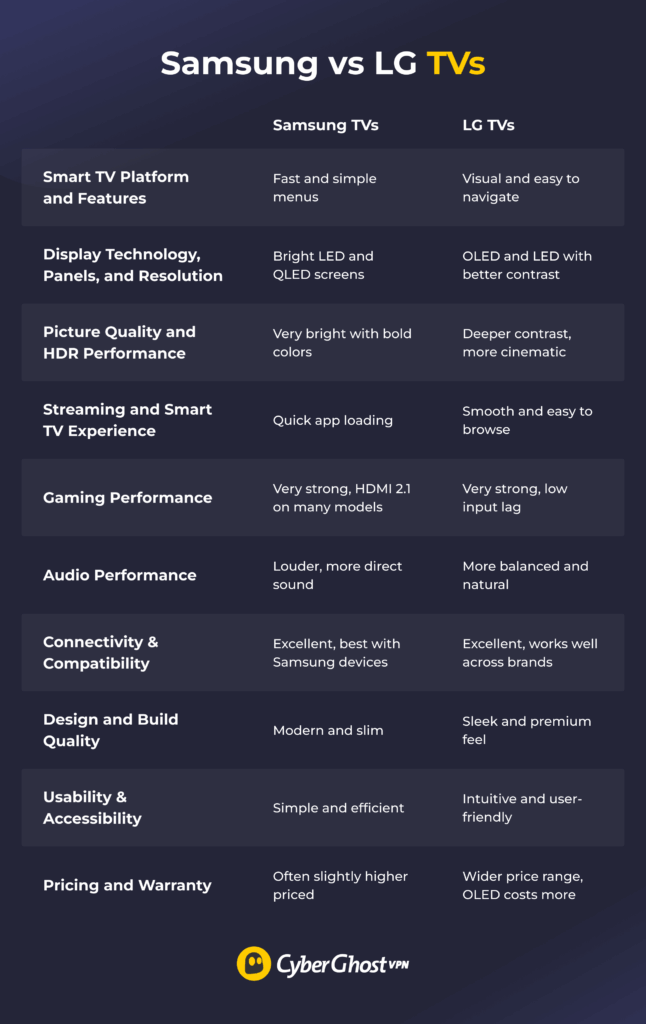
Samsung and LG TVs share many core features, but they often handle them in slightly different ways. Both brands offer modern Smart TV platforms, strong gaming support, and wide compatibility with streaming services and external devices.
The differences become more noticeable in areas like display technology, interface design, and how each brand prioritizes features. Samsung TVs often emphasize brightness and vibrant color output, while LG’s OLED models focus more on contrast and viewing angles. At the same time, both brands support popular gaming technologies like HDMI 2.1 and variable refresh rate on many midrange and premium models.
Because of this, the experience of using a Samsung or LG TV can feel a bit different even when the basic features are similar.
Smart TV Platform and Features
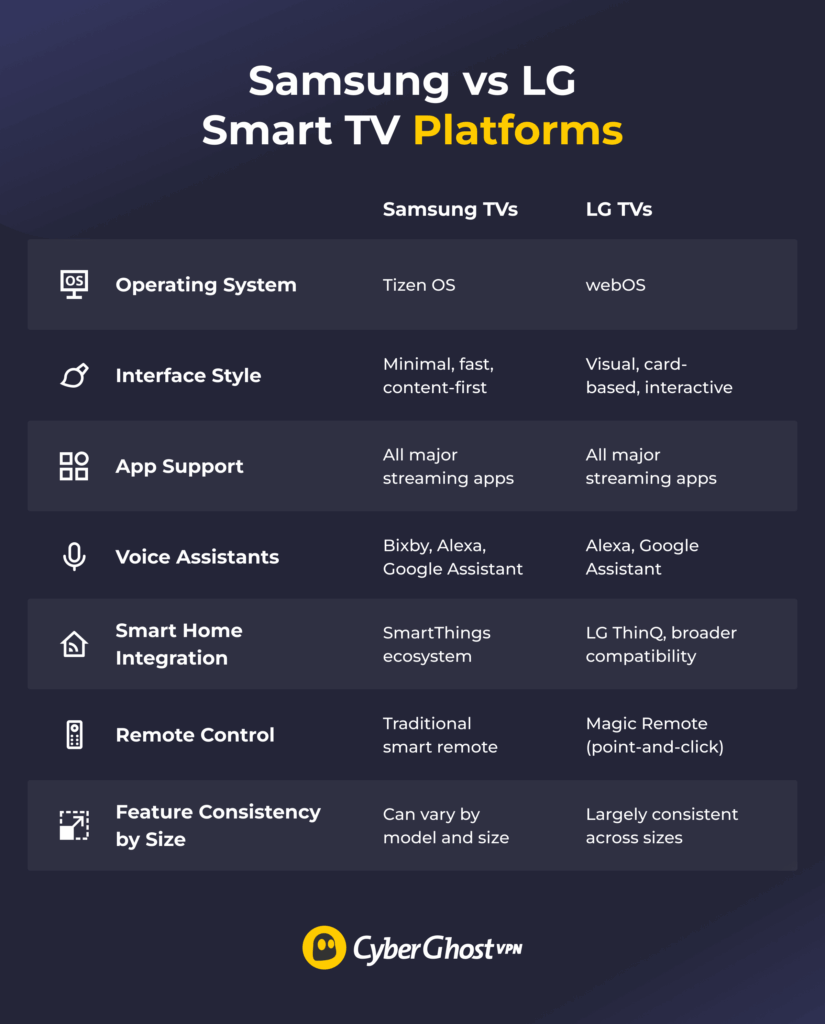
Samsung and LG TVs use different Smart TV platforms, which affects how you navigate menus, open apps, and control other devices in your home. Samsung TVs typically run Tizen OS, while LG TVs use webOS.
Samsung’s Tizen platform focuses on a fast, streamlined interface. The home screen is designed to highlight apps and content quickly, so switching between streaming services or inputs usually takes only a few clicks. Tizen also integrates closely with Samsung’s SmartThings ecosystem, which allows compatible devices like phones, soundbars, and smart home products to connect easily.
LG’s webOS platform takes a slightly more visual approach. Apps appear horizontally, making it easy to jump between streaming services, inputs, and settings. Many LG TVs also support the Magic Remote, which works like a pointer and lets users select apps or settings by pointing at the screen.
Voice assistants are available on both systems, with Amazon Alexa and Google Assistant supported across many models. Samsung TVs may also include Bixby, Samsung’s own voice assistant.
Display Technology, Panels, and Resolution
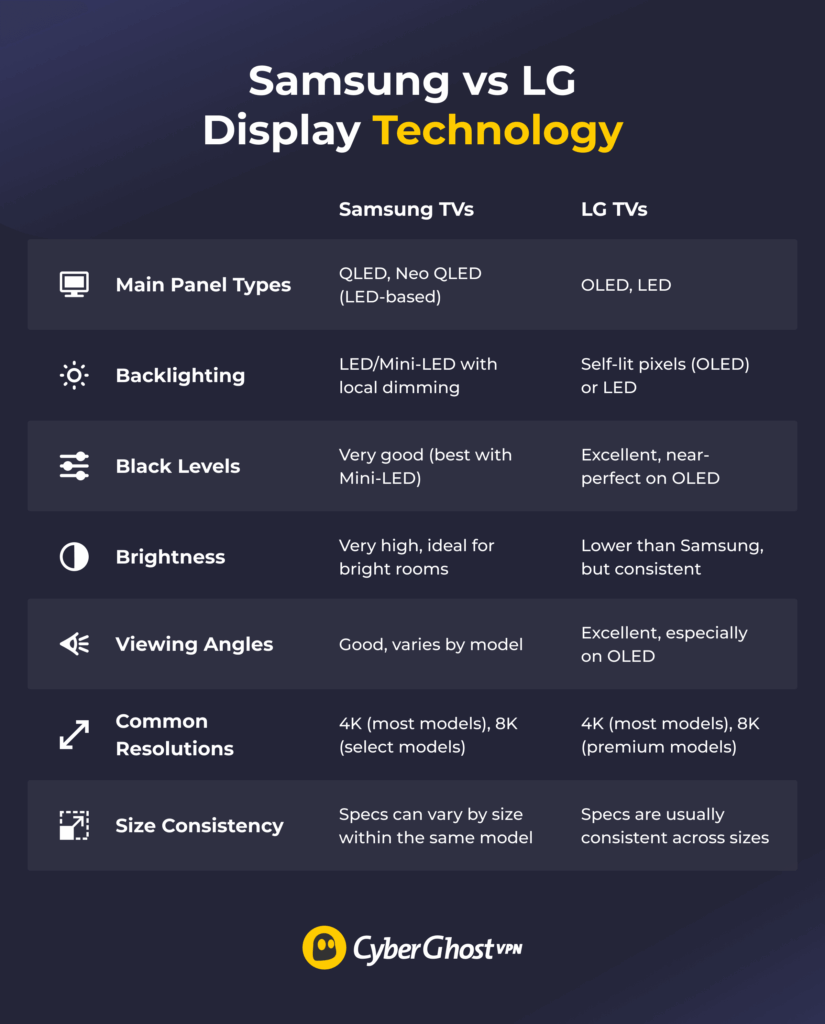
Samsung and LG TVs use different panel technologies across their product lines, and that difference plays a big role in how their screens look.
Samsung’s TVs mostly rely on LED-based panels, including QLED and Mini-LED. These displays are known for reaching very high brightness levels, which can help the picture stay visible in bright rooms.
LG also produces LED TVs, but many of its well-known models use OLED panels. With OLED, each pixel produces its own light, which allows the screen to create very deep blacks and strong contrast, especially in darker scenes.
Both brands mainly focus on 4K resolution across most of their lineups, while some higher-end models also support 8K resolution. In practice, however, most streaming and broadcast content is still produced in 4K or lower.
Picture Quality and HDR Performance
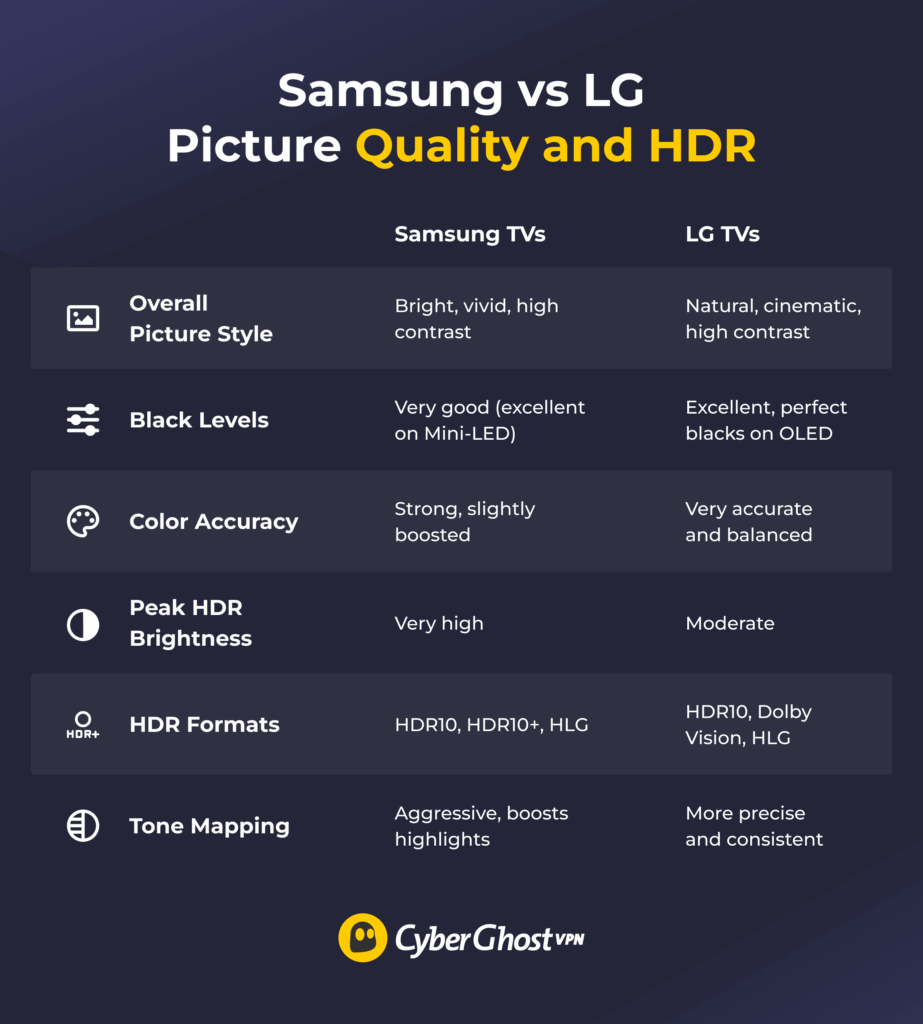
Both Samsung and LG TVs support HDR (high dynamic range), which improves brightness, contrast, and color in compatible content.
Samsung TVs are often tuned to produce bright, vivid images, which can make highlights stand out more, especially in well-lit rooms. LG’s OLED models usually focus more on contrast and color balance, which can make movies and darker scenes look more detailed.
Another difference is HDR format support. Samsung TVs typically support HDR10 and HDR10+, while LG TVs support HDR10 and Dolby Vision. Since different streaming platforms support different formats, this can sometimes affect how HDR content is displayed.
Streaming and Smart TV Experience
Samsung and LG TVs handle streaming very well. You get access to all major streaming apps right out of the box.
Both platforms allow users to install streaming apps, switch between services, and manage settings from a central interface. Samsung’s platform also supports integration with other Samsung devices and smart home features. LG’s webOS platform includes navigation options such as the Magic Remote on compatible models.
Streaming quality depends on factors such as internet speed, network stability, and the capabilities of the TV and streaming service. Display technology and image processing can also influence how streamed content appears. For example, Samsung TVs are often designed to reach higher brightness levels, while LG OLED TVs use self-emissive pixels that allow individual pixels to turn on or off to produce high contrast levels.
Gaming Performance
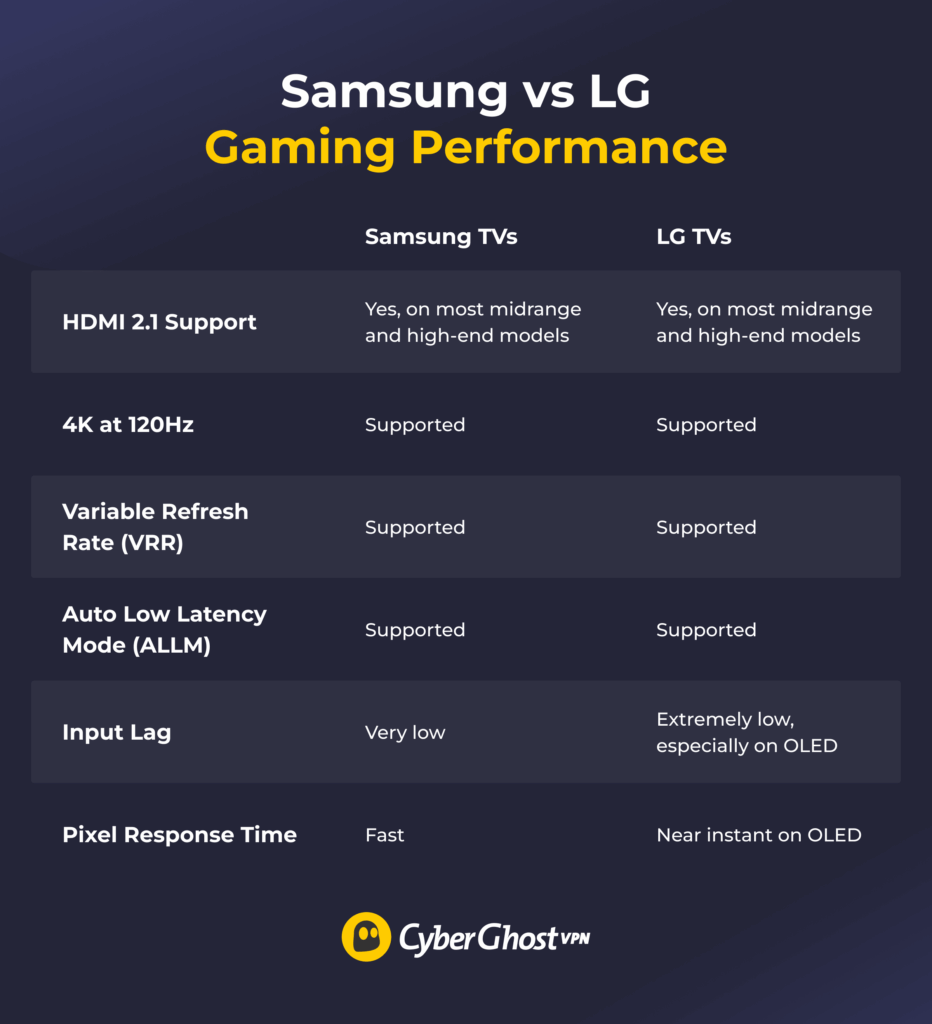
Samsung and LG TVs include several features designed for gaming. Many midrange and high-end models support HDMI 2.1, which enables technologies such as 4K at 120Hz, variable refresh rate (VRR), and auto low-latency mode (ALLM).
Display technology can also influence gaming performance. For example, OLED panels used in many LG TVs allow pixels to turn on and off individually, which affects response time and motion clarity. Samsung TVs often include high brightness levels and anti-reflective screen technologies that may improve visibility in well-lit environments.
Audio Performance
Samsung and LG TVs include built-in speakers designed for everyday viewing. Audio performance can vary depending on the model, speaker configuration, and processing features.
Samsung TVs often include audio processing designed to enhance volume levels and sound presence. Some higher-end models also support additional sound technologies intended to expand the perceived soundstage.
LG TVs commonly focus on clarity and spatial audio processing, particularly on models that support features such as AI Sound or Dolby Atmos. As with most modern TVs, the slim design of many models can limit bass performance when relying on built-in speakers alone.
It’s important to note that audio performance can vary by screen size and model, since larger TVs usually have more space for stronger speakers.
Connectivity & Compatibility
Samsung and LG TVs include a range of connectivity options that allow users to connect external devices such as game consoles, streaming devices, and soundbars. Many Samsung TVs provide multiple HDMI ports, with support for standards such as HDMI 2.1 on select midrange and higher-end models. Samsung TVs are also designed to integrate with other Samsung devices, including soundbars, smartphones, and smart home products.
LG TVs offer similar connectivity options, including multiple HDMI ports and support for features such as eARC and Bluetooth audio. LG TVs are designed to work with a wide range of external devices, including game consoles, sound systems, and smart home platforms.
While both brands offer VPN compatibility, you may need to set up the VPN on a compatible router, as native VPN support is limited on the TVs. For example, you can set up CyberGhost VPN on a VPN router to stream more securely on either LG or Samsung TVs.
Design and Build Quality
Samsung and LG TVs both follow a clean, modern design style with slim bezels and thin profiles. Samsung TVs usually have a more polished look, especially on midrange and high-end models, with metal or metal-finished frames that feel solid.
LG TVs typically use a minimalist design approach with slim bezels and lightweight construction. Many models are designed for flexible placement and support common mounting options such as stand placement or wall mounting.
Both brands produce TVs with durable materials and similar construction standards across their product lines. Differences between models often relate to design preferences, materials used in the frame or stand, and overall product positioning within each brand’s lineup.
Usability & Accessibility
Samsung and LG TVs include features designed to support everyday navigation and accessibility. Both brands provide tools intended to assist a wide range of users when interacting with menus, apps, and settings.
Samsung TVs include accessibility features such as voice guidance, high-contrast menus, and text enlargement options. These tools are available through the system settings and are designed to help you navigate menus and adjust display preferences.
LG TVs also provide accessibility options, including screen readers, zoom tools, and customizable captions. Some models support the Magic Remote, which allows pointer-based navigation when selecting apps, adjusting settings, or browsing menus.
Pricing and Warranty
Pricing and warranty are fairly similar between Samsung and LG, but there are some practical differences. Samsung TVs often start at slightly higher prices, especially in the QLED and Neo QLED ranges, while LG’s lineup spans a wider range, from budget LED models to premium OLED TVs. In general, Samsung tends to charge more for brightness and newer features, while LG’s higher prices are usually tied to OLED picture quality.
Both brands typically include a standard one-year manufacturer’s warranty that covers defects in materials and workmanship. Extended warranties are commonly offered by retailers and can add coverage for longer periods or specific concerns, such as OLED burn-in. Since prices and warranty terms vary by model, size, and region, it’s best to compare the exact TVs you’re considering before buying.
What Buyers Are Saying About Samsung and LG TVs
Feedback from TV owners often highlights the differences between the two display technologies. People who own LG OLED TVs frequently mention the strong contrast and deep black levels, especially when watching movies or TV shows in darker rooms. Samsung owners often point to brightness and color intensity, which can make sports or daytime viewing look more vivid.
When it comes to the Smart TV experience, preferences tend to vary. Some viewers find LG’s webOS interface easier to navigate, while others prefer the simpler layout of Samsung’s Tizen platform.
Across most reviews and discussions, both brands are generally seen as reliable. The choice usually comes down to viewing habits, room lighting, and personal preference rather than major quality differences.
Samsung vs LG TVs: How They Compare
Choosing between Samsung and LG ultimately comes down to how you watch TV and what you value most in daily use. Both brands make great TVs, but they excel in different areas, so the choice is more about which is right for you than which is better.
Samsung is a great choice if you watch TV in bright rooms, enjoy sports or gaming, and want a fast, no-nonsense Smart TV experience. Its TVs are known for high brightness, punchy colors, and strong gaming features, along with a responsive interface that feels quick in everyday use.
LG is the better option if you care more about deep blacks, accurate colors, and a more cinematic viewing experience. Its OLED TVs stand out for contrast and picture consistency, while webOS and its Magic Remote make navigation feel intuitive and user-friendly.
No matter which brand you choose, pairing your TV with the right streaming setup can make a big difference. Using a VPN like CyberGhost with your Smart TV can help you stream more securely, all without complicating your setup.
FAQs
Is Samsung or LG better for picture quality?
Picture quality differences between Samsung and LG TVs mainly come down to the display technology used. LG’s OLED TVs can produce very deep black levels and strong contrast because each pixel generates its own light. Samsung TVs often focus on brightness and color intensity through technologies such as QLED and Mini-LED.
In practice, OLED displays are often preferred for dark-room viewing and cinematic content, while brighter LED-based displays can perform better in well-lit environments.
Which is better for gaming, Samsung or LG TVs?
Both Samsung and LG TVs support many modern gaming features, including HDMI 2.1, 4K at 120 Hz, variable refresh rate (VRR), and Auto Low Latency Mode (ALLM). Differences typically come from panel technology and model specifications. LG’s OLED panels offer extremely fast pixel response times, while Samsung TVs often provide high brightness levels and strong visibility in bright rooms. Overall gaming performance depends more on the specific model than the brand alone.
Which brand is better for bright rooms?
Samsung TVs are often designed to reach higher peak brightness levels, which can make them easier to view in brightly lit rooms. LG TVs can also perform well in bright environments, but OLED panels generally don’t reach the same brightness levels as some LED-based displays.
Which is better, OLED or QLED?
OLED is generally better for contrast and true blacks because each pixel lights itself, giving deeper dark scenes and wider viewing angles. QLED is better for brightness and vibrant colors because it uses a backlight with quantum dots, which helps in bright rooms. This means OLED often excels in picture quality in darker viewing environments, while QLED excels where brightness and punchy color are more important.
Which TV brand lasts longer, Samsung or LG?
Neither Samsung nor LG TVs have a clearly proven longer lifespan overall, because longevity depends more on model quality, usage patterns, and panel type than the brand name itself. With normal use, both brands can last many years.
Is Samsung or LG better for streaming services?
Both Samsung and LG TVs support all major streaming services. Streaming performance is very similar on both, but LG’s webOS is often easier to navigate, while Samsung’s Tizen offers a more structured layout.
Can I use a VPN on Samsung or LG Smart TVs?
Yes, you can use a VPN on Samsung or LG Smart TVs, but you can’t install VPN apps directly on them. The easiest way to use a VPN on your Smart TV is to install it on a compatible router. Doing so automatically connects all gadgets on your network to the same VPN server, boosting your data privacy across all of them.

Leave a comment