
When your business network starts to feel slow, unreliable, or expensive to maintain, the problem typically lies in how your sites are connected. Choosing between MPLS and VPN tunnels can affect day-to-day things you actually care about, like call quality, app performance, security, and how difficult it is to add new locations.
Here’s the core difference. MPLS uses your provider’s network, while a VPN tunnel protects your traffic with encryption as it crosses the public internet. MPLS is often chosen for predictable site-to-site performance, while VPN tunnels are usually quicker to roll out and easier to scale, especially for remote or hybrid teams.
There’s no one “best” option. If you need steady, consistent routing between fixed sites, MPLS is usually the better match. If you need flexibility and lower costs as your network grows, a VPN tunnel is often the smarter starting point. This guide breaks down how MPLS and VPN tunnels work, where each one excels, and how to choose the right approach for your network.
MPLS vs VPN: A Quick Comparison
As a rule of thumb, choose MPLS when steady site-to-site performance matters most. Choose a VPN tunnel when you need faster rollout, easier scaling, and lower costs.
Choose MPLS if:
- Several fixed sites share constant traffic all day.
- Calls and other real-time tools can’t afford hiccups.
- You want the provider to manage site-to-site connectivity.
- You’re okay with a longer rollout for steadier performance.
Choose a VPN tunnel if:
- Remote or hybrid access is part of daily work.
- You need to connect new sites or users quickly.
- You want secure access over typical internet connections.
- You want a setup that’s easier to adjust as you grow.
What Is MPLS?
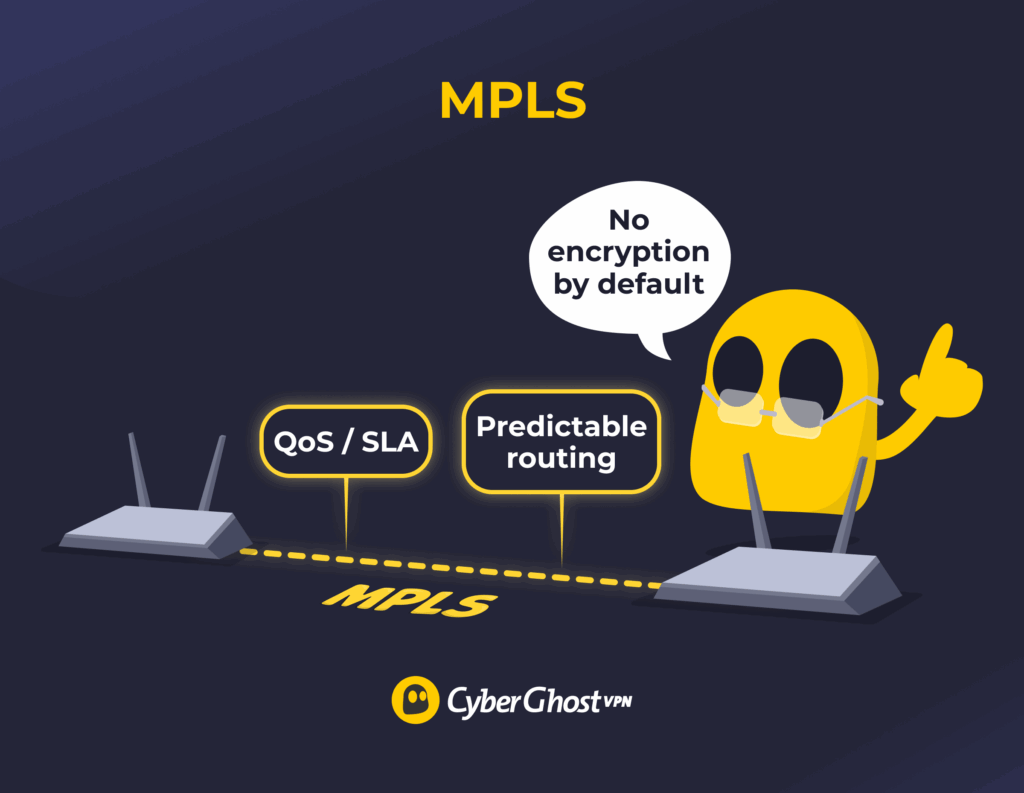
MPLS (Multi-Protocol Label Switching) is a carrier-managed networking service used to connect business locations over a private WAN. In an MPLS network, entry point routers give data packets labels, which enable the provider network to efficiently forward traffic along predefined paths to their destinations.
MPLS traffic usually maintains consistent performance because it stays within the carrier’s infrastructure and doesn’t traverse the public internet. It also allows the provider to control, optimize, and prioritize application traffic through traffic engineering.
One important caveat: MPLS doesn’t encrypt traffic by default. While it’s isolated from the public internet, data visibility depends on the provider unless encryption is added on top.
What Is a VPN?
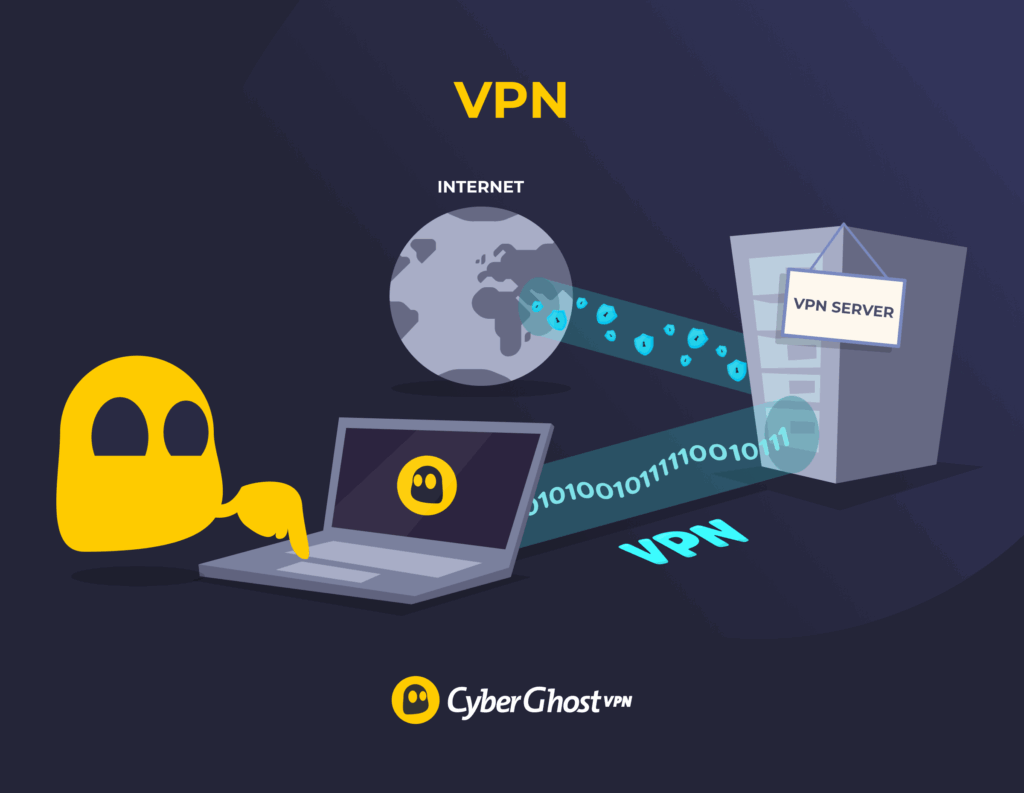
A VPN (virtual private network) provides encrypted tunnels that create private connections on the public internet or a shared network. It encrypts the traffic and securely verifies that only authorized devices and users can communicate over the network.
VPNs can be deployed in two main ways:
- A client VPN connects individual users and devices.
- A site-to-site VPN connects entire offices or networks together.
Unlike MPLS, VPNs rely on existing internet connections. This makes them easier to roll out, more flexible, and better suited for remote and hybrid work. The trade-off is that performance can vary depending on routing, congestion, and distance.
Key Differences Between MPLS and VPNs
MPLS and VPN can connect multiple business locations. They can transport application traffic between geographical sites, and both can be used for hybrid network designs. However, they have many significant differences.
How Traffic Is Sent
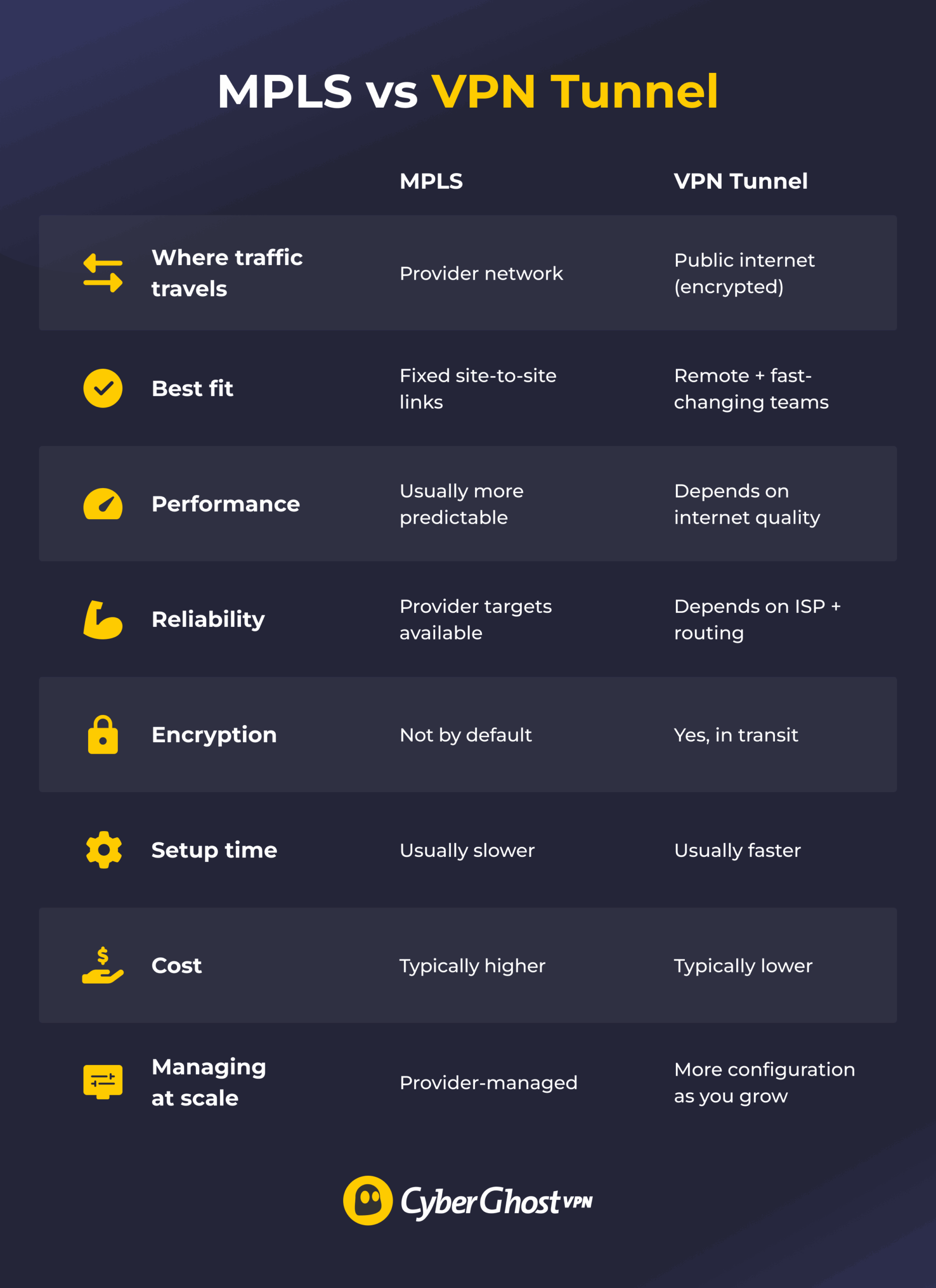
MPLS traffic stays on a private network set up by the provider, while VPN traffic goes over the public internet but keeps data safe using encryption. MPLS routing is more restrictive, while a VPN is more flexible, and changes can be implemented much faster.
Performance
The dedicated carrier network makes MPLS more predictable and consistent, whereas abrupt changes in internet conditions may affect VPN performance. Things like network congestion during busy hours, outages, or VPN server location distance can introduce variability.
MPLS performance is more controllable than a VPN, making it less susceptible to high latency and jitter compared to a VPN.
Security
MPLS traffic is isolated but not encrypted unless you add an encryption overlay (such as IPsec). Without encryption, traffic may be visible to the provider or anyone with circuit access.
VPNs encrypt traffic by default, protecting data even when it crosses public networks. The level of protection depends heavily on the provider you choose. Some services use weak encryption and may record your data and sell it to marketers and other third parties.
CyberGhost VPN is a secure service that uses AES 256-bit encryption to safeguard data in transit. It’s also backed by a no-logs policy, so we don’t track what you do online.
Cost
MPLS private WAN circuits are often more expensive than standard internet links used for VPN connections. The carrier providers also charge premium rates for SLAs, QoS options, and managed services, which can raise monthly costs.
A VPN is more cost-effective because it can use regular broadband internet, fiber, LTE/5G, or cable connections. Other costs may come in the form of software subscriptions and tunnel management for site-to-site VPNs, but expenses are still relatively lower compared to MPLS provisioning.
Scalability
VPN tunnels are easier to set up and expand than MPLS. You can add remote users by just installing client software and creating new credentials. Adding new branch sites may involve configuring site gateways and tunnels, but it gets harder to manage them as the network grows.
MPLS is slower to implement but simpler to run once it’s in place. It requires upfront planning with the provider, so it may take quite a long time to add new branch offices because circuits must be provisioned and turned up.
Which Is Better for Your Business: MPLS or a VPN?
Choose MPLS When Your Sites Depend on Smooth Performance
MPLS makes the most sense when your offices share constant, time-sensitive traffic and you can’t risk busy-hour slowdowns. This is common when multiple sites rely on central systems and real-time tools throughout the day.
- Example: Branch offices depend on a central ERP or POS system.
- Example: Call-heavy teams need a clear voice and stable video between sites.
- Example: You’re consolidating traffic through a main office or data center.
Choose a VPN When You Need to Expand Fast Without New Circuits
A VPN tunnel is usually the better fit when you want to connect locations quickly using the internet links you already have. It’s a practical option when the network changes often and you need to bring new sites online without long lead times.
- Example: You’re opening pop-up locations or short-term offices.
- Example: You need to connect partners or contractors for specific projects.
- Example: Your “network map” changes regularly and needs flexibility.
Choose a VPN for Remote Work and Cloud-First Setups
VPN tunnels are often the simplest way to secure access when your users are outside the office and your apps live in the cloud. This is especially useful when most work happens in SaaS tools and employees sign in from many networks.
- Example: Teams work from home, hotels, or shared Wi-Fi every week.
- Example: Most tools are browser-based (SaaS), not hosted in one office.
- Example: You regularly onboard staff and need access control that’s easy to update.
Can You Use MPLS and VPN Together?
Yes, many businesses use both MPLS and VPN on the same network to solve different needs. However, running multiple transports simultaneously can also negatively impact network performance due to overheads and other complications.
On a hybrid network, you can:
- Connect office branches on MPLS to get reliable performance for critical applications and business software.
- Use a secure VPN for remote and mobile staff connecting outside the office network.
- Split traffic when it helps, keeping time- and data-sensitive workloads on MPLS while sending less sensitive or non-critical traffic over a VPN for cost flexibility.
Similar Alternatives: MPLS-VPN and SD-WAN
MPLS-VPN is a provider-managed WAN service that connects customer sites over the provider’s network. Customer traffic is isolated on the provider network but isn’t encrypted by default. Businesses use MPLS-VPN when they want predictable performance without managing the network themselves.
Software-Defined Wide Area Network (SD-WAN) is a flexible alternative that lets businesses use different connection types such as MPLS, broadband, or LTE/5G. It offers software-based control from a central platform, where network administrators can set routing policies that apply to some or all sites in the managed networks.
SD-WAN chooses the best connection based on network conditions to help avoid congestion. It can be paired with security features like encryption, firewalls, and zero-trust access. While it works reliably with most connection types, the performance will depend on the link quality. Businesses that prefer a hybrid network with MPLS and VPN qualities can choose SD-WAN because it’s adaptable and relatively less expensive.
MPLS vs VPN Tunnel: Choosing What Fits Your Network
MPLS is usually the better fit when you need steady site-to-site performance between fixed locations, and you’re willing to pay more for a provider-managed service. A VPN tunnel is often the better starting point when you want encrypted traffic over the public internet, faster rollout, and easier scaling as your team grows or goes remote.
If you’re leaning toward a VPN tunnel, CyberGhost VPN gives you strong encryption and modern protocols with easy-to-use apps across major devices. It’s also backed by a 45-day money-back guarantee, so you can try it without long-term risk.
FAQs
What is the main difference between MPLS and VPN?
MPLS is a carrier-managed private WAN service, while a VPN typically provides encrypted tunnels over public internet links. MPLS transports traffic on private circuits that don’t use encryption by default, but it offers more control over traffic behavior compared to VPN tunnels. A VPN is easier and faster to deploy on a network since it doesn’t require a dedicated provider infrastructure like MPLS.
Is MPLS faster and more reliable than a VPN?
It depends on the use case and implementation. MPLS performance is often more predictable because providers can create paths and prioritize important traffic, which can help deliver more predictable latency and minimal jitter. Latency, congestion, and routing changes on the public internet can still affect site-to-site VPN tunnels.
Do VPNs provide better security than MPLS?
VPNs use cryptographic protocols for data encryption on network traffic. VPNs encrypt traffic in transit by default, while MPLS doesn’t encrypt traffic by default. Because MPLS traffic isn’t encrypted by default, it could be readable if someone gains access to the circuit/provider path, unless you add an encryption overlay (for example, IPsec).
Is an IPsec VPN tunnel better than MPLS?
IPsec VPN provides more secure routing on broadband-based networks with encryption in transit over broadband links. MPLS offers better connectivity for applications and systems that are sensitive to speed and latency fluctuations. It’s more stable for wider-area networks, as it runs on private-carrier circuits that are often less exposed to public-internet congestion and routing changes. Whether to choose IPsec VPN or MPLS should be decided based on the organization’s unique needs.
Why is MPLS usually more expensive than VPN solutions?
MPLS is usually more expensive because it relies on carrier-managed access circuits and often includes SLAs, QoS options, carrier provisioning (turn-up), and managed service. VPN setups can use standard broadband internet links, so they typically avoid the same circuit and provisioning costs.
Can businesses use MPLS and VPN together in a hybrid network?
Yes, enterprises with hybrid networks combine MPLS and VPN routing for advantages such as encryption or safe remote work access. Such a setup may, however, impact connection performance. Technologies like SD-WAN can help manage traffic across MPLS and internet/VPN links using centralized policies, and it may include encryption depending on the design.
Are MPLS connections always private?
Although MPLS uses carrier-managed circuits, the provider can still see and read data being sent over the network because it’s not encrypted. It’s private in the sense that the network is logically separated from the public internet and other customers. Forwarding across the provider core is based on labels rather than per-hop IP lookups.
Is MPLS considered outdated?
MPLS is still widely used today, especially where predictable performance and SLAs matter. Many organizations are adding SD-WAN and internet-based links to improve flexibility and reduce costs, and some partially replace MPLS for certain sites while keeping it for critical traffic.

Leave a comment