
Traveling during the 2026 World Cup means relying on your smartphone for almost everything, whether that’s booking travel, accessing stadiums with digital tickets, or using public Wi-Fi on the move. Big events like the World Cup also attract scammers looking to steal money, accounts, or personal data. The risks don’t stop at the stadium gates; they often follow fans online, including fake tickets, phishing messages, and unsafe public networks. To stay safe from cyber risks, you need to know what to look out for before traveling to your next game.
This post covers how the World Cup increases cyber threats, what scams look like, and how to protect yourself and your devices. Let’s kick off.
Why the World Cup Increases Cyber Risks
Big sporting events like the World Cup attract cybercriminals. Millions of fans rush to buy tickets, book travel, and follow tournament updates, often under pressure and time limits. That urgency makes it easier for scammers to catch people off guard. For example, you could accidentally click a sketchy link or send money to book last-minute accommodation.
The numbers don’t lie. Cybercriminals register thousands of fake domains for every major tournament. Ahead of 2026, over 4,300 suspicious World Cup-related websites have already popped up1. Scammers use these sites to lure fans into paying money or disclosing personal information.
You might come across fake ticket giveaways, suspicious emails, or shady resale links promising last-minute access. Some scams even spread malware through fake streaming sites. If something feels rushed, exclusive, or too good to be true, double-check it before you click. Taking a moment to verify a link or offer can save you from losing money, accounts, or personal data later.
Common World Cup Scams
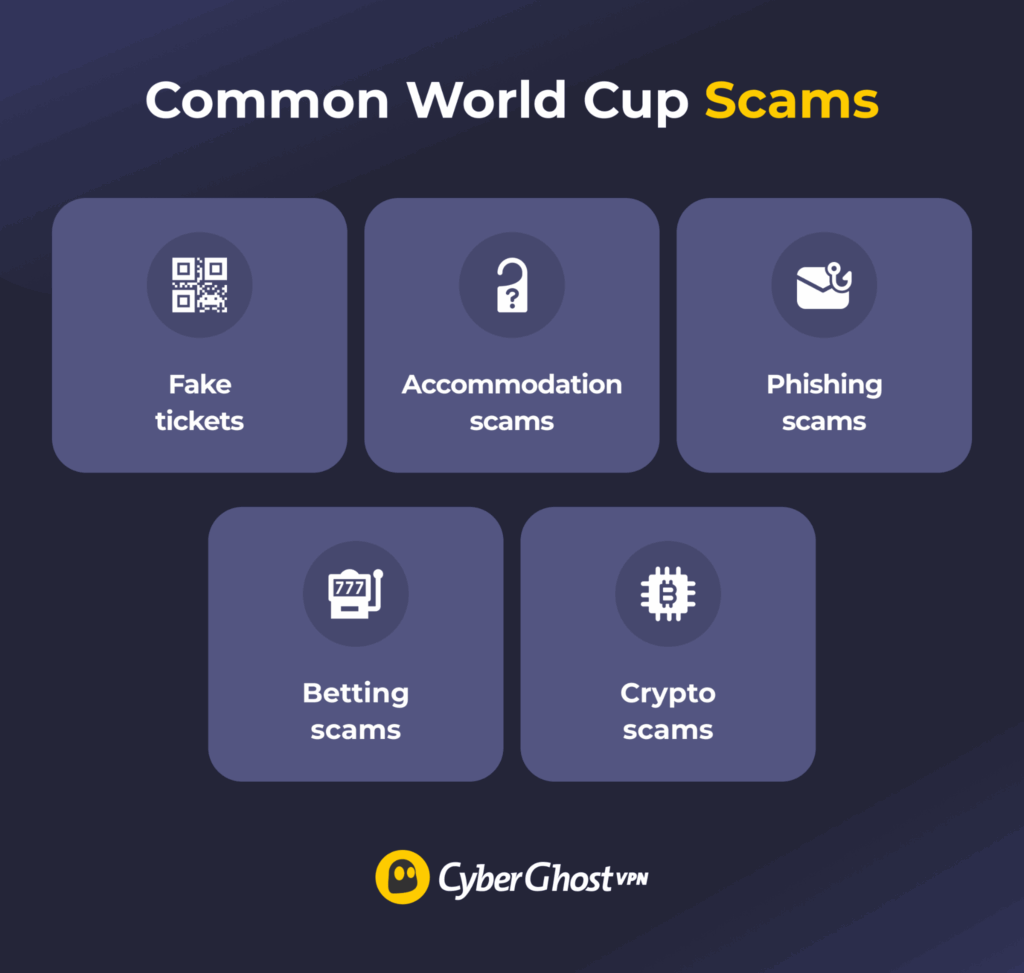
Many scams appear as attractive deals, harmless match updates, or opportunities you wouldn’t want to miss. It’s important to stay alert and know how to identify when something’s not right. Here are some of the most common World Cup scams to watch out for.
1. Fake Tickets and “Last Minute” Deals
Fake tickets are the most common World Cup scam2. Scammers flood social media, messaging apps, and unofficial sites with unbelievably cheap or “last-minute” tickets. When scammed, victims arrive at the stadium only to find their ticket is invalid. Always buy directly from the official platform or authorized resale partners. If the deal looks too good to be true, it almost certainly is.
2. Phishing Scams with Fake Updates
Phishing attacks spike around the tournament3. You could receive emails or texts pretending to be from the official World Cup website, your ticketing provider, or event organizers, warning about “ticket problems” or “urgent updates.”
Messages containing links can steal your data or install malware on your mobile device if you click on them. As a general rule, it’s best to avoid clicking links in unsolicited messages, especially when they’re using urgent language. Phishing messages often rely on urgency to prompt people to click before they stop to think.
Other signs of phishing include:
- Generic greetings
- Poor grammar and spelling
- Requests for personal information
- Offers that sound too good to be true
If you’re unsure, compare the sender’s address or phone number with the official contact details listed on the company’s website. If something seems off or the addresses don’t match, avoid clicking on the link until you verify the sender.
3. Accommodation Scams
When demand for accommodation surges, bad actors can exploit it. They use fake listings to steal from unsuspecting fans seeking a place to stay during a match. Scammers may copy real listings, create fake properties, or even hijack legitimate accounts on booking platforms. You pay, thinking your accommodation is sorted, but when you show up, the place doesn’t exist. By the time you realize, the listing is deleted.
4. Betting and Gambling Scams
World Cup fever can trigger a wave of betting scams. Scammers often push “guaranteed win” tips on simple bets like who will win a match or how many goals will be scored. They create fake apps and copied versions of trusted sites like DraftKings or FanDuel. These scams often promise huge bonuses or guaranteed wins, but once payment details are entered, victims can lose money or expose sensitive financial information.
Only use licensed betting apps available in your country. Skip “sure win” tips from social media or influencers — they’re almost always scams.
5. World Cup Crypto Scams
Scammers can take advantage of World Cup excitement by creating fake “official” tokens, NFTs, and investment schemes. They may promise huge profits if you invest in their “World Cup coin” or join special airdrops. Many use the official logos, mascots, or stadium images to look legitimate.
These crypto scams typically ask you to send cryptocurrency to a wallet address, connect your digital wallet to a fake website, or enter a “guaranteed giveaway.” Be extremely cautious of any World Cup-related crypto investment or profit scheme.
Cybersecurity Tips for Fans While Traveling
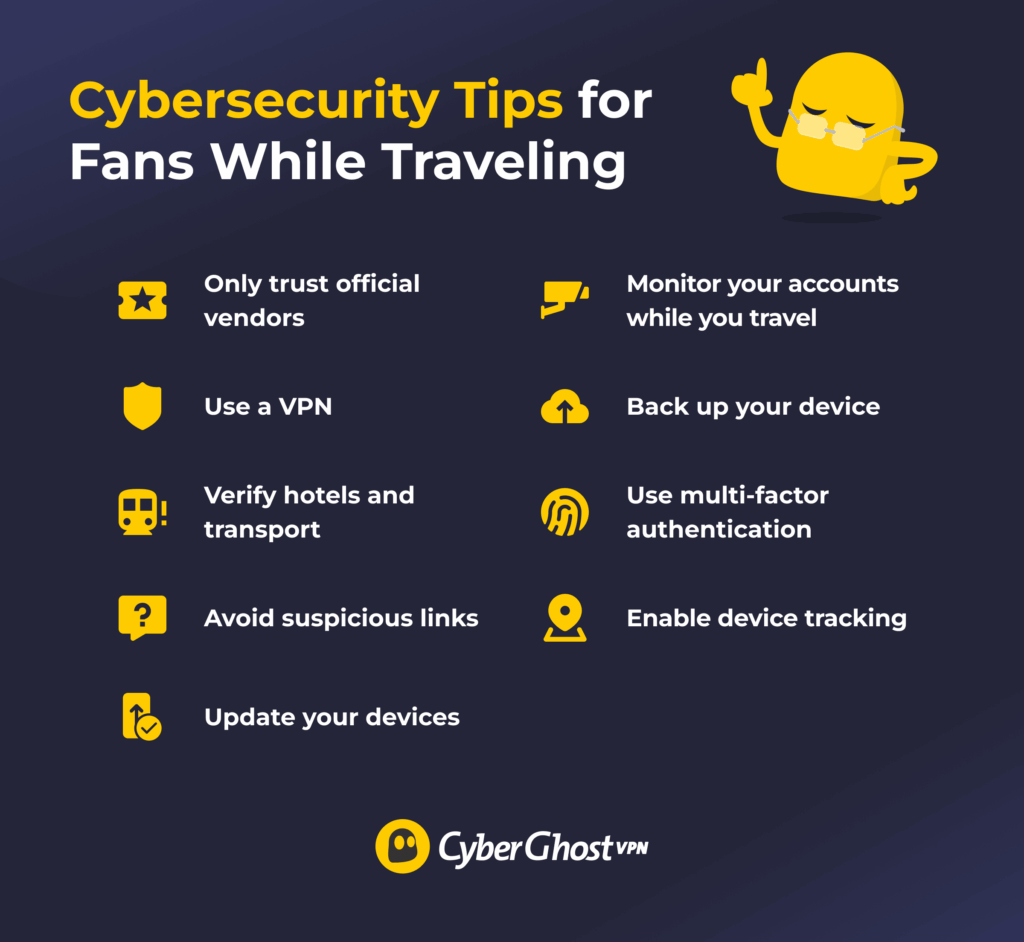
Protecting yourself against World Cup scams involves sticking with trusted vendors and getting ahead of potential trouble. Here’s our list of tips to help you avoid falling victim to scams during the tournament season.
1. Only Buy from Official Vendors
Phishing and scamming websites often mimic official ones almost perfectly, especially as demand skyrockets closer to kickoff. Using official channels helps keep your money safe and ensures your tickets actually work at the gate.
Your tickets, accommodations, and merchandise are prime targets for scammers. Stick strictly to the World Cup’s official website or verified resale platforms for tickets. When booking accommodation, use popular platforms. As a general rule, it’s best to avoid deals shared on social media, random links in emails, or suspiciously cheap offers on third-party sites.
2. Use a VPN on Public Wi-Fi
Stadiums, fan zones, airports, trains, and hotel lobbies all offer convenient free Wi-Fi — and they don’t always come with appropriate security. Using public Wi-Fi can open you up to Man-in-the-Middle (MitM) attacks, packet sniffing, and evil twin attacks.
A VPN encrypts your connection, making it much harder for someone to snoop on your traffic. It also routes your traffic through secure servers, masking your real IP address in the process. This makes it harder for websites and threat actors to track your online activity.
Enable a VPN before you connect to any public network. Don’t skip it just because you’re in a “trusted” venue; large crowds often mean more opportunities for bad actors.
CyberGhost VPN uses strong encryption to secure your connection and scramble your data while it’s in transit. Even if someone manages to intercept your connection, your data will be indecipherable without the decryption key. This helps prevent people on the same network from seeing your browsing activity or intercepting sensitive data.
3. Be Cautious When Clicking Links
An urgent text about “your ticket update” or a DM promising a better seat? Don’t click links in unsolicited messages. Instead, go directly to the official app or website by typing the address yourself. Poor grammar, pressure tactics (“act now or lose your tickets”), and generic greetings are classic red flags. This one habit blocks the most common attacks before they start.
4. Check Reviews for Hotels and Transport
Fake booking sites and cloned listings explode during major events, but even legitimate platforms aren’t immune. That’s why it’s essential to always read reviews carefully — watch for patterns of sudden complaints, repeated issues, or generic-sounding praise. Verify the property’s real contact info, cross-check photos, and confirm details directly with the host or hotel when possible.
For transport between host cities, stick to official shuttles, reputable ride apps, or known carriers. Pay with credit cards for easy chargebacks if something goes wrong. A few extra minutes spent verifying can save you from arriving at a non-existent “hotel” or handing your money to a scam driver.
5. Update Your Devices Before You Travel
Outdated software is like leaving the front door wide open. Hackers often actively scan for devices running known vulnerabilities that haven’t been patched. Once they find one, they can sneak in through a malicious link, a compromised Wi-Fi network, or even a fake app update and steal passwords, tickets, photos, or banking details.
Large international events like the World Cup create more opportunities for attackers to target outdated devices and rushed travelers. Patching everything in advance closes those easy entry points that phishing or public Wi-Fi could otherwise use. It takes just a few minutes but gives you serious peace of mind while moving between three different countries.
6. Monitor Your Accounts While You Travel
Set up real-time alerts for banking, email, and ticketing apps so you catch anything suspicious immediately. Check statements regularly during the trip. Small test charges often signal bigger problems ahead.
Notify your bank about travel dates to avoid legitimate transactions being flagged. If something looks off, freeze cards or change passwords right away. Quick action limits damage if a compromise slips through despite your best efforts.
7. Use Multi-Factor Authentication (MFA)
Strong passwords alone may not be enough. MFA adds an extra layer of protection that goes beyond login details. Enable MFA on every important account: email, banking, tickets, and travel bookings. Even if a phisher steals your password, they’ll still need that second factor to get in.
This extra step can significantly reduce the risk of account takeovers. It’s especially important during the World Cup, where losing your phone in a crowded stadium or fan zone could otherwise give someone easy access to your digital life. Set it up now, before the tournament excitement takes over.
8. Back Up Your Device
In the chaos of World Cup travel, it’s surprisingly easy to lose your phone in a packed stadium, crowded train, or busy fan zone. Losing a phone while traveling can mean losing access to photos, digital tickets, travel documents, and contacts all at once.
A solid backup turns what could be a nightmare into a minor inconvenience. The golden rule most experts recommend is the 3-2-1 approach4: keep three copies of your data, on two different types of storage, with one copy stored offsite.
Practical options include cloud services like iCloud, Google Drive, or OneDrive for automatic syncing or manually copying everything to an external hard drive or USB before you leave. It also helps to test the restore process once everything is backed up. This confirms your files can actually be restored if something goes wrong.
9. Enable Device Tracking
During major events and travel days, phones are easy to misplace or steal. That’s where the built-in tracking features become incredibly useful. Both iOS and Android offer powerful location tools that can help you locate, lock, or even erase your device remotely if it goes missing in a taxi, hotel, or packed crowd. For best results, combine it with a strong passcode and biometric lock (Face ID or fingerprint).
Staying Safe While You Travel to Matches
The 2026 World Cup will bring massive crowds, packed stadiums, and nonstop travel across host cities. It also creates opportunities for scammers who know fans are rushing to buy tickets, book accommodation, and stay connected on the move.
A few simple habits can make a big difference. Stick to official vendors, avoid suspicious links, keep your devices updated, and be careful on public Wi-Fi networks. Small precautions like enabling MFA or backing up your phone before traveling can save you a lot of stress if something goes wrong during the tournament.
For extra protection while traveling during the World Cup, CyberGhost VPN helps secure your connection on public Wi-Fi by encrypting your traffic and masking your IP address. Whether you’re checking banking apps at the airport, logging into ticket platforms at a stadium, or browsing on hotel Wi-Fi, it adds another layer of privacy while you stay connected.
FAQ
Do I need a VPN for World Cup travel to stay safe online?
Yes. A virtual private network (VPN) helps protect your internet traffic on public Wi-Fi in crowded places, transit hubs, and stadium areas. It encrypts your connection and masks your real IP address, helping defend against Man-in-the-Middle attacks and other security threats.
Is it safe to use public Wi-Fi during World Cup events abroad?
Using public Wi-Fi in busy areas carries even higher risks than usual. It’s always a good idea to use a VPN or switch to your mobile hotspot instead. Avoid accessing banking apps or sharing sensitive information without extra protection.
How can I protect my data while traveling for the World Cup?
Staying safe during World Cup travel starts with keeping your operating system updated, using strong, complex passwords, enabling multi-factor authentication, turning on device encryption, and backing up your personal data. It can also help to notify your bank about your travel dates and be cautious with hotel reservations and international payment systems.
What are the most common cybersecurity risks during World Cup travel?
The most common risks include fake ticket websites, phishing messages pretending to share match updates, accommodation and transport scams, and fake betting or crypto platforms tied to the tournament. Fans can also run into malware spread through suspicious apps, unsafe links, or unsecured public Wi-Fi networks while traveling.
References
- 4,300 Fake FIFA Domains and Counting: The Cybercrime Behind World Cup 2026 — cisometric.com
- These Scams Could Ruin Your Trip to the 2026 FIFA World Cup — globalrescue.com
- Kaspersky spots rising scam activity around the 2026 World Cup, from bogus tickets to $500,000 “grant” emails — Kaspersky
- Master the 3-2-1-1-0 Golden Backup Rule with Autonomous AI Database — blogs.oracle.com

Leave a comment