
Identity theft can take many forms, from someone opening a credit account in your name to using your personal details to access benefits or impersonate you online. Some types are easy to spot. Others can go unnoticed until you’re denied credit, receive a bill you don’t recognize, or discover an account you never opened.
With so much of our personal information shared and stored online, avoiding every possible exposure isn’t realistic. But you can take steps to reduce your risk and recognize the warning signs sooner. This guide covers 13 common types of identity theft, how each one works, what to watch for, and what to do if someone’s stolen your identity.
What Is Identity Theft and Why Is It Dangerous?
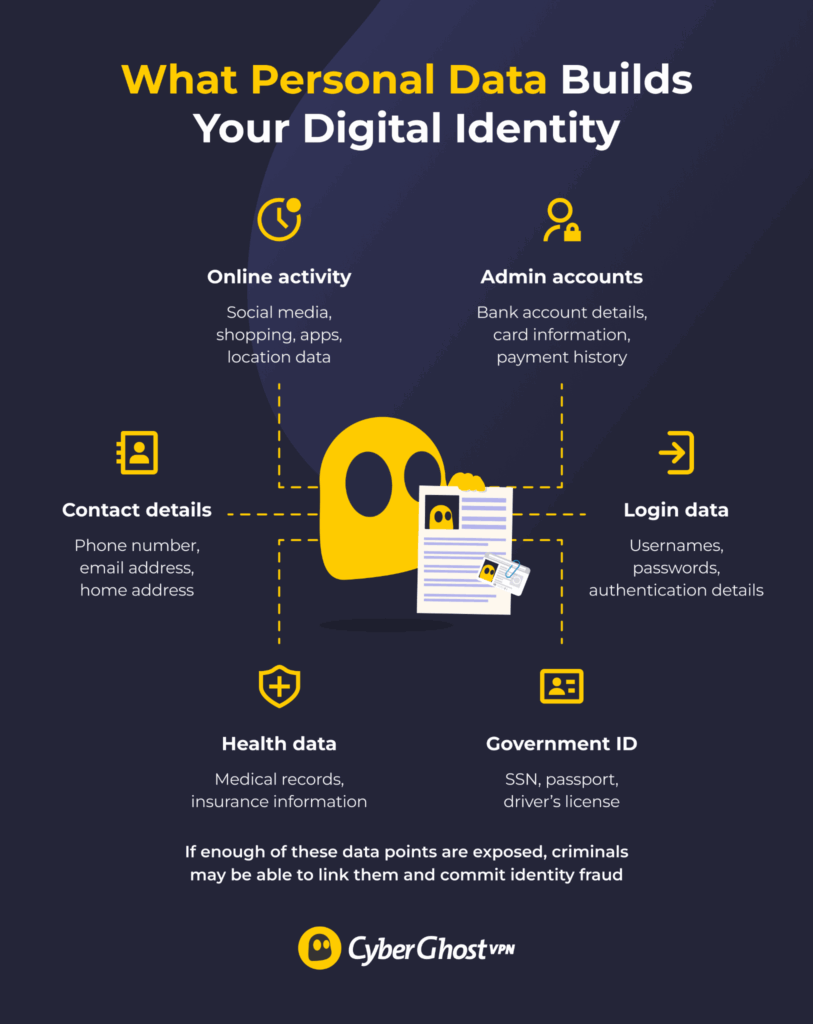
Identity theft occurs when someone accesses your personal information without permission. That might include sensitive details like your login credentials, contact details, home address, government-issued ID, or bank account details. When criminals use those details to impersonate you, access accounts, or obtain money or services in your name, it becomes identity fraud.
The consequences can go well beyond money stolen from an account. Someone using your identity might open credit accounts, make purchases, claim benefits, or carry out other activities that leave you dealing with unfamiliar bills, damaged credit, or records you need to correct. Sorting everything out can take time, even after you’ve stopped the immediate fraud.
National and global regulators, such as the Federal Trade Commission (FTC), Financial Action Task Force, and European Banking Authority see identity theft as a major risk. Beyond defrauding individuals, identity theft often enables large-scale fraud, money laundering, and financial manipulation.
The scale of the problem is significant. A 2025 study by Javelin Strategy & Research, cosponsored by AARP, estimated that US adults lost $27 billion to traditional identity fraud in 2024, with another $20 billion lost to scams.1
Identity theft is also becoming a greater threat as the amount and variety of data collected increase. As reported by CNBC, cybersecurity researchers estimate that data brokers collect an average of 1,000 data points on each individual with an online presence.2
Your personal information can be exposed in several ways, including data breaches, phishing attempts, and information shared across apps and websites. You can’t control every organization that holds your data, but understanding how identity theft happens can help you recognize suspicious activity and take steps to protect yourself.
What Types of Identity Theft Are There?
Identity theft can take many forms, and the categories don’t always fit neatly together. The same stolen information can enable several types of identity fraud. For example, someone who secures your Social Security number might use it to apply for credit, file a fraudulent tax return, or create a synthetic identity.
Financial Identity Theft
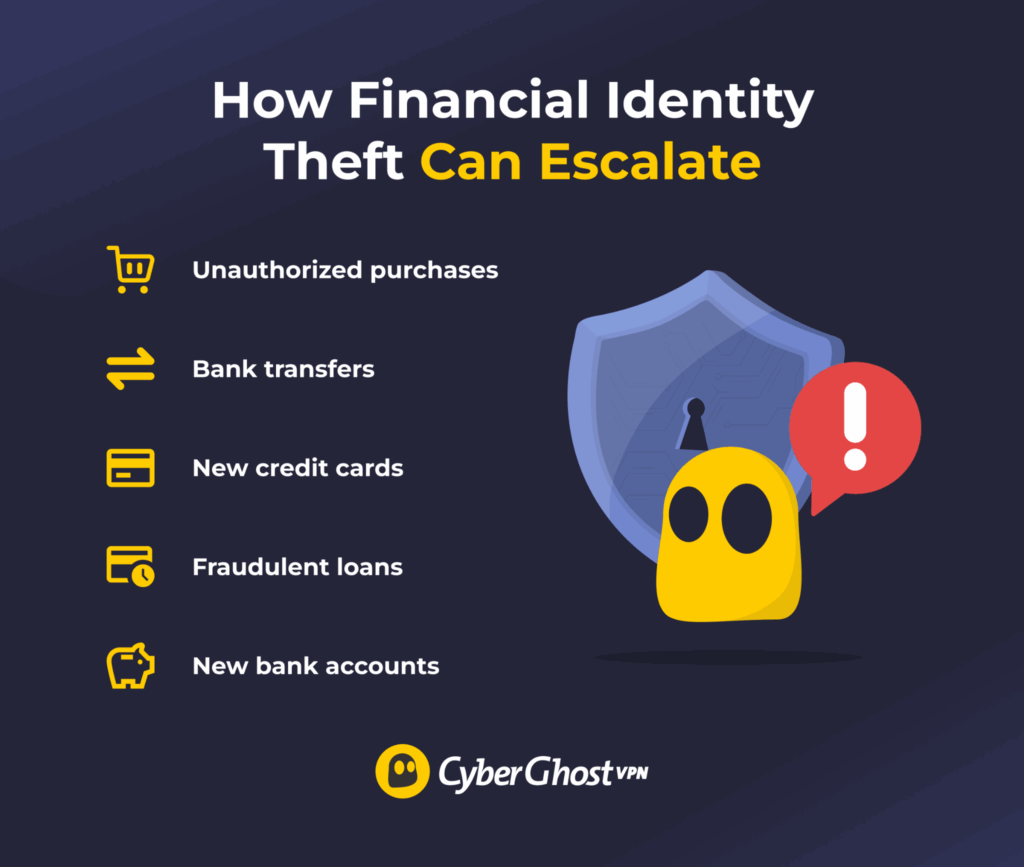
Financial identity theft happens when someone uses your financial information to access money or receive credit in your name. They might steal your credit card number to make purchases, use your bank account details for unauthorized transfers, or open new accounts and apply for loans using your identity.
The consequences can extend beyond the money taken from you. Fraudulent accounts and unpaid debt may affect your credit history, while sorting out transactions you didn’t authorize is often time consuming.
Criminals may get this information through card skimming, stolen financial statements, phishing, or compromised online accounts. The best way to catch this early is to keep an eye on your transaction history and set up payment alerts. Fraudsters often start with small transactions that go unnoticed before escalating.
Tax Identity Theft
Imagine finally filing your tax return expecting a refund, only to discover someone has already filed one using your identity. Cybercriminals can use your personal information to submit fraudulent returns to claim a refund in your name or transfer their tax debt to you.
In the US, scammers may use a stolen Individual Taxpayer Identification Number (ITIN) or Social Security Number (SSN), often alongside other personal details. They can get this information through stolen tax documents, data breaches, compromised accounts, or phishing messages that impersonate the Internal Revenue Service (IRS) or your local tax authority.
You may first discover the fraud when the tax authority rejects your legitimate return or you receive an unexpected notice. Similar schemes can occur in other countries, although the identification numbers and reporting processes are often different.
Medical Identity Theft
Medical identity theft happens when someone uses your identity or health insurance to get treatment, medication, medical equipment, or other healthcare benefits. You might receive bills for care you never received, notice unfamiliar claims on your insurance statement, or discover that someone used benefits without your knowledge. Fraudulent information added to your medical record can be particularly concerning if it affects the care you receive later.
Someone may acquire your information through a stolen insurance card, exposed records, or access to your personal documents. Review medical bills, insurance claims, and records for unfamiliar activity, and report discrepancies to your healthcare provider or insurer.
Employment Identity Theft
Scammers can use your information and identity to secure employment or pass background checks. While this may seem harmless at first, it could damage your professional reputation and hurt your own chances of employment in the future. It may also result in organizations hiring unqualified individuals over legitimate job seekers.
Another danger is that criminals might file for unemployment benefits in your name. You might discover it through an unexpected government notice, a tax document from an unfamiliar employer, or a rejected benefits application.
Online services like ID.me and E-Verify help enrolled employers and government agencies to verify the identity of job applicants, which can help prevent fraud. When job hunting, confirm you’re communicating with official company email accounts and avoid sending important information to unverified employers.
Child Identity Theft
Child identity theft can go unnoticed for years because children often have little or no credit history to monitor. Someone may use a child’s personal information to open accounts, apply for credit, or commit other types of identity fraud.
If you fall victim to this kind of identity fraud, you may have difficulty applying for credit, student loans, housing, or employment as a young adult. Depending on the fraud’s length and extent, it could take significant time and effort to restore your credit standing.
Parents and guardians should keep children’s identity documents secure and take unexpected financial correspondence addressed to a child seriously.
Criminal Identity Theft
Criminal identity theft occurs when criminals use your information to file false police reports or commit crimes under your name, making it look like you’re the one responsible. For example, a criminal might present a copy of your driver’s license if pulled over for a traffic violation. The resulting records could incorrectly connect you to a fine, charge, or other legal issue.
An unfamiliar citation, court notice, or criminal record linked to your name needs prompt attention. Correcting the record may involve contacting the relevant law enforcement agency, court, or legal adviser.
Synthetic Identity Theft
Synthetic identity theft happens when criminals combine fake information with real data from one or more victims to create a fictitious identity. For example, they may pair your SSN with their own personal details and someone else’s proof of residence and mailing address. Criminals often use synthetic identities to fraudulently open bank accounts, apply for credit cards, and rent properties or lease vehicles.
Because the identities don’t belong to them, criminals can rack up debts or max out accounts and then disappear. While the organization may seem like the immediate victim, the fraud can also damage the finances, credit, or records of the people whose real information they used.
Synthetic identity theft is often difficult to detect and resolve because it combines elements of truth with false information. You may not have enough evidence to immediately recognize what’s happening, and legitimate-looking details can mislead early investigations.
SSN Theft
A stolen SSN can give criminals a valuable piece of the information they need to impersonate someone in the US. An SSN alone doesn’t give someone access to your accounts, but combined with other details, it may help them apply for credit, commit tax fraud, or attempt other forms of identity fraud.
In other countries, citizens’ national ID numbers serve a similar purpose, although it’s generally not as useful on its own. Depending on your country’s system, a criminal usually needs your government ID number or SSN to carry out most types of identity fraud.
If they can combine it with other information about you, they can use it to open bank accounts, apply for lines of credit, claim your government benefits, and more. Criminals often obtain SSNs through data breaches or by copying them from poorly secured physical documents.
Digital Identity Theft
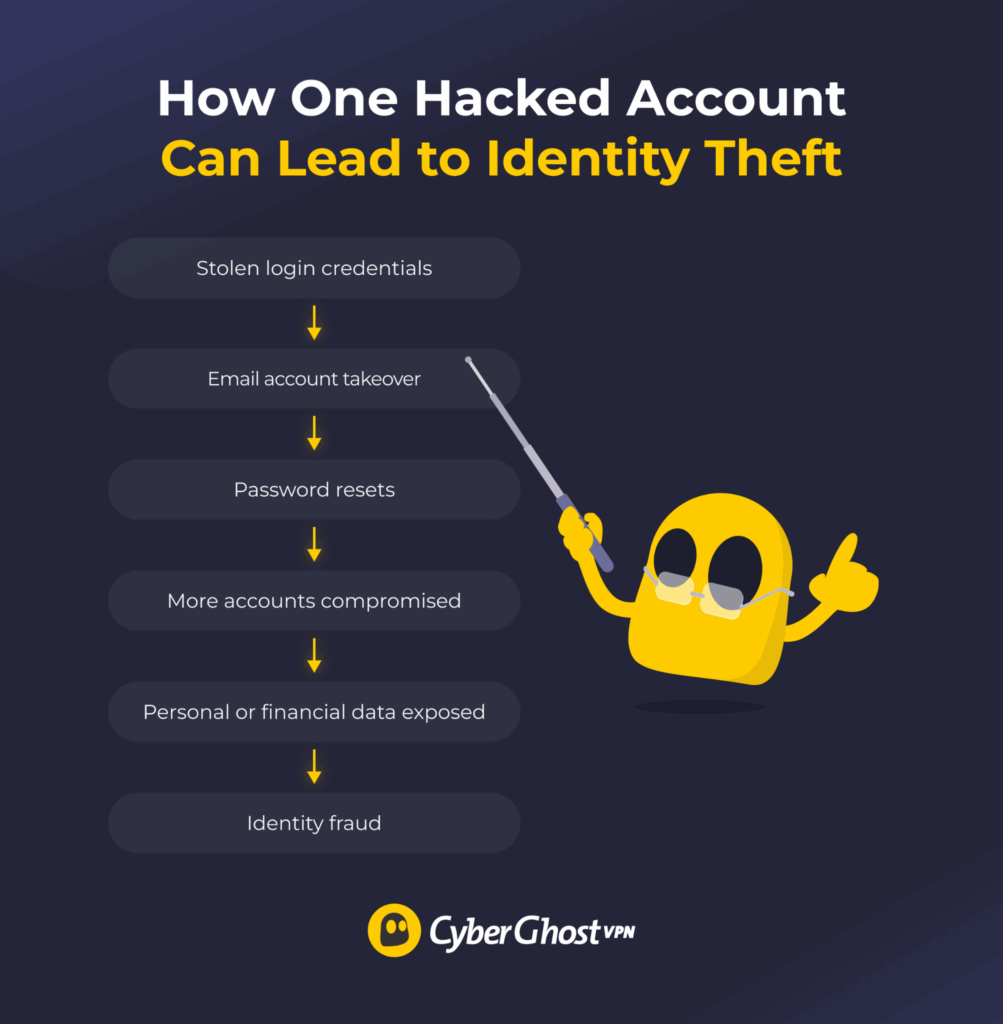
Digital identity theft occurs when someone uses your credentials or personal information to impersonate you or take control of your accounts. Criminals may collect login details through phishing, data breaches, or malware, then try to access your email, social media, or other online services. Once inside an account, they might change the password, contact people while posing as you, or look for information they can use to compromise other accounts.
Even accounts secured with two-factor authentication (2FA) aren’t foolproof as attackers may bypass it through social engineering, SIM swapping, or other attacks. Unexpected login alerts, password-reset messages, or changes to account settings are signs worth investigating.
Driver’s License and Passport Identity Theft
Someone who steals your driver’s license, passport, or another government-issued ID may use its details to impersonate you or support other fraudulent applications. A stolen document can also be combined with information from other sources to make an impersonation attempt more convincing. The exact risks depend on the document, the checks used by the organization involved, and the country where the fraud occurs.
Report lost or stolen identity documents through the appropriate official channels. If you receive notices about applications or activity you don’t recognize, don’t assume the missing document is the only information that may have been exposed.
Mail Identity Theft
Mail identity theft can happen either when criminals steal your physical mail or change your mailing address to their own. In some countries, government agencies, financial institutions, businesses, and utility companies still send sensitive communications by mail, including receipts, checks, and account statements.
For example, criminals can alter and cash your Social Security or benefits checks, redirecting the funds into their own accounts. They can take and activate your credit cards before you even notice. Or they can look through your bills and statements to find information for other attacks against you.
Watch for missing statements, unexpected changes to your mailing address, or financial documents that never arrive. Secure your mailbox where possible, and contact the sender if an important item goes missing.
Mortgage Identity Theft
Property-related identity fraud can involve someone using stolen personal information or forged documents to apply for a mortgage, attempt to borrow against a property, or make fraudulent changes to property records.
These schemes don’t mean that stealing a deed automatically transfers ownership. They generally involve additional deception, forged documentation, or failures in verification processes.
You might notice an unfamiliar mortgage inquiry, unexpected property correspondence, or a change to records you didn’t authorize. If something doesn’t look right, contact your lender or the relevant land or property registry to investigate.
What Are the Warning Signs of Identity Theft?
Identity theft can show up in different ways, and not every unusual notice means someone has stolen your identity. However, unfamiliar activity involving your money, accounts, or personal records deserves a closer look. Watch for:
- Bills from healthcare providers, service providers, or companies you don’t recognize.
- Unfamiliar credit card charges, wire transfers, and account or credit card application notices.
- Calls or letters from collection agencies about debts you didn’t incur.
- Denied credit card, loan, mortgage, or insurance applications despite having a good track record.
- Tax returns in your name that you haven’t submitted.
- Credit checks (hard inquiries) on your credit report for applications you didn’t make.
- Lost access to your online account or finding that your login details have changed.
- Unexpected changes to loans, mortgages, billing details, or automatic payments.
- Password-reset requests, login alerts, or authentication prompts you didn’t request.
A single alert might have an innocent explanation, but don’t ignore it. Check the activity through the organization’s official app or website rather than using links or phone numbers in an unexpected message.
How Does Identity Theft Happen?
Your personal information can be stolen or exposed in more ways than you might expect. Some criminals target individuals, while others use information exposed in large-scale data breaches. Common methods include:
- Hacking into network routers or monitoring unencrypted Wi-Fi connections to intercept data through techniques like packet sniffing.
- Creating phishing emails, text messages, or web pages designed to trick you into handing over sensitive information.
- Developing and spreading malware like keyloggers, ransomware, or other spyware to steal data from your devices.
- Monitoring leak sites to gather or buy data obtained from large-scale data breaches or dumps.
- Using free or paid online public record search tools to find information on specific targets.
- Stealing sensitive documents, devices, or bank cards from your mail, improperly disposed waste, or unattended belongings.
- Spying on users in real time, such as by shoulder surfing while they log into a website or use an ATM.
- Using social engineering tactics to manipulate you into providing sensitive information by pretending to be a customer support or government agent.
These methods can overlap. A scammer might combine details from a data breach with information on your social media profile, then use both to make a phishing message more convincing.
How to Protect Yourself Against Identity Theft
You can’t control every place that stores your information, but a combination of account security, careful information sharing, and regular checks can reduce your risk. Start with the measures that fit your circumstances:
- Consider identity monitoring: Check paid services that monitor various online sources for signs that someone may have exposed your personal information and to alert you to potential risks. Some also find data broker profiles and help request the removal of your personal information or can help scrub some of your data from certain online sources.
- Secure your accounts: Create strong passwords for all your sensitive online accounts and use 2FA or device passkeys to secure logins wherever possible. Change your important passwords at frequent intervals, don’t reuse them across sites, and use a password manager to manage your logins.
- Be aware of phishing: Educate yourself or your staff about the typical signs of phishing attacks. Spoofed communications or emails often contain small inconsistencies or mistakes that give them away as inauthentic. In general, don’t share sensitive account or personal information with representatives over non-official or unusual channels.
- Limit what you share: Think twice about any account information you make public or what you post, especially on social media. Determined identity thieves may be able to gather a significant amount of information by looking at your different online profiles.
- Review privacy settings: Check what information your apps and online services collect or share and adjust their privacy controls to suit your needs.
- Use a VPN: A VPN such as CyberGhost VPN encrypts traffic routed through its tunnel between your device and the VPN server. It can help protect against network-level snooping, particularly on public Wi-Fi, and masks your public IP address from services reached through the VPN.
- Handle physical data carefully: Secure documents containing sensitive information and shred them before disposal. Keep payment cards and identity documents somewhere safe.
- Stay alert in public: Don’t leave your laptop, smartphone, or sensitive files unattended in public spaces. Be aware of potential shoulder surfers trying to look at your passwords or PIN codes while logging into websites or using the ATM.
- Look out for family members: Don’t assume they’re safe because they may spend less time online. Fraudsters may target people who aren’t as familiar with common scams or monitor their financial and identity records less closely.
What to Do If Your Identity Is Stolen
The best way to recover from suspected data theft depends on what the thief stole and their method. However, you’ll generally want to cover as many of these steps as appropriate to recover your identity and protect yourself from follow-on scams:
- Secure affected accounts: Change compromised passwords, sign out of other sessions where possible, and enable 2FA. If someone compromised your email account, check its recovery details and forwarding settings.
- Contact the relevant organizations: Tell your bank, payment provider, insurer, or other affected service what happened. Ask about stopping unauthorized activity, securing accounts, and disputing fraudulent transactions. Keep a record of your reports and case numbers.
- Report the identity theft: Use the appropriate reporting service in your country. In the US, IdentityTheft.gov provides reporting and recovery guidance. Depending on the circumstances, a police report may also be useful or required.
- Protect your credit where applicable: In the US, you can place a fraud alert or request a credit freeze. A fraud alert placed with one of the three nationwide credit bureaus also alerts the other two, but a freeze must be requested from each bureau. Check your credit reports for accounts or inquiries you don’t recognize.
- Report stolen identity documents: Contact the issuing authority if you’ve lost or had your passport, driver’s license, or other official ID stolen or misused. Follow its guidance on cancellation, replacement, and any further protective steps.
- Keep checking for further misuse: Review relevant account activity, statements, and correspondence. Be wary of anyone who unexpectedly offers to recover stolen money or repair your identity for an upfront fee.
Protect Your Identity on More Than One Front
Identity theft doesn’t always begin with a suspicious message or a mistake you made. Your information can also be exposed through a breach at an organization you trust. Knowing the warning signs, securing your accounts, and checking for unfamiliar activity can help you respond sooner if something goes wrong.
CyberGhost VPN can play a useful part in that broader protection. It encrypts traffic routed through the VPN tunnel and includes automatic Wi-Fi protection on supported devices, making it easier to protect your connection when you join a new network.
A VPN can’t stop every form of identity theft. Combine it with strong account security, thoughtful information sharing, and regular checks of your financial and personal records. The goal isn’t to make every exposure impossible, but you can give criminals fewer opportunities to misuse your information and help you spot trouble earlier.
FAQ
What are the main types of identity theft?
The most common types of identity theft are financial, account, government ID (Social Security), and synthetic. Criminals prefer these types because they’re easy to monetize and offer many ways to commit identity fraud.
How can I tell if my identity has been stolen?
Typical red flags include receiving bills for services or benefits you didn’t use, a sudden shift in your credit score, losing access to your accounts, or financial transactions you didn’t authorize. Warning signs like unexpected login notifications or application notices may indicate that someone’s targeting you, even if the fraud hasn’t succeeded yet.
Can my identity be stolen without an internet connection?
Yes, fraudsters can steal information without an internet connection. While you often have less control over how websites and apps collect, store, use, or share your online information, physical copies of important documents (such as financial statements) may be as damaging if exposed. Stolen devices or shoulder surfing in public spaces are also methods that enable identity theft.
What is the difference between identity theft and identity fraud?
Identity theft is the act of stealing personal information. Identity fraud involves using the stolen information in a deceptive way, usually by committing crimes aimed at financial gain. Most types of identity fraud rely on identity theft, but they can also use fabricated information.
How can I protect myself from identity theft?
The best advice is to minimize what information you share online, use privacy controls, and keep your account credentials confidential. However, nothing can guarantee that your data will be 100% safe, so you should also stay vigilant for potential signs of identity theft. Monitor your transaction history, account activity, credit status, and overall security as often as you’re able to.

Leave a comment