
Your Social Security Number (SSN) plays a central role in your identity. In the wrong hands, it can be misused in ways that are difficult to detect and even more difficult to fix. Many people only start asking questions after a data breach or a suspicious request for their SSN. By then, the damage may already be in motion.
So what can someone actually do with your SSN? And how much risk are you really facing? This article explains the signs your SSN may be compromised and what steps to take to improve your security.
What Is a Social Security Number and Why It Matters
An SSN is a nine-digit number issued by the Social Security Administration (SSA) of the United States to track earnings and benefits. According to the SSA, it’s used to record your work history, determine your eligibility for Social Security benefits, and handle taxes1. Over time, it’s become widely used to help verify identity across many systems.
Today, your SSN is used far beyond government programs. Banks, employers, healthcare providers, and other institutions use it to verify your identity. Because of this, it connects to many parts of your financial and personal life.
That is why your SSN matters so much. If someone gets access to it, they can use it to impersonate you and commit fraud. Unlike a password, you can’t easily change it, which makes it a long-term target for criminals. Protecting your SSN is essential to keeping your identity and finances safe.
What Can Someone Do With Your Social Security Number?
If someone gets access to your SSN, the effects may not appear right away. In many cases, the damage develops over time. Here are some of the possible results.
Financial Damage and Debt Accumulation
Financial damage is often the first and most direct impact when someone misuses your SSN. A criminal can use it to open credit cards, take out loans, or sign up for services in your name. These accounts are tied to your identity, so any unpaid balances or missed payments show up on your record. You may not notice right away, but the debt can grow quickly behind the scenes.
This type of fraud is becoming more common. The Federal Trade Commission (FTC) reported over 1 million identity theft reports in 20242, which shows how widespread the problem is. As these cases increase, more people are left dealing with debt they didn’t create.
The consequences can be serious. You may start getting collection calls, see unfamiliar charges, or struggle to keep up with payments that aren’t yours. Fixing the issue often takes time and effort, and if you delay it, the financial damage can become harder to reverse.
Credit Score Impact and Loan Denials
A stolen SSN can quickly damage your credit score. When criminals open accounts in your name, those accounts appear on your credit report. Missed payments, high balances, or defaults can lower your score, even though you didn’t create the accounts. This can happen before you notice any warning signs.
This type of fraud is rising fast. According to FTC data, there were more than 500,000 reports of credit card fraud in the first three quarters of 20253. This makes it one of the most common forms of identity theft. Many of these cases involve new accounts opened with stolen personal data like SSNs.
The impact can last for years. A lower credit score can lead to loan denials, higher interest rates, or difficulty renting a home. Even after you fix the issue, it can take time to remove fraudulent accounts and rebuild your credit.
Legal and Tax Complications
A criminal can file a tax return in your name and claim a refund before you do. When you file your return, it may get rejected because one was already submitted. This can delay your refund and require extra steps to fix.
This type of fraud is common. The Internal Revenue Service (IRS) flagged nearly 2 million tax returns for potential identity theft in a recent tax filing season4. Criminals can also use your SSN for other activities tied to your identity, such as:
- Applying for jobs, thereby creating incorrect income records
- Reporting wages under your name
- Filing for unemployment or other benefits
- Accessing healthcare or filing insurance claims
These actions can create records you don’t recognize and lead to legal or tax issues. You may receive notices about income you never earned or owe taxes on money you never made. Fixing this often takes time and requires proof that the activity wasn’t yours.
Long-Term Identity Theft Consequences
Identity theft linked to your SSN can have long-term effects. The damage doesn’t always stop after the first incident. A stolen SSN can be reused over time, which means new fraud can appear months or even years later.
This risk is ongoing. The Identity Theft Resource Center reports that identity theft can involve repeated incidents. In 2025, 31.5% of victims reported being targeted twice, and 24.6% experienced three incidents within a year5. Once your SSN is exposed, it can continue to circulate and be used again in different ways.
The impact can affect multiple parts of your life. You may face ongoing credit issues, repeated fraud alerts, or problems with financial and government records. Fixing these issues can take years, and in some cases, the risk never fully goes away because your SSN can’t be changed easily.
How Criminals Get Access to Social Security Numbers
Here are some of the ways SSNs get into the wrong hands:
- Data breaches and Dark Web leaks: One of the main ways criminals get SSNs is through large-scale data breaches. When companies that store personal information get hacked, millions of records can be exposed at once. After these breaches, criminals often sell the stolen data on the Dark Web, where other attackers can easily buy and use it.
- Phishing and social engineering: Not all attacks rely on hacking systems. Many criminals go straight to individuals and try to trick them into handing over their SSN. They use fake emails, text messages, or phone calls that look like they come from trusted sources. This tactic is widely used.
- Mail theft and dumpster diving: Some criminals use simple physical methods to find sensitive information. They may steal mail from your mailbox or go through discarded documents to look for SSNs. Items like tax forms, bank statements, and medical bills often contain this information, especially if they are not shredded before being thrown away.
- Insider threats and corporate leaks: In some cases, the risk comes from inside organizations that handle your data. Employees, contractors, or partners may expose SSNs either by accident or on purpose. Weak security practices can make this worse. According to the Cybersecurity Insiders 2024 Insider Threat Report, 71% of organizations said they feel at least moderately vulnerable to insider threats6.
Warning Signs Your Social Security Number Is Compromised
If your SSN is compromised, the signs aren’t always obvious. In many cases, the warning signals appear gradually and can be easy to miss if you aren’t actively checking your accounts. These are common warning signs of identity theft, based on guidance from consumer protection agencies like the FTC8 and the IRS9.
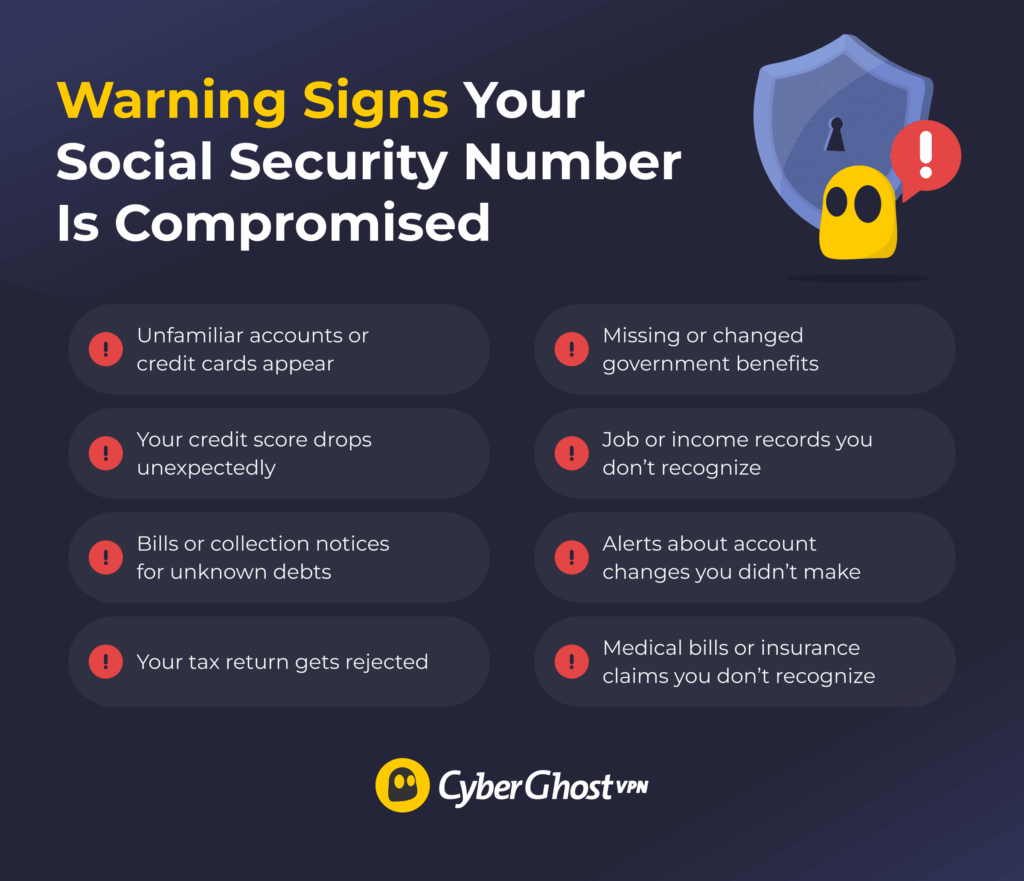
- Unfamiliar accounts or credit cards appear: You may see new credit cards, loans, or accounts on your credit report that you didn’t open.
- Your credit score drops unexpectedly: Your credit score may drop if fraudulent accounts carry balances or missed payments.
- You receive bills or collection notices for unknown accounts: Letters or calls about debts you don’t recognize may mean someone is using your identity to borrow money or make purchases.
- Your tax return gets rejected: If you file your taxes and are told a return was already submitted, it may mean someone used your SSN to file a fraudulent return.
- Government benefits are missing or changed: Issues with your government benefits, such as unexpected changes or disruptions, may indicate identity theft.
- You see job or income records you don’t recognize: If your SSN is used for employment, it can create records that don’t match your actual work history.
- You get alerts about account changes you didn’t make: Unexpected account activity or changes you didn’t make can signal unauthorized access.
- You receive medical bills or insurance claims you don’t recognize: This may mean someone used your identity to receive healthcare services.
What to Do If Someone Has Stolen Your SSN
If someone has stolen your SSN, acting quickly can help limit the damage. If your SSN is compromised, the FTC recommends taking the following steps to report and recover from identity theft7:
- Report the incident through the Federal Trade Commission’s identity theft reporting system.
- Place a fraud alert on your credit reports.
- Review your credit reports for unauthorized activity.
- Close fraudulent accounts.
- Consider placing a credit freeze.
How To Stop Others From Using Your Social Security Number
Protecting your SSN involves limiting exposure and monitoring your accounts, as recommended by agencies like the FTC10 and IRS9.
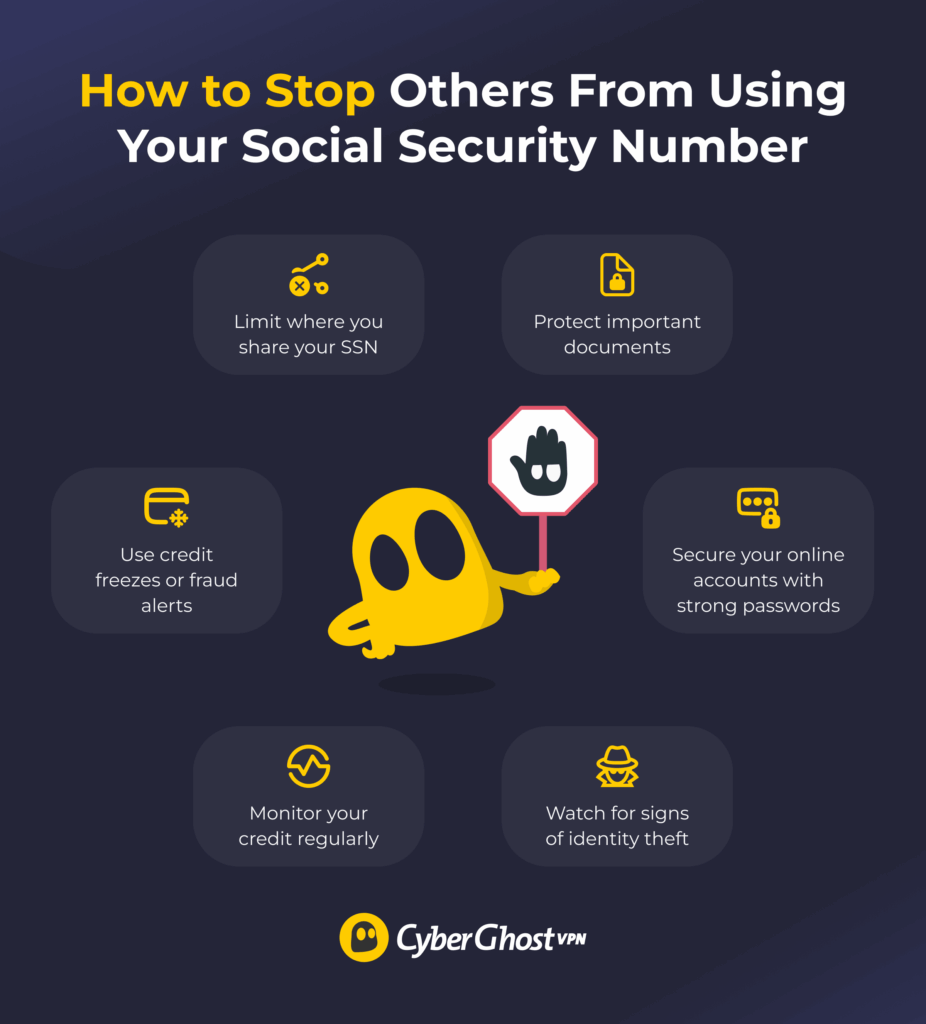
- Limit where you share your SSN: Don’t give it out unless necessary. If possible, ask if another form of identification can be used instead.
- Protect your documents: Keep tax records, medical files, and other sensitive papers in a safe place. Shred anything that contains your SSN before throwing it away.
- Secure your online activity: Use strong, unique passwords and additional security measures, such as two-factor authentication, to help protect your accounts. Avoid sharing sensitive personal information on public or unsecured networks.
- Watch for signs of identity theft: Pay attention to unusual activity or alerts about your accounts.
- Monitor your credit regularly: Check your credit reports for unfamiliar activity. Early detection can help you stop fraud before it grows.
- Use credit freezes or fraud alerts: Consider options that alert you to suspicious activity or help you respond quickly if your information is misused.
Using unsecured networks can expose your personal data without you realizing it. CyberGhost VPN encrypts your internet connection and changes your IP address, which can make it harder for others to intercept your data. This adds an extra layer of security, especially when using public WiFi or accessing sensitive accounts online.
Protect Your Social Security Number
Your SSN connects to many parts of your life, which makes it valuable but also vulnerable. You can’t control every risk, but you can take steps to limit how and where your information is exposed.
One way to reduce risk is to further protect your activity online. CyberGhost VPN encrypts your connection, which adds an extra layer of protection when you’re online. It works quietly in the background while you go about your day. You can try it with peace of mind thanks to a 45-day money-back guarantee (14 days for monthly users).
FAQ
What can someone do with my Social Security number?
If someone has your SSN, they can use it to commit identity theft in several ways. They might open credit cards or take out loans in your name or file fake tax returns to claim refunds. In some cases, your identity could be used to access government benefits, receive medical care, or get a job.
Combined with other personal details, your SSN can also be used to take over existing accounts or create a synthetic identity. The result can be damaged credit, unexpected debt, and long-term financial and legal issues.
Can a stolen SSN be used to open accounts in my name?
Yes. Criminals often use it, along with other personal details, to apply for credit cards, loans, or even utility services. Because the SSN is a key identity identifier, many institutions rely on it to verify applications. This makes it easier for fraudsters to create accounts that appear legitimate. As a result, you may not notice the activity right away, but it can lead to debt, credit damage, and ongoing financial issues.
How do criminals use SSNs for identity theft?
Criminals use stolen SSNs to create a false identity with your personal details. They use it to open credit accounts, take loans, or file fake tax returns. Some also access benefits or build synthetic identities. This fraud can go unnoticed at first and lead to serious financial and legal damage.
What should I do if my SSN is compromised?
If your Social Security number is compromised, act quickly to limit the damage. Start by placing a fraud alert or freezing your credit to stop new accounts. Then review your credit reports for any suspicious activity. Finally, report the issue to the Federal Trade Commission’s official reporting service7 and update your account passwords to stay secure.
Can someone ruin my credit score with just my SSN?
Yes, someone can damage your credit score with your Social Security number. They can use it to open credit cards or take out loans in your name. Missed payments or high balances on those accounts can quickly lower your score. The impact may not be obvious right away, but it can lead to long-term credit damage if left unchecked.
Can you change your Social Security number?
Yes, you can change your Social Security number, but only in rare situations. The Social Security Administration may approve a new number if you’re dealing with the ongoing consequences of identity theft, harassment, abuse, or serious safety risks. You must provide strong evidence that the problem continues and that changing your SSN will help. Even then, a new number doesn’t erase your past records or credit history, so it’s not always a complete fix.
Can a VPN protect your personal data?
A VPN can help protect your personal data, but it’s not a complete solution. CyberGhost VPN encrypts your internet connection and hides your IP address, which makes it harder for hackers, trackers, or snoopers to see what you do online. This is especially useful on public WiFi or unsecured networks. However, a VPN can’t stop identity theft on its own, so you still need strong passwords and good security habits.
References:
- The Story of the Social Security Number – Social Security Administration
- New FTC Data Show a Big Jump in Reported Losses to Fraud to $12.5 Billion in 2024 –
Federal Trade Commission - Identity Theft Reports – Federal Trade Commission Tableau Public
- National Taxpayer Advocate issues mid-year report to Congress – Internal Revenue Service
- Identity Theft Resource Center 2025 Consumer Impact Report – Identity Theft Resource Center
- Cybersecurity Insiders 2024 Insider Threat Report – Cybersecurity Insiders
- Federal Trade Commission Identity Theft – IdentityTheft.gov
- What To Know About Identity Theft – Federal Trade Commission
- Identity theft guide for individuals – Internal Revenue Service
- Identity Theft: How to protect your personal information from identity theft – Federal Trade Commission

Leave a comment