
Personal data has become one of the most powerful tools in a romance scammer’s arsenal. Swindlers have access to more information about potential victims than ever before, from data broker records to information they post about themselves online.
By combining this data with AI-powered tools, scammers can operate more efficiently and at a much larger scale than ever before.
To better understand this growing threat, we at CyberGhost VPN examined how modern romance scams work, where swindlers obtain information about their victims, and how AI is changing their tactics.
Based on our findings, we compiled a list of practical steps you can take to reduce your digital footprint, along with common red flags that can help you recognize and avoid romance scams.
How Modern Romance Scams Work
A romance scam is a type of fraud in which someone uses a fake online identity to feign romantic interest in a victim. Scammers typically engage in “love bombing” (an overwhelming display of love and affection) to quickly gain the victim’s trust. They then manipulate the victim into taking different actions, including:
- Sending money: Often under the guise of a medical emergency, travel expenses, business problems, or other fake crises.
- Investing into fraudulent schemes: The scammer may be running fake investment opportunities, often referred to as pig butchering schemes.
- Sharing sensitive personal information: Like their home address, phone number, date of birth, banking details, and login credentials, which can then be used for identity theft or account takeover.
- Sending intimate photos or videos: These may later be used for sextortion or blackmail.
- Acting as a money mule: The scammer may ask the victim to receive or transfer illegally obtained funds, often without realizing they’re facilitating criminal activity.
How Scammers Find and Target Their Victims
Although romance scams have always existed in some form or another, they’ve surged alongside social media and online dating platforms as scammers adapt to new technologies.
The core principle remains the same: Scammers build trust and emotional intimacy with their victims before exploiting that relationship for financial gain, personal information, or other forms of abuse. What has changed is how effectively they can identify and manipulate potential victims now that AI tools are widely available.
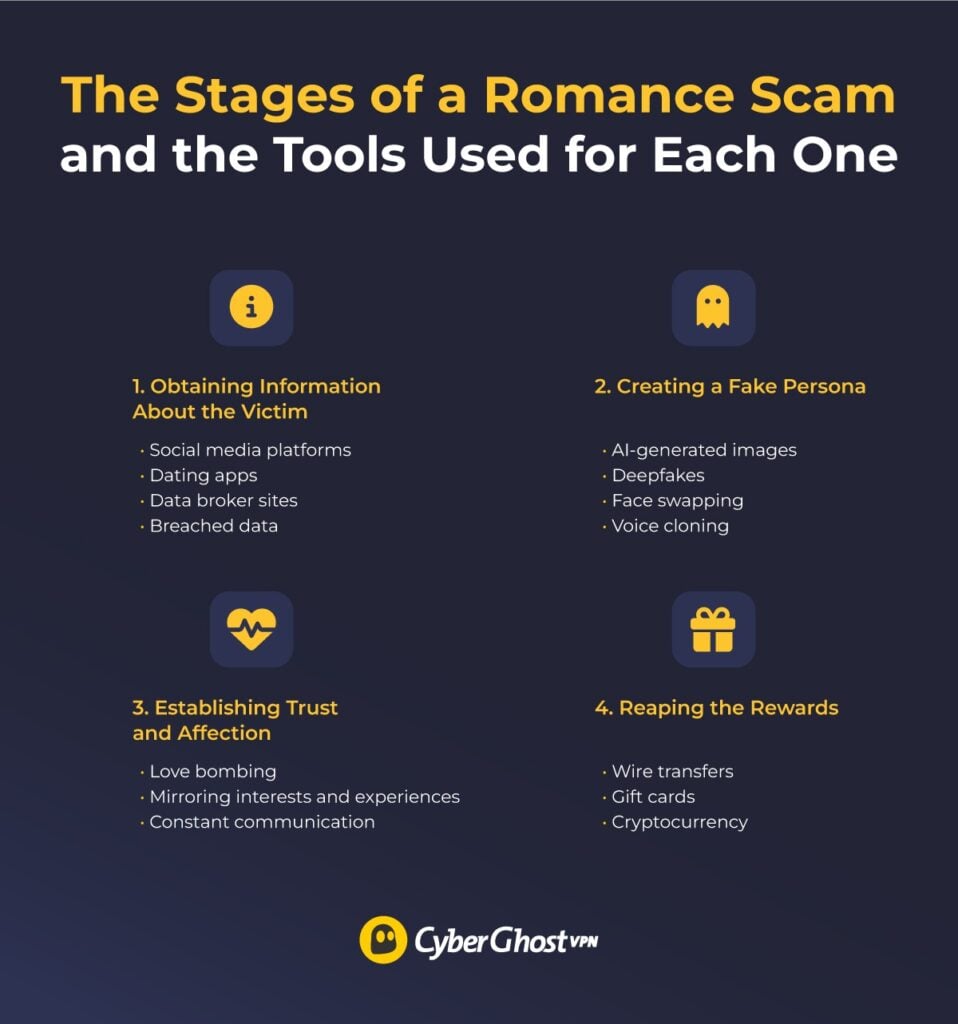
Gathering Information
Scammers often try to gather as much intel as they can on a potential target. They don’t even have to infringe the law to learn what they need to run a successful scheme. With the widespread use of technology, the information is, more often than not, already out there for the taking.
Data Brokers and People Search Sites
Data brokers are companies that specialize in collecting, aggregating, and selling personal information at scale. Scammers often turn to them to build profiles on potential victims. Much of the information gathered comes from public records, commercial sources (like purchase history and loyalty programs), and people’s online activity.
Brokers group individuals into categories based on traits like age or interests, and then they sell that information to advertisers and other third parties for marketing and profiling purposes. Brokered data is also made publicly available through online people-search websites, where information like your name, address, phone numbers, email, age, family members, and other publicly sourced records can be found.
In December 2024, the Consumer Financial Protection Bureau (CFPB) specifically warned that data brokers sell “detailed dossiers” that can help scammers target vulnerable consumers, particularly older adults and people experiencing financial hardship.1
Publicly Visible Online Activity
Scammers also rely on the publicly available information found on social media platforms and dating apps to learn more about their targets. Public posts, photos, profile details, and interactions can help them infer a person’s location, relationship status, interests, recent life events, and more.
AI tools can analyze this data in seconds to identify patterns, interests, and life circumstances that would likely take a human much longer to piece together.
Creating a Fake Identity
After identifying a potential target, scammers typically create a fake identity based on the information they’ve gathered. AI technology has facilitated this process by enabling scammers to generate highly realistic AI deepfakes and automate personalized conversations at scale.
AI-Generated Photos and Deepfakes
As one of the first things a potential victim sees, the pictures on the scammer’s profile play an important part in the scheme. They can determine whether a potential target engages in a conversation at all.
Scammers have a mix of techniques at their disposal to make the photos and videos on their social media and dating app profiles appear as convincing as possible. For instance, they may use AI-generated portraits or alter stolen photographs with AI-generated elements. This allows them to create unique images that are less likely to be identified through reverse-image searches.
Techniques such as face swapping and voice cloning enable scammers to create moving footage and mimic another person’s voice for fake video calls. This makes the fake identity appear more genuine.
Research suggests that AI-generated content is already widespread on social media and dating platforms. In McAfee’s 2024 Modern Love study, 42% of respondents said they had encountered fake profiles or photos that appeared AI-generated on dating websites, apps, or social media.2
However, how effective a romance scam is ultimately depends on how convincing this content appears to potential victims. As generative AI becomes more sophisticated, it’s becoming harder for people to distinguish AI-generated images and videos from real content.
For example, a 2024 study by researchers at the University of Waterloo found that participants correctly distinguished real faces from AI-generated ones only 61% of the time, far below the researchers’ expected accuracy of 85%.3
Automated Personalized Conversations
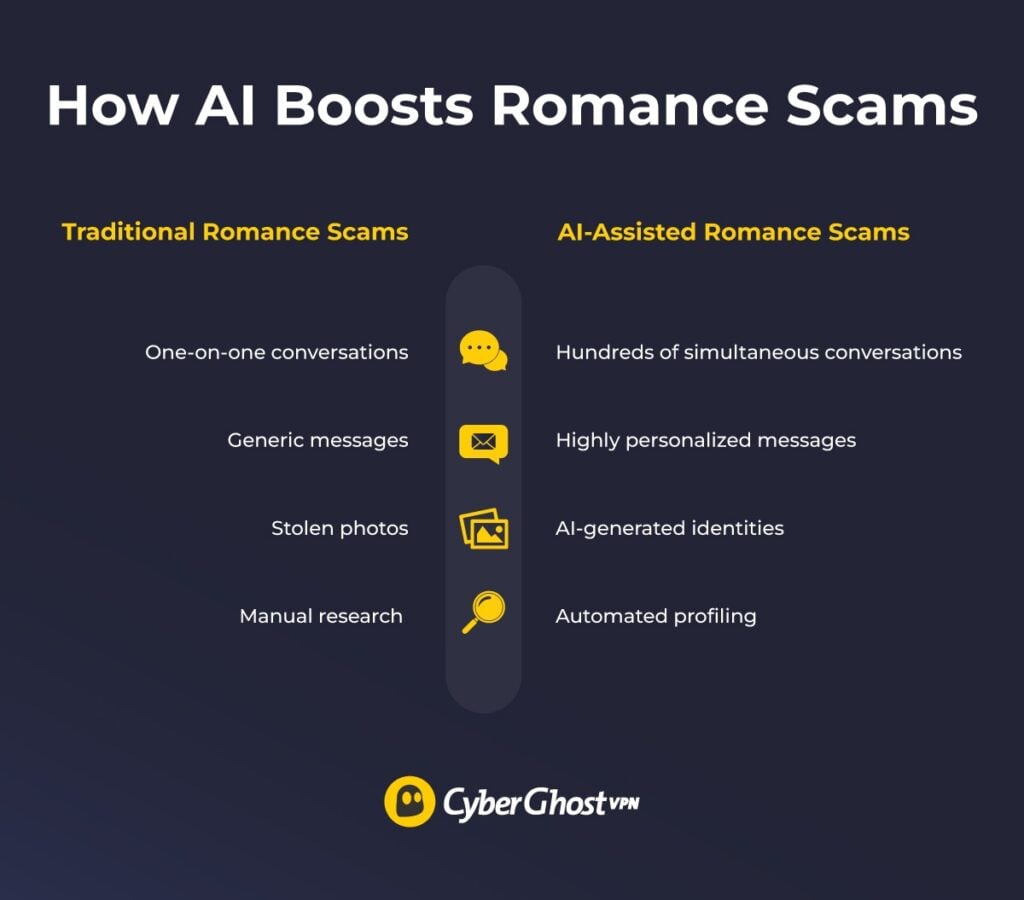
Traditional romance scammers probably dedicated significant time and effort to writing believable messages, remembering details, and keeping multiple fake identities consistent over time. Today, large language models and AI chatbots can automate much of that work in minutes.
With AI, scammers can create highly personalized conversations at an unprecedented scale. Plus, they avoid projecting the red flags generally associated with scams, such as poor grammar, generic messages, and inconsistent stories.
The increased scale of these operations is already evident. A 2026 Associated Press investigation found that a scam compound worker used AI-powered software as part of romance-baiting scams. During a single shift, this individual regularly managed more than 100 simultaneous conversations across dozens of fake profiles.4
Exploiting the Victim
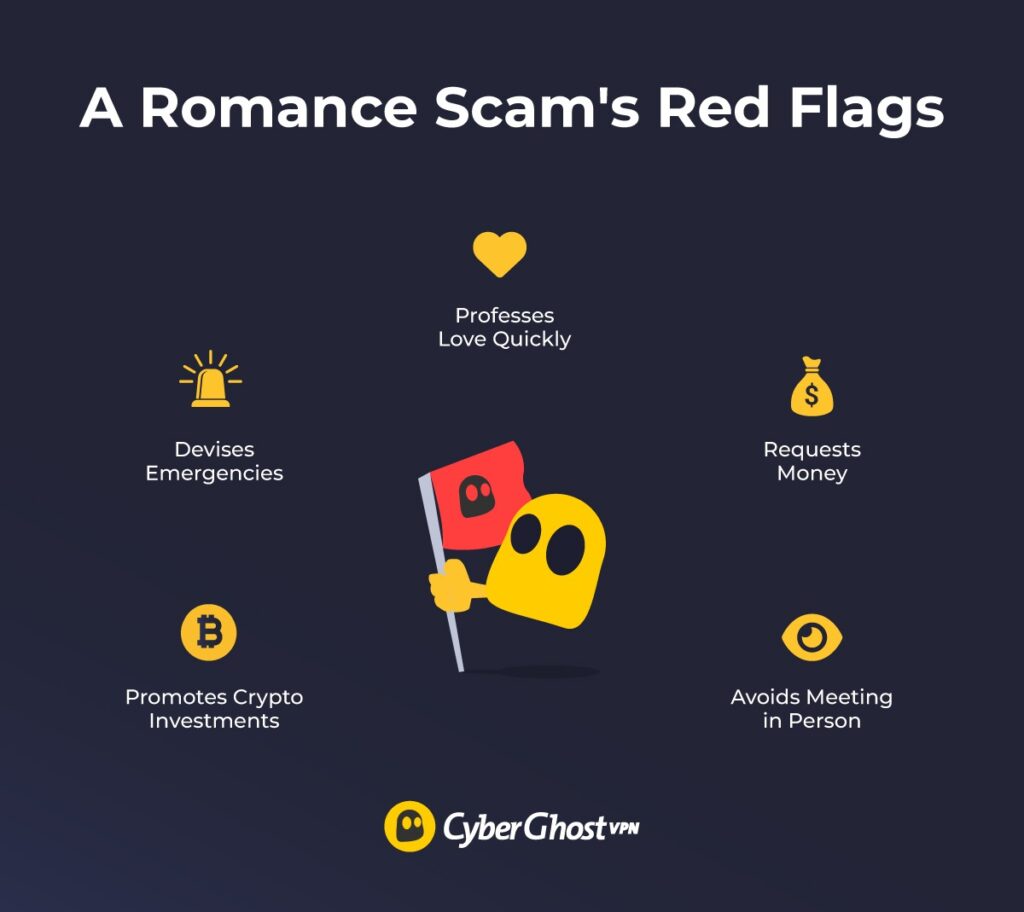
After establishing an emotional connection with the victim, the scammer starts asking for favors. Requests are typically introduced gradually and framed as either emergencies or reasonable favors, taking advantage of the victim’s affection and empathy.
Financial Fraud
The ultimate goal of most romance scams is financial gain. To persuade victims to send their money, scammers rely on a wide range of believable scenarios. For instance, they may claim to need money for medical emergencies, unexpected legal fees, or travel expenses.
Scammers usually instruct victims on how to send the money, often insisting on payment methods that are difficult to trace or reverse, such as gift cards, wire transfers, or cryptocurrency.
With more sophisticated techniques being used, the amount of money lost to romance scams is on the rise. According to the FTC, romance scam losses in the U.S. reached $1.48 million in 2025, a 22% increase from the year before, with a median loss of $2,020 per victim.5
Fake Investment Opportunities
In this variation, the scammer frames the scheme as an opportunity to help the victim make money rather than asking for financial assistance themselves. The scammer gradually steers the conversation towards investing, often in cryptocurrency, claiming the victim can earn substantial returns by following their instructions.
Believing they’re investing through a trading platform, the victim unknowingly sends money or cryptocurrency to an account controlled by the scammer. Once a substantial amount has been invested, the scammer abruptly stops contact, leaving the victim unable to withdraw their funds.
Identity Theft and Account Takeover
Scammers don’t typically ask for sensitive information outright. Instead, they create situations in which sharing personal information feels like a natural part of the relationship. They may persuade victims to share sensitive details (such as their home address), account credentials, or even copies of identity documents under various pretexts.
Combined with intel gathered from social media, brokers, or previous data breaches, this information can potentially be used to impersonate victims, bypass identity verification checks, reset passwords, gain access to online accounts, or commit other forms of fraud.
Sextortion and Blackmail
Once enough trust is established, scammers may also ask their victim to send an intimate image of themselves or even record them during a live chat without their consent. In these cases, scammers later threaten to send the intimate content to the victim’s family and friends or post it online unless their demands are met.
AI technology has broadened this form of abuse by allowing scammers to create fake intimate images or videos. AI-generated content can then be used to blackmail victims, even when no real explicit pictures were taken.
Research suggests that it’s becoming increasingly common for romance scams to escalate into sextortion. FTC data shows that reports of romance-scam-related sextortion increased more than eightfold between 2019 and 2022, with adults aged 18–29 disproportionately affected.6
How to Reduce Your Digital Footprint
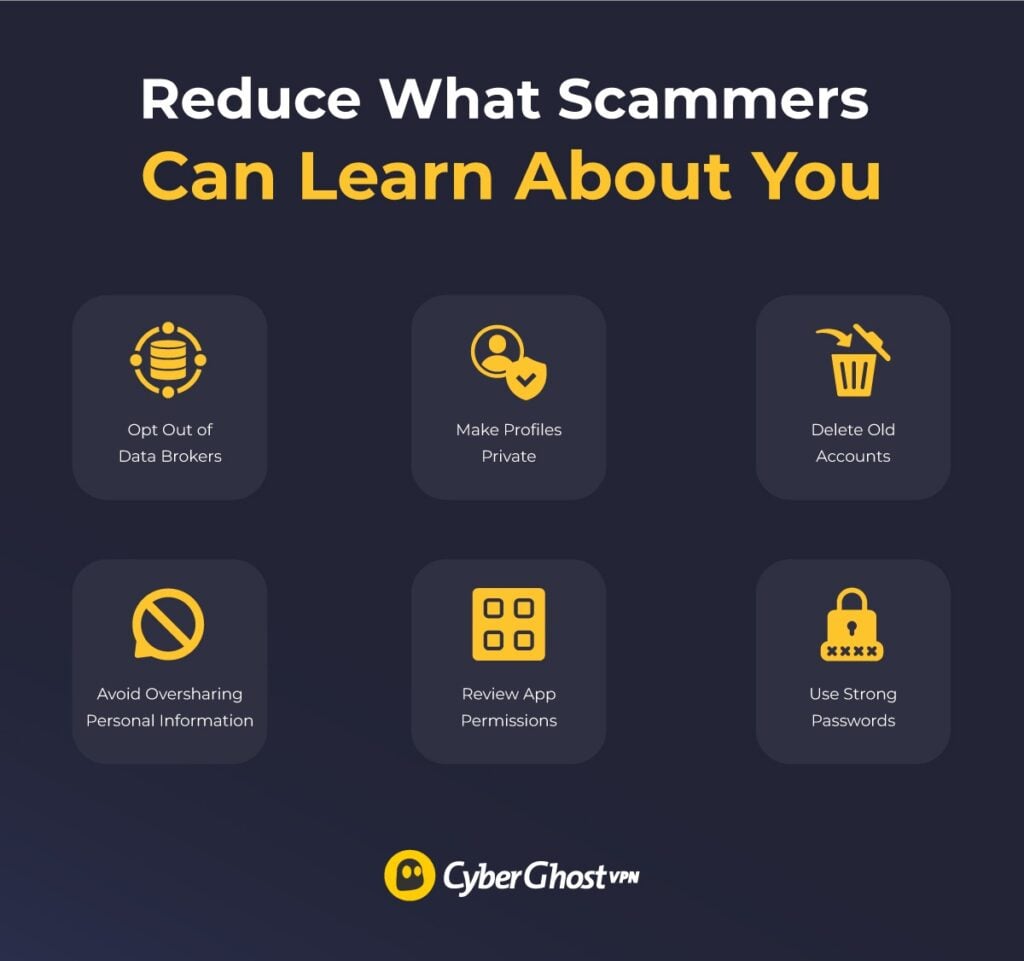
Removing all your information from the web and companies’ databases may be unfeasible, but you can certainly reduce your digital footprint going forward. This can make it more difficult for scammers to identify you as a potential target.
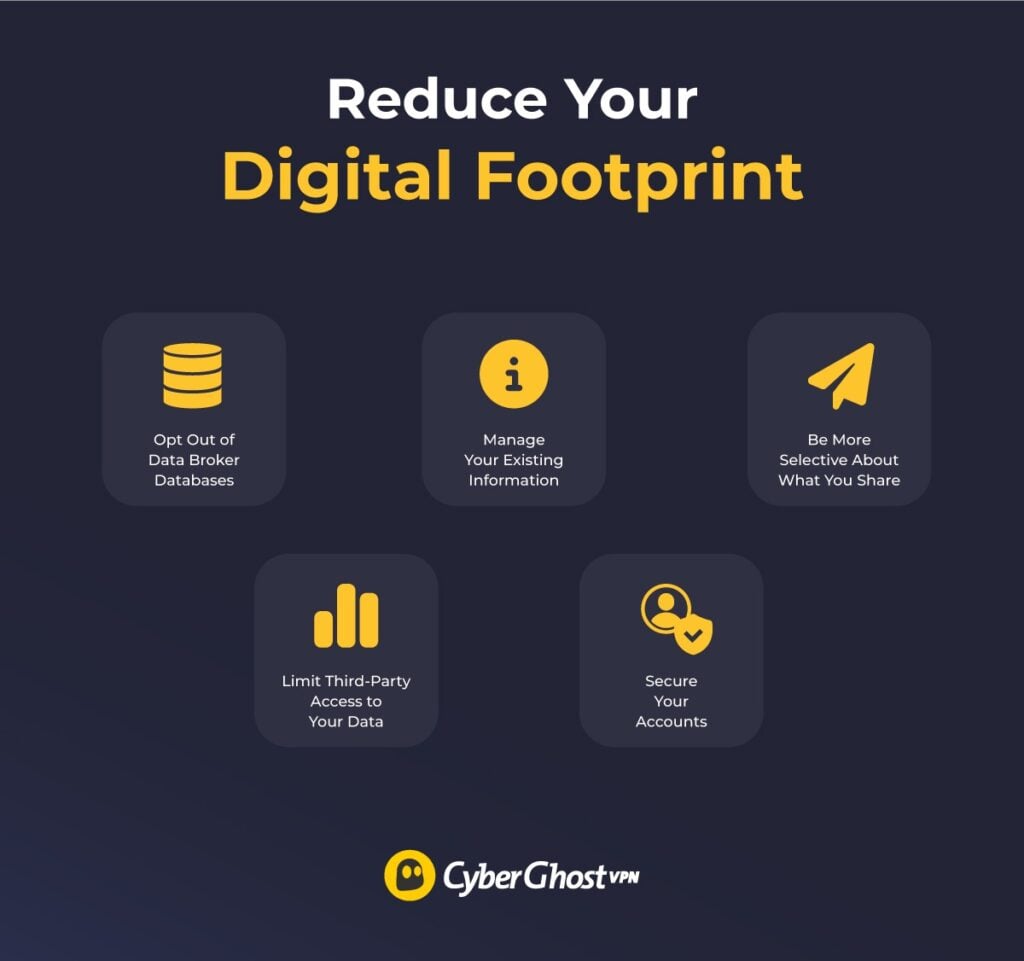
1. Opt Out of Data Broker Databases
The first step in reducing your digital footprint is understanding what information about you is already publicly available. Start by searching for yourself online using your name, email address, phone number, and home address to see what information comes up.
Once you know where your information appears, submit opt-out or deletion requests to each data broker individually. Major people-search websites (including Whitepages, Spokeo, BeenVerified, Radaris, and Intelius) usually allow individuals to request the removal of their personal information.
The steps may differ slightly depending on the broker, but we’ll use Whitepages to show you an example of how you can remove your information from people-search sites.
- Search for your listing on Whitepages.
- Copy the URL of your profile page.
- Open the Whitepages suppression request page and paste the URL.
- Confirm that the listing is yours and select Remove Me.
- Choose a reason for your removal request.
- Verify your identity by entering your phone number and completing the automated phone verification.
- Once your request is confirmed, Whitepages will process the removal.
Removing your information once is only half the job. To avoid data brokers republishing your information, continue monitoring major people-search sites and resubmit opt-outs when listings reappear.
2. Manage Your Existing Information
Clean up your existing online profiles by removing anything that may be unnecessary or too sensitive to leave publicly accessible. This can include old social media posts, tagged photos you no longer want associated with your profile, and outdated profiles on forums or dating platforms.
While it’s not possible to erase your digital footprint entirely, regularly reviewing your online presence can significantly reduce the amount of personal information available online.
The European Union’s General Data Protection Regulation (GDPR) and the California Consumer Privacy Act (CCPA) give individuals under the corresponding jurisdictions the right to request that organizations delete certain personal information they have collected. Known as the Right to Erasure or Right to be Forgotten, these rights can be a useful way to reduce the amount of personal data available through data brokers and other organizations. However, they are not absolute. Whether a request is granted depends on the applicable law and the circumstances. Organizations may also refuse deletion if they are legally required to retain the information or if an exception applies, such as for fraud prevention or security.
3. Be More Selective About What You Share
AI tools can quickly analyze publicly available information across multiple platforms to identify patterns and interests. As a result, even seemingly harmless information can contribute to a detailed personal profile.
To reduce this risk, keep your social media profiles private whenever possible. Also, be mindful of how much you share and who you accept as a friend or follower.
4. Limit Third-Party Access to Your Data
Companies can also collect personal information through the apps and websites you use, even when you’re not actively sharing it yourself. Depending on the permissions you grant, this may include your location, contacts, browsing activity, photos, microphone, camera, or other device data.
Over time, this information may be shared with advertisers, analytics providers, or other third parties. It’s another contribution to the detailed profiles that data brokers build and scammers can exploit.
To minimize this exposure, regularly review the permissions granted to your apps. Only allow them access to the data they genuinely need to function. Likewise, when visiting websites, reject non-essential advertising and analytics cookies whenever possible to reduce the amount of information collected about your browsing habits.
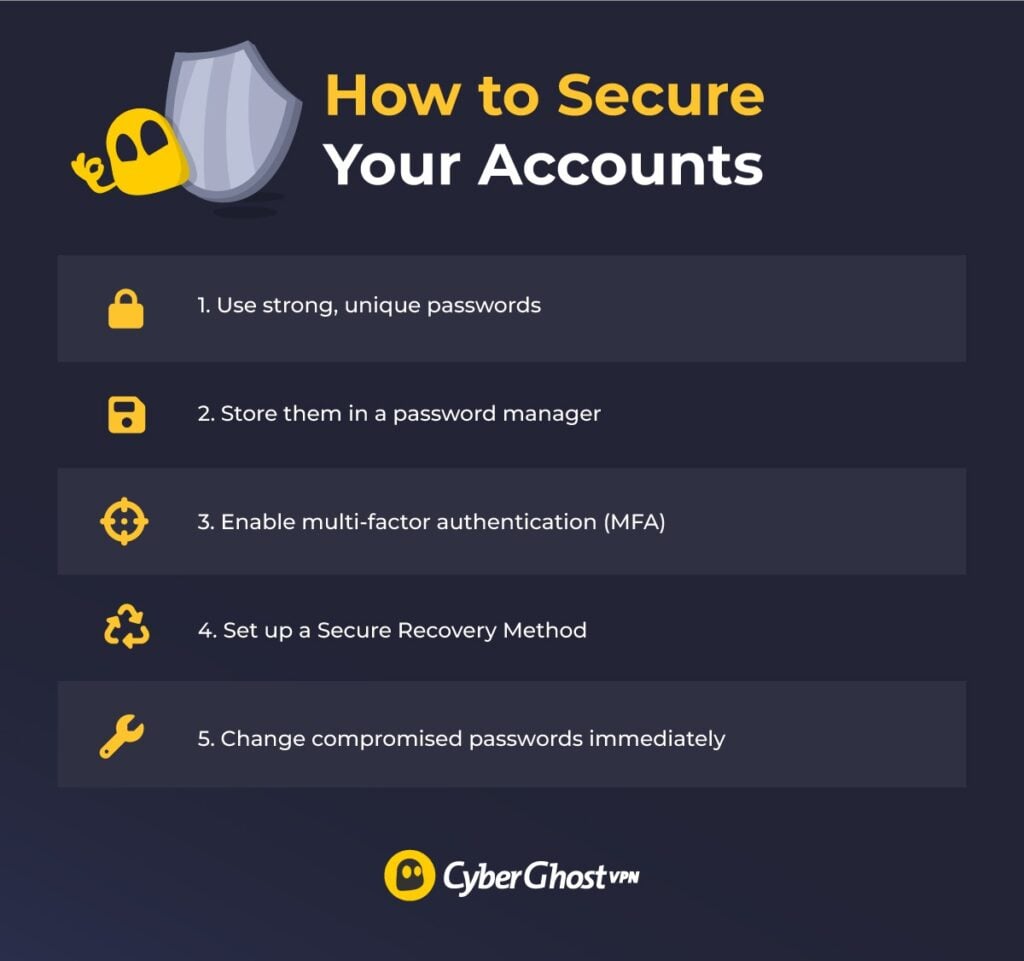
5. Secure Your Accounts
Even if you carefully manage your digital footprint, your personal information can still be exposed through a compromised account or a data breach. Protecting your online accounts reduces the risk of unauthorized access to sensitive information that can be exploited for romance scams and other types of fraud.
Navigate Dating Apps Safely
Romance scammers commonly use dating apps as an entry point to their schemes. To create more convincing dating profiles, scammers typically combine stolen identities, AI-generated content, and personal details that are carefully chosen to resonate with targets.
In response to this, major dating apps like Tinder, Bumble, Grindr, and Hinge have introduced a range of safety features aimed at reducing fake profiles.
For example, most platforms offer profile verification to help users determine whether the person depicted is in fact the account’s owner. Users are typically asked to record a short selfie video, which the platform compares with their profile photos to verify that they match.
Some platforms also give users the chance to prove their identity by submitting a government-issued ID, typically in exchange for a verification badge.
The use of AI-powered tools to detect fake accounts, bots, spam, and other suspicious behavior before it reaches potential victims is also gaining traction. Some dating apps also display in-app safety warnings during conversations. These prompts encourage users to pause before engaging with potentially risky interactions.
Dating app users can also report profiles that appear fake, that request money, that impersonate someone else, or that otherwise violate community guidelines. If an account is found to breach the platform’s policies, it may be suspended or permanently removed.
However, while all these features can make it more difficult for scammers to operate, they can’t prevent romance scams entirely. Instead of relying solely on a verification badge, take these additional precautions when getting to know someone on a dating app:
- Stay on the app: Romance scammers often try to move the conversation off the dating platform after initial contact to avoid the platform’s moderation and reporting tools.
- Verify their identity yourself: Avoid becoming emotionally invested until you’ve met the person in real life (and only do so if you deem it safe). Before then, treat verification badges, live video calls, and other forms of identity verification with caution, as they can be manipulated or abused by sophisticated scammers.
- Be cautious about sharing personal information: Avoid revealing your home address, workplace, financial details, or login credentials.
- Report and block suspicious accounts: If you suspect you’re interacting with a scammer, stop communicating, report the profile through the dating app, and block the account to prevent further contact.
Reduce What Scammers Can Learn About You
As romance scams become more personalized and difficult to detect, reducing your digital footprint is one of the most effective ways to make yourself a harder target.
While it can’t eliminate the risk entirely, limiting the personal information available about you can make it more difficult for scammers to build convincing profiles and carry out targeted attacks. Combined with recognizing common scam tactics and following good online security practices, it can reduce your risk of becoming a victim.
Go ahead and reuse the data or images from this article. We don’t mind sharing the details! Just be a good sport and link back to the original article so we get the credit.
References
- Prepared Remarks of CFPB Director Rohit Chopra on Protecting Americans from Harmful Data Broker Practices – Consumer Financial Protection Bureau
- Love Bytes – How AI is shaping Modern Love – McAfee
- Real Person or Deepfake? Can You Tell? – Neuroscience News
- Four days to make victims fall in love: How global scammers use US tech to fleece people – Associated Press
- New trends in reports of imposter scams – FTC Consumer Advice
- Romance scammers’ favorite lies exposed – FTC

Leave a comment