
Telegram is one of the world’s most popular messaging platforms for private conversations and large public communities, with over 1 billion active users. People use it every day to chat with friends, join communities, follow businesses, and share information.
Like any large online platform, Telegram is also often targeted by scammers. The Federal Trade Commission (FTC) reported that scams that began on social media resulted in losses eight times higher in 2025 than in 20201. The 2025 Internet Crime Report from the Federal Bureau of Investigation (FBI) documented over $17.7 billion in reported cyber-enabled fraud losses, with cryptocurrency-related complaints exceeding $11 billion2.
In this guide, we’ll explain the most common Telegram scams, why they can be convincing, the warning signs to watch for, and what you can do to protect yourself.
What Are Telegram Scams?
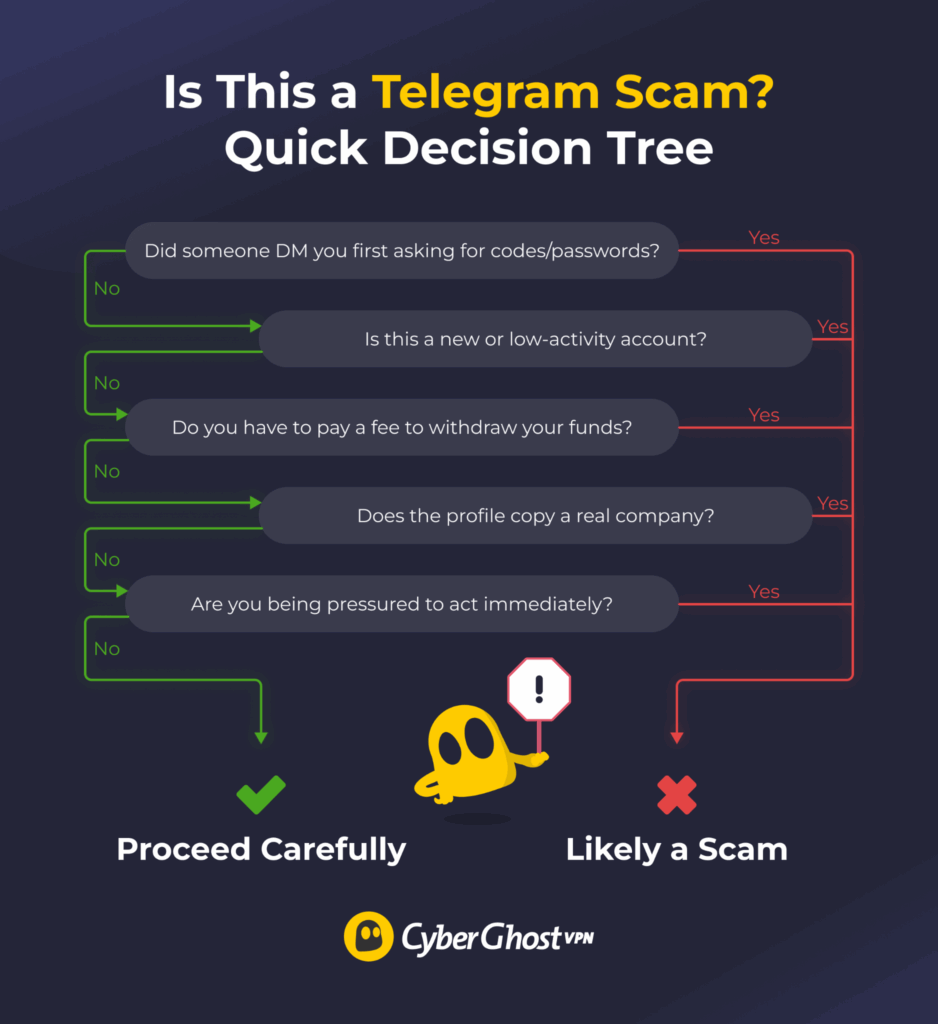
A Telegram scam is any fraudulent scheme exploiting the platform’s infrastructure to deceive users. Scammers may contact people directly, impersonate trusted individuals or organizations, promote fake investment opportunities, or send phishing links designed to steal money, login credentials, personal information, or access to accounts. Here’s how it often goes:
- Contact: A stranger, fake admin, or recruiter sends a direct message with an opportunity.
- Hook: They present a lucrative job, crypto investment, giveaway, or account issue.
- Pressure: They create urgency using fear, greed, or false deadlines.
- Action: They ask you to click a link, enter a code, pay a fee, or send cryptocurrency.
- Loss: The scammer disappears or cuts communication.
What can make these scams particularly damaging is that payments are often made using cryptocurrency or wire transfers, which can be difficult or impossible to reverse. According to Revolut’s Consumer Security and Financial Crime Report for 2025, Telegram accounted for over 58% of reported job scams, making it one of the fastest-growing sources of app-based fraud3.
Common Telegram Scams
Investment and Cryptocurrency Scams
Scammers create professional-looking channels offering trading signals, token presales, or exclusive investment opportunities. They use polished branding, daily updates, and fabricated profit screenshots to build trust with victims before pressuring them to invest. Once you make a payment, scammers typically block withdrawals and disappear.
Red flags: Guaranteed returns, requests to send cryptocurrency first, fake dashboards, pressure to recruit others.
Impersonation and Fake Accounts
Scammers copy the name, photo, and writing style of a real person you might know and claim to have an emergency or ask for financial help. They may also impersonate company representatives or group admins.
Red flags: A sudden urgent request, a new profile, a username that looks similar to the real account, refusal to verify identity via video call.
Phishing and Account Takeover
A scammer claims Telegram flagged your account and requires verification. They send a link or ask for your login code. If you share it, they gain full access, lock you out, and use your account to target your contacts.
Red flags: Unsolicited security alerts, requests for login codes, links to unfamiliar websites, urgent language.
Job and Task Scams
Fake recruiters advertise easy online jobs such as liking social media posts or completing simple tasks for unusually high pay. After you earn a small amount to build trust, you’re told you need to pay a fee or deposit to unlock higher-paying tasks or withdraw your earnings. The promised payout never arrives, and the money you’ve already sent is lost.
Red flags: High pay for minimal work, requests for upfront payment, no official company website, pressure to act fast.
Why Do Scammers Use Telegram?
Telegram offers a range of features designed to support private messaging, large communities, and automation. Like many popular online platforms, those same features can also be misused by scammers to reach more people, impersonate trusted accounts, and make fraudulent schemes appear more convincing.
None of these features are inherently malicious, but understanding how they can be exploited can help you recognize common Telegram scams and avoid becoming a victim.
Anonymous Account Creation
You can create a Telegram account using only a phone number — no email, identity verification, or security questions required. Scammers exploit this by creating hundreds of disposable accounts. When one gets banned, they spin up another in seconds, so a single bad actor can keep operating under a constant stream of fresh identities.
Privacy Features Can Be Misused
Telegram includes privacy features that help users control what information they share. For example, you can hide your phone number and use disappearing messages to keep conversations private. Unfortunately, scammers may also misuse these features to conceal their identity or remove evidence of a conversation after a scam.
Bot Automation Enables Scaling
Telegram’s bot platform supports many legitimate uses, from customer support to community management. However, scammers can also use bots to automate messages, impersonate services, or create fake investment dashboards. One scammer can run multiple bot-powered operations at the same time, targeting thousands of victims with minimal effort.
Large Group Capacity Amplifies Reach
Telegram groups can host large communities of up to 200,000 members, making them useful for clubs, businesses, and public discussions. Scammers can sometimes take advantage of this and create fake investment groups, job communities, or giveaway channels. They typically fill them with fake testimonials and staged screenshots to make their schemes appear more legitimate. The scale creates false credibility because it’s hard to believe thousands would fall for a fake investment.
Cryptocurrency Community Concentration
Telegram is where legitimate cryptocurrency traders congregate. But it also attracts crypto scammers targeting an audience that understands tokens, expects quick profits, and is more likely to move large amounts of money without traditional safeguards. Investment scams on Telegram are particularly profitable.
Cross-Border Jurisdiction Can Complicate Enforcement
Scammers often operate across multiple countries, making investigations more difficult regardless of the platform they use. When victims, scammers, and service providers are located in different jurisdictions, coordinating investigations and enforcement can take longer.
Speed Outpaces Verification
Telegram enables near-instant conversation and payment, which is one of its biggest strengths. Scammers may exploit that speed by creating a sense of urgency, encouraging victims to act before they’ve had time to verify a claim, think it through, or speak to someone they trust.
Scam Content Can Be Difficult to Moderate at Scale
Like other large online platforms, Telegram has to moderate enormous amounts of user-generated content. The platform relies on user reporting and automated systems to do that. While this does remove accounts and content that violates its policies, some scam groups may remain active long enough to target victims before they’re detected or reported.
How to Protect Your Telegram Account
The platform gives you privacy and control, but these protections work only if you configure them correctly.
Enable Two-Factor Authentication (2FA)
2FA enables a separate verification step that Telegram asks for after the usual SMS login code. Even if a scammer phishes that code or hijacks your SIM, they still can’t sign in without the password.
Here’s how you can turn it on:
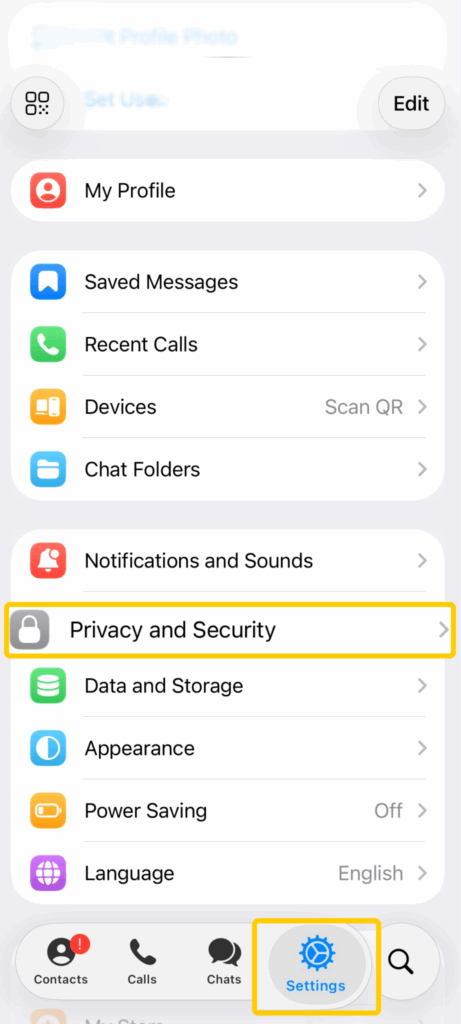
1. In your Telegram app, go to Settings > Privacy and Security.
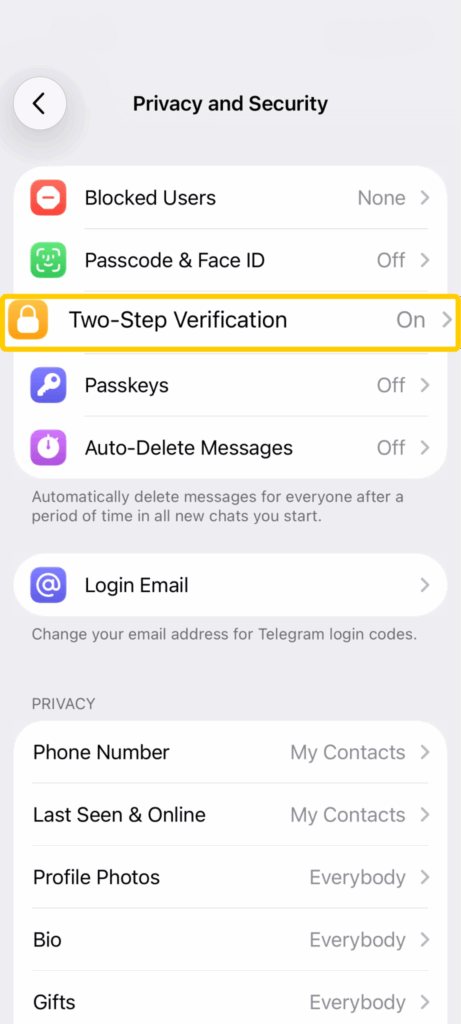
2. Select Two-Step Verification to set your password and add a recovery email.
Hide Your Phone Number
Scammers scrape and search phone numbers to cold-message strangers and pull them into scam groups. Hiding your number closes that entry point, so only people who already have you saved as a contact can find you by number.
To hide your number from strangers:
- In your Telegram app, go to Settings > Privacy and Security.
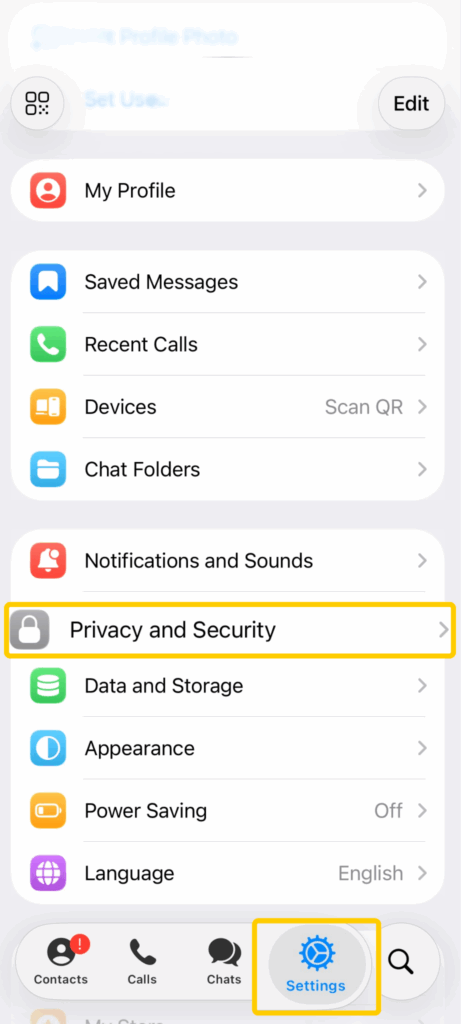
- Under Phone Number, choose My Contacts for both visibility and discovery.
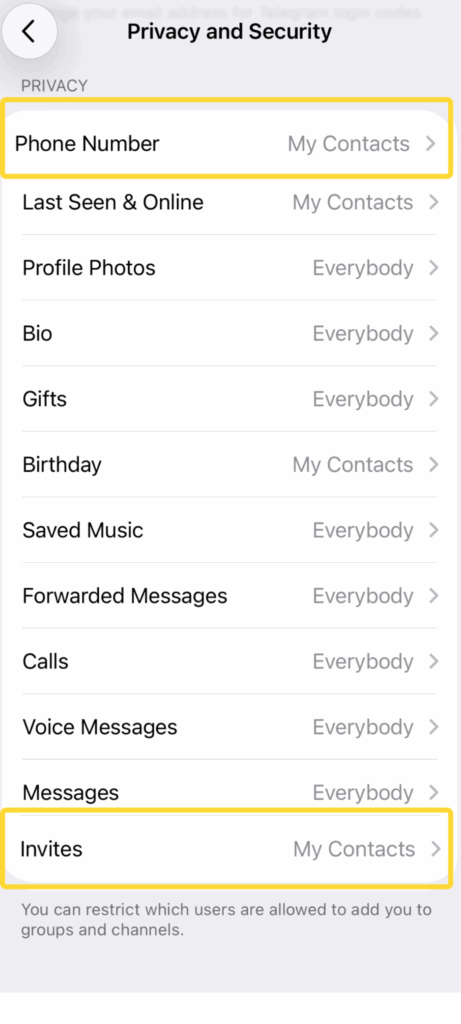
- Under Invites, choose My Contacts to restrict unwanted invitations.
Restrict Group Invitations
By default, anyone can drop you straight into a group. That’s how scammers land you in fake investment or job channels stacked with staged testimonials. Limiting invites to your contacts shuts that door.
To make sure this doesn’t happen:
- In your Telegram app, navigate to Settings > Privacy and Security.
- Under Groups & Channels, set your option My Contacts.
Check Active Sessions
If someone hijacks your account, their session keeps running on their own device even after you regain access. The active sessions list shows every device currently logged in, so you can spot an intruder and cut off their access.
Here’s how:
- In the Telegram app, navigate to Settings > Devices.
- Review and terminate any sessions you don’t recognize.
If You’ve Been Scammed: First 24 Hours
Time matters. Here’s what to do immediately:
- Stop all payments: Don’t send more money, even if the scammer promises to unlock your funds.
- Document everything: Take a screenshot of the scammer’s username, profile, chat history, wallet addresses, and transaction details.
- Change your passwords: Update your Telegram password, email, and financial accounts from a clean device.
- Report the account: In the chat, open the options menu (the three-dot menu in the corner), report the account as a scam, and then block it. For impersonation, you can also report to it Telegram’s @notoscam bot.
- Contact your bank: If you sent money via bank transfer or card, call your bank immediately to report fraud and freeze your card.
- File an official report: Report the fraud to the FBI’s Internet Crime Complaint Center (IC3) at ic3.gov or the FTC at reportfraud.ftc.gov.
Recovery is difficult once cryptocurrency is in transit, but reporting helps law enforcement identify patterns and stop the scammer from victimizing others.
Stay Safe From Telegram Scams
Telegram is a popular messaging platform used by millions of people every day, but like many popular online services, it’s also targeted by scammers looking to exploit trust and urgency. Knowing how the most common Telegram scams work, recognizing the warning signs, and securing your account can go a long way toward protecting your money, personal information, and online accounts.
Simple steps like enabling two-factor authentication, hiding your phone number, restricting group invitations, and checking your active sessions can make your account harder to target. If something doesn’t feel right, take a moment to verify who you’re talking to before clicking a link, sharing sensitive information, or sending money.
FAQ
What are the most common Telegram scams?
The most common Telegram scams are investment and cryptocurrency fraud, impersonation of friends or company representatives, phishing and account takeover, job and task scams, and giveaway or airdrop schemes. Each uses different tactics but follows the same pattern: contact, build trust, create urgency, and request payment or personal information.
How can I tell if someone is scamming me on Telegram?
Watch for unsolicited messages from new or low-activity accounts, requests for passwords or verification codes, profiles that copy real companies with slightly different usernames, and pressure to act fast. Real support never asks for login codes, seed phrases, or passwords. If something feels off, verify through another communication channel before responding.
Is Telegram safe to use?
Yes, Telegram is a legitimate platform. The risk comes from scammers who abuse its privacy features. You can use Telegram more safely by enabling 2FA, hiding your phone number from strangers, restricting group invitations to contacts only, and checking active sessions for unauthorized access.
Can I recover money lost in a Telegram scam?
Recovery depends on the payment method. Cryptocurrency and wire transfers are nearly impossible to reverse once sent. Contact your bank or payment provider immediately to report fraud. If you’ve used a credit card or digital payment service, they may be able to reverse the transaction. File a report with the FBI’s IC3 and FTC to help law enforcement track the scammer.
How do I report a scammer on Telegram?
Open the scammer’s profile, tap the three-dot menu, and select Report and Block. You can also forward suspicious messages to Telegram’s official anti-scam bot at @notoscam. For serious crimes, file a complaint with the FBI’s Internet Crime Complaint Center (IC3).
References:

Leave a comment