
You line up a shot or try to escape and your game starts to stutter or freeze. Shots don’t register, enemies seem to teleport, and even when you’ve got the drop on someone, every action feels delayed. In a fast-paced game like Apex Legends, even a small spike in ping or packet loss can cost you the match.
The good news is that you can easily fix most issues causing the game to lag. In this guide, we go over the most common reasons Apex Legends lags and outline the practical steps you can take to stabilize your ping and improve your gameplay.
Why Is Apex Legends Lagging?
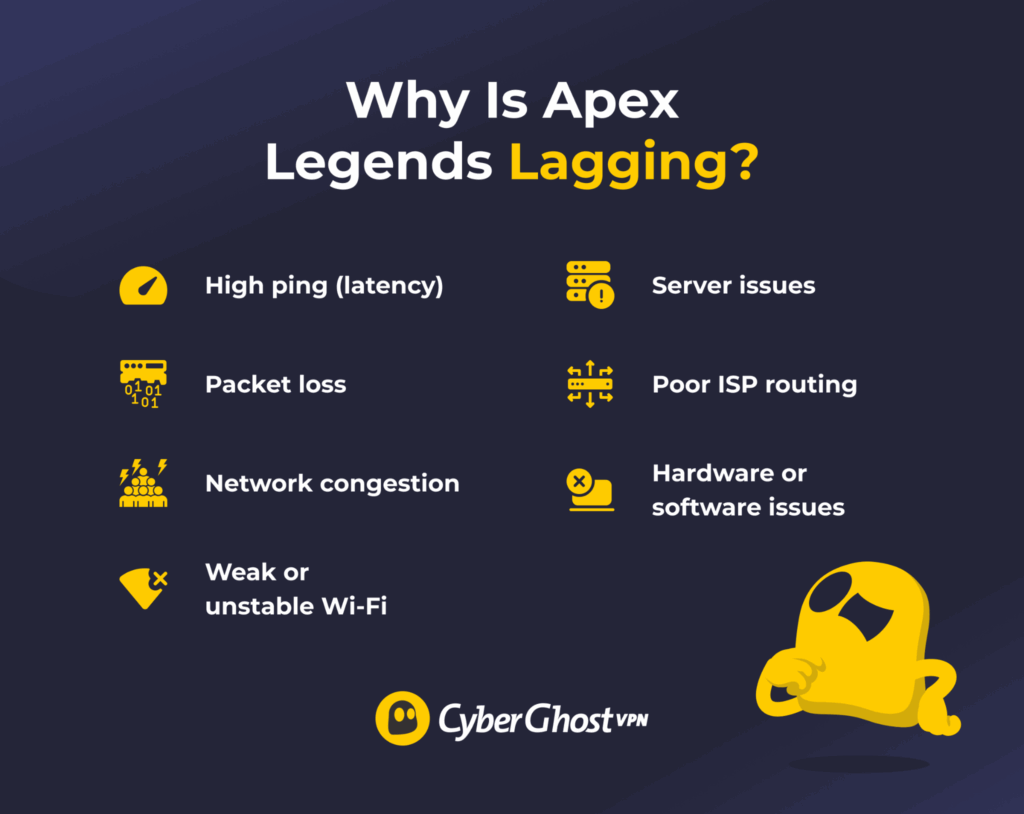
Apex Legends lags when something causes a delay in the traffic between your device and the game’s servers. The game constantly sends and receives small packets of data to track movement, shooting, and other actions in real-time. If network delays or data loss occur, you can experience problems during matches like stuttering, rubberbanding, delayed inputs, and high ping.
Common reasons your Apex Legends game is lagging include:
- Server issues: Apex Legends servers may lag during peak hours or after updates when many players are online.
- High ping: Your actions register later than they should when data takes too long to travel between your device and the game server.
- Packet loss: Some data packets never reach the server, which can cause rubberbanding, freezing, or inconsistent gameplay.
- Poor ISP routing: Your internet provider may route your traffic through inefficient network paths, which increases latency.
- Network congestion: Heavy internet use on your network, such as streaming or downloads, can increase latency and cause lag spikes.
- Weak or unstable Wi-Fi: Poor signal strength, interference, or distance from the router can make your connection unstable.
- Shader compilation: Graphics-related updates and patches can cause conflicts with the existing shader cache, forcing the game to recompile the shaders. This can cause some lag, but it resolves when the compilation is over.
- Hardware or software issues: Outdated drivers, background apps, or limited system resources can cause frame drops and stuttering.
How to Find Out What’s Causing Apex Legends Lag
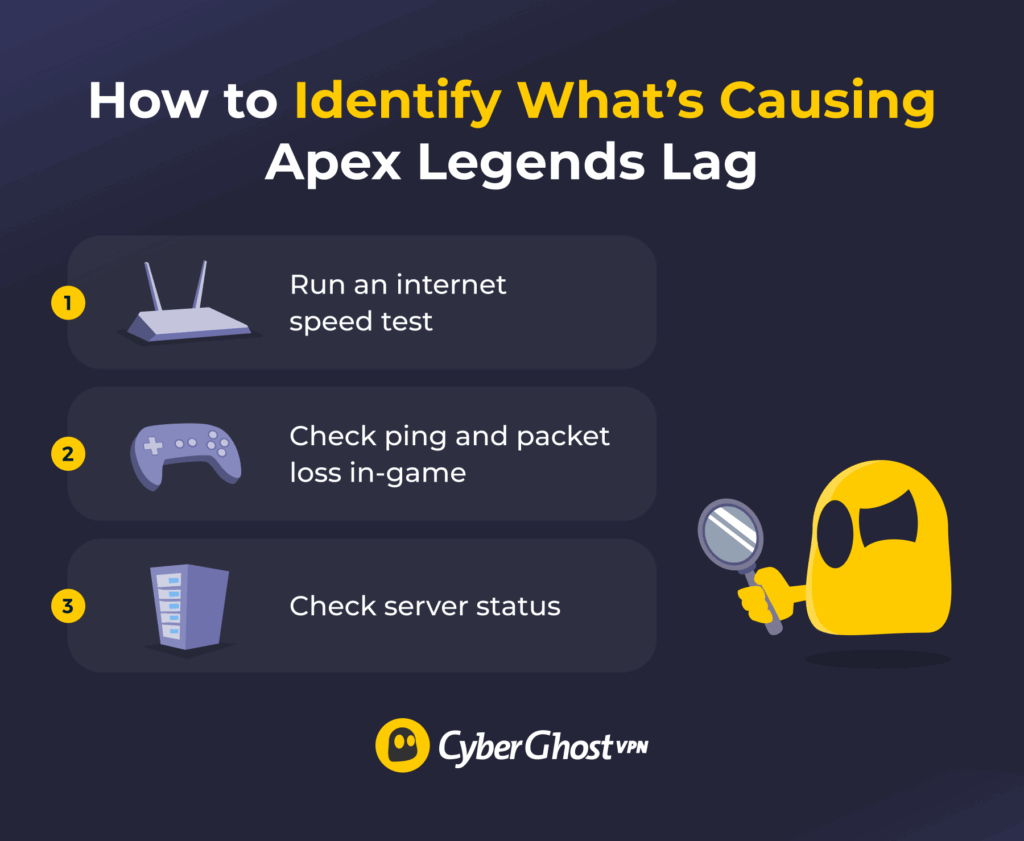
Identifying what’s causing lag in Apex Legends can help you resolve it. While it might be difficult to pinpoint the exact problem, you can estimate where it’s located. This can give you a good idea of where to start looking and which tips to apply first.
Test Your Internet Connection Speed and Ping
Start by checking your internet connection. Apex Legends needs a stable connection to run, as well as decent speeds. As a baseline, aim for at least 15 Mbps download speed and 1 Mbps upload speed. You can run a quick speed test using tools like Speedtest to check if your connection meets these requirements and stays consistent over time.
Online connection speed tests also often display your ping, which shows how quickly your device communicates with the testing site. Having high ping on this test usually means the problem is with your local network or your ISP. This in turn affects the ping to Apex Legends’ servers, which can cause lag.
Check Packet Loss and Ping In-Game
Apex Legends has an in-game display that shows your current frames-per-second, ping, packet loss, and choke values. Knowing these numbers can help you determine where the issue might lie. In the game, go to Settings > Gameplay tab and toggle on the Performance Display option. Now, a small section near the upper right corner of the screen shows the relevant values.
- Ping: The time it takes for a packet to go from your device to the Apex Legends servers and back. According to Apex Legends’ own suggestions, you want your ping to be below 100 ms, or ideally under 50 ms.1
- Frames per second (FPS): The number of individual images your device renders in a second — higher FPS means the game looks less choppy. Low FPS usually means the problem is somewhere on your device.
- Packet loss: The percentage of packets dropped between your device and the game servers. High packet loss can mean the issue is with your network or ISP.
- Choke: The percentage of packets that a game server holds back because either your device or the server can’t process them fast enough. High choke means the problem is either with a congested server or on your local network.
Check the Game Servers’ Status
Before changing your setup, see if the issue is coming from Apex Legends’ servers. Server problems on their end can cause high ping, lag spikes, or connection issues even when your internet is working fine.
To confirm this, use sites like Downdetector to see if other players are reporting issues at the same time. You can also check official Apex Legends or Respawn Entertainment social media pages for updates. If the game’s servers are down or unstable, there isn’t much you can do except wait until they’re fixed.
What Can You Do to Fix Apex Legends Lag?
The problems causing lag can arise at any point between your device and Apex Legends servers. This means that you can try out multiple solutions to make sure you resolve the issue. The tips below can help you get back to stable gameplay.
Connect to a Closer Apex Legends Server
Sometimes Apex Legends lags because the game connects you to a server that’s far away or already under heavy load. The game picks a server when you launch it, but it doesn’t always choose the best one for your connection.
The good news is that Apex Legends lets you choose a server yourself. Switching to a closer location or one with less traffic can lower your ping and make your connection more stable. Try to pick a server as close to you as possible, or at least on the same continent. Look for low ping (100 ms at most) and low packet loss (ideally 0%).
Here’s how to change your server on Apex Legends:
- Launch the game.
- Press Tab or click on the Data Center button at the bottom of the title screen (where it asks you to press a button to continue).
- Pick a server from the list.
Check Your System Specifications
Your hardware needs to be “strong” enough to run Apex Legends without issues. If your system doesn’t meet the game’s requirements, you may see stuttering, low frame rates, and delays that worsen your gameplay. The minimum specs let you run the game, but getting closer to the recommended specs can help you stay competitive.
Here’s how you can check your PC’s system specifications in Windows 10 or 11:
- Click the Start button.
- Go to Settings > System > About.
- Here, you can see information about your graphics card, RAM, processor, and more.
You can then compare your specs with the Apex Legends system requirements2:
| Minimum Requirements | Recommended Requirements | |
| CPU | AMD FX 4350 or equivalent, Intel Core i3 6300 or equivalent | Ryzen 5 CPU or equivalent |
| GPU | AMD Radeon™ HD 7790 (2 GB), NVIDIA GeForce® GTX 950 | AMD Radeon™ R9 290, NVIDIA GeForce® GTX 970 |
| RAM | 6 GB | 8 GB |
| VRAM | 1 GB | 8 GB |
| Storage space | 75 GB + 3.8GB for language localization | 75 GB + 3.8GB for language localization |
Reconfigure Your Apex Legends Game Settings
Even if your hardware meets the game’s minimal system requirements, your game settings could still be too advanced and make the game lag. If your PC can’t handle these settings, it might cause low FPS or rubberbanding, especially during chaotic team fights or final ring situations. You can head to the video settings in the game’s menu to change them.
Disable these settings:
- V-Sync
- Ambient occlusion quality
- Volumetric lighting
- Dynamic spot shadows
Set these video quality settings to “Low”:
- Sun shadow coverage
- Sun shadow detail
- Model detail
- Effects detail
- Impact marks
- Ragdolls
Update Your Game
Running an outdated version of the game can cause performance issues, including lag, bugs, or connection problems. Most platforms update Apex Legends automatically, but it’s still a good idea to check for updates if you notice sudden lag. Make sure your game launcher, such as Steam or the Electronic Arts (EA) app, has downloaded and installed the latest version of the game before you start playing.
Follow these steps to update Apex Legends:
- Open the app you used to download the game (e.g., Steam, EA app).
- Choose Apex Legends in your library.
- Update the game.
Verify or Reinstall Your Game
Apex Legends may lag because certain game files are missing or corrupted. This can happen after updates, crashes, or interrupted downloads. Damaged game files can prevent the game from running properly and you could notice stuttering or performance issues.
You can verify your game files to make sure they’re working as intended. The process will differ depending on the platform you’re using, but you can search for a “verify game files” option in your launcher settings.
For example, on Steam:
- Right-click on Apex Legends in your library.
- Select Properties, then click on the Local Files tab.
- Choose Verify integrity of game files. This may take a few minutes.
If that doesn’t work, you can also uninstall and reinstall your game to see if that solves the problem.
Update Your Graphics and Network Drivers
Outdated drivers can lead to performance and connection problems in Apex Legends. Graphics drivers help your GPU run the game, while network drivers control how your system connects to the internet. While they usually update, sometimes you might need to do so manually.
Here’s how to update your drivers in Windows:
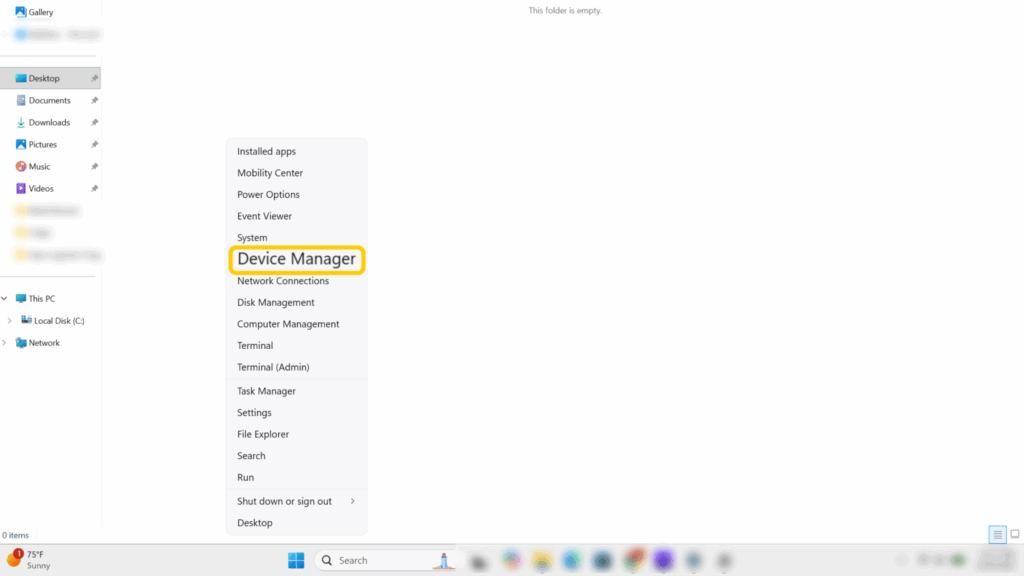
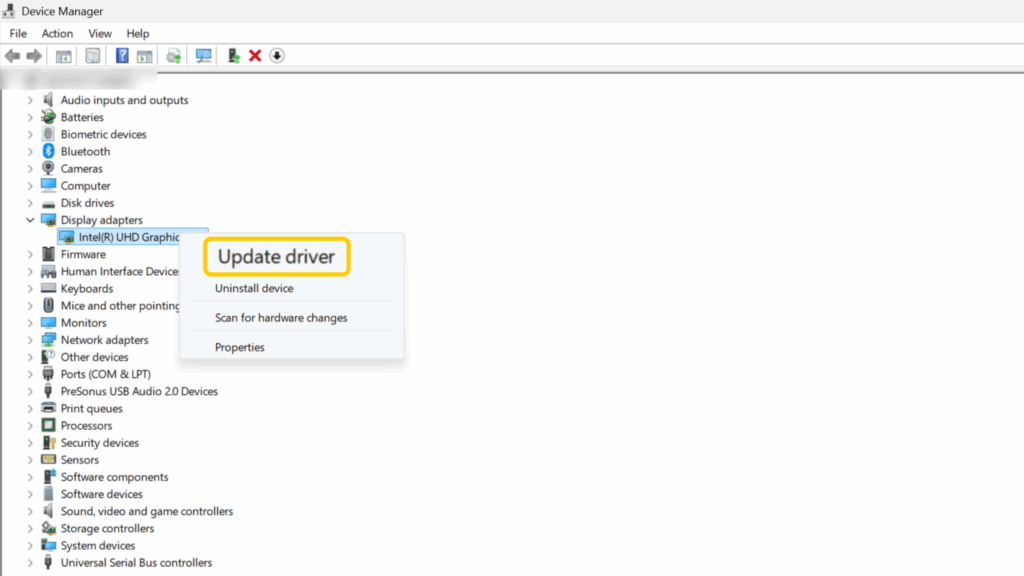
- Right-click the Start button and select Device Manager.
- Expand Display adapters.
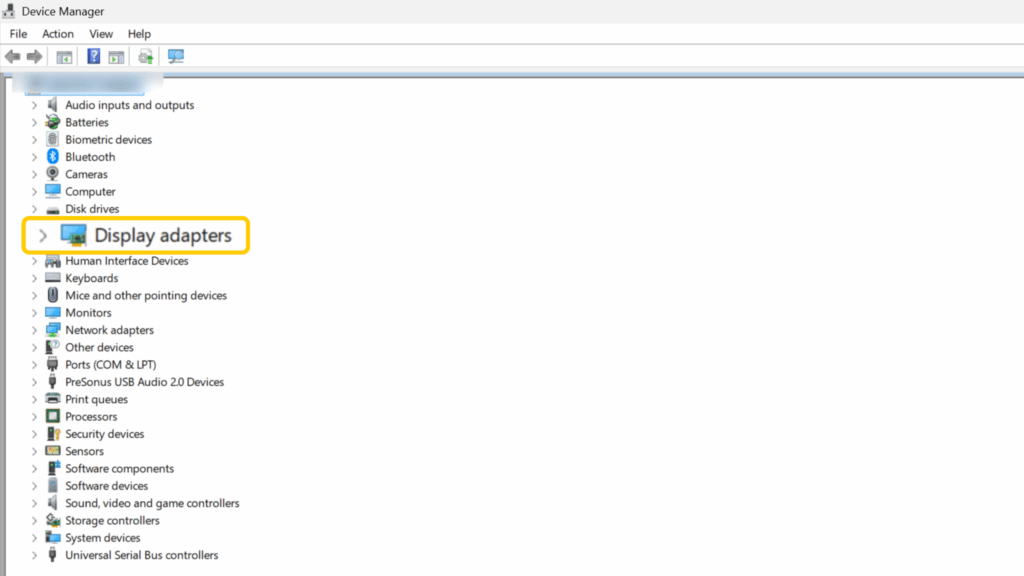
- Right-click your graphics card and select Update driver.
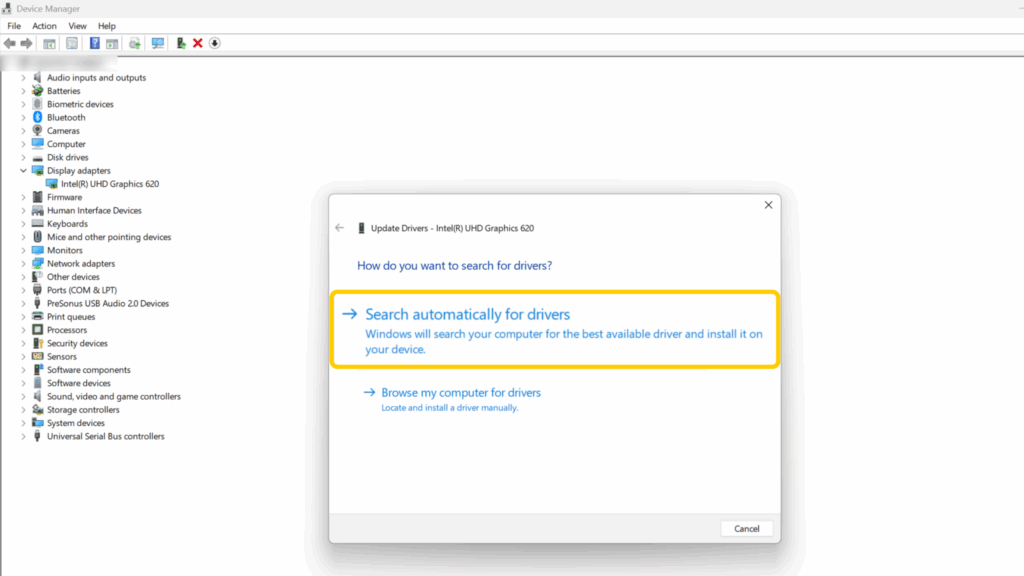
- Click Search automatically for drivers and install any available updates.
- Restart your computer after updating the drivers to make sure the changes take effect.
Close Resource-Heavy Apps & Disconnect Unused Devices
Other programs on your PC might be using up resources or bandwidth in the background. Close any unnecessary apps running on your PC before launching the game. Be sure to pause any ongoing downloads and close your browser, or at least any tabs you use for social media or streaming sites like YouTube. These sites constantly communicate with their respective servers, which takes up both computing resources and local network bandwidth.
Similarly, other devices on the same network as your gaming PC could be running apps and programs that take up bandwidth. This means the data packets from your Apex Legends session go through more slowly, so the game begins to lag. Disconnect any devices you’re not currently using, though keep in mind that this is commonly a problem on older home routers.
Switch to a Cabled Connection
Wi-Fi connections can sometimes be unstable because of distance from the router or signal interference. The signal can have trouble going through walls or large, bulky objects between your device and the router. Unstable Wi-Fi can cause packet loss, which in turn makes Apex Legends lag. Using an Ethernet cable to connect your device to the router can make the connection more stable and less vulnerable to interference.
Disable Game DVR
Windows’ Game DVR is a great tool that records your game so you can upload it later to social media. The downside is it can use up a lot of resources and slow down your game. In that case, try one of the following options to disable Game DVR and see if it helps reduce Apex Legends lag.
On Windows 10 (build 14393 or earlier):
- Open the Xbox app.
- Click on the gear icon, and then click the Game DVR tab.
- Turn off Game DVR.
- Restart your computer.
On Windows 10 (build 15063 or later):
- Go to Settings.
- Select Gaming > Game Bar.
- Turn off Game Bar.
- Navigate to Gaming > Captures.
- Turn off audio and video recording options.
- Restart your computer.
On Windows 11:
- Go to Settings.
- Select Capturing.
- Uncheck the Record in the background while I’m playing a game option. You can also select ”None” in the Audio to Record section to disable audio recording.
Use a VPN to Stabilize Apex Legends Ping
Connection issues that cause lag in Apex Legends don’t always come from a single source. Your ping may be high due to natural distance, bandwidth throttling, or inefficient routing. It could even be all the above, which is why lag often feels inconsistent from match to match. A tool like CyberGhost VPN might help provide a more direct and stable path to the game server.

Here’s how a VPN can improve your Apex Legends connection:
- Reduce activity-based throttling: Some ISPs slow down certain types of traffic, including online gaming, especially during peak hours. A VPN encrypts your internet traffic, which can make it harder for your ISP to target gaming traffic specifically.
- Improve connection routing: Your ISP might send your data through inefficient network paths to the Apex Legends servers. This can increase ping even if your internet speed is high, introducing delays even when your aim is on point. A VPN routes your traffic down a different route that could provide a better path to the game server and reduce lag.
- Avoid congested routes: Internet routes can become crowded when many people are online at the same time. When this happens, your data may move more slowly across the network. A VPN lets you connect through a different network route that may be less congested, helping your connection stay more stable in matches during peak activity hours.
Fix the Lag and Jump Back Into the Fight
Lag in Apex Legends can make every fight and match outcome feel completely out of your hands. High ping, packet loss, and stuttering can delay your actions and make enemies impossible to hit. In many cases, the problem comes from unstable connections, poor routing, or system performance issues. The good news is that once you identify the cause, small changes to your setup or network can often make a big difference.
If lag keeps getting in your way, CyberGhost VPN could help. We provide fast servers that might route your gaming traffic through a more efficient network path. This might help reduce congestion, prevent activity-based ISP throttling, and improve connection stability so you can focus on winning fights instead of fighting your connection. You can also try it risk-free with our 45-day money-back guarantee (14 days for monthly plans).
FAQ
Why are the Apex servers so laggy?
Apex Legends servers start lagging when they’re under heavy load or experiencing technical issues. This often happens during peak hours, new season launches, or major updates when many players are online at the same time. Lag can also occur if you’re far from the server or if your ISP routes your traffic through inefficient network paths. These factors can increase ping and cause unstable gameplay even if your internet speed is fast.
What ping is good for Apex Legends?
For Apex Legends, EA recommends ping below 50 ms. Ping between 50 and 100 ms should still keep your game playable and without major issues, but you may notice small delays. If ping rises above 100 ms, the game becomes less responsive, and lagging becomes more noticeable. Apex Legends has an in-game ping display, so you can estimate if high ping is causing your game to lag.
What helps Apex Legends run better?
To improve performance in Apex Legends, make sure your PC meets the recommended system requirements and keep your graphics and network drivers updated. Use a stable wired internet connection and close background apps that may use bandwidth or system resources. Lowering in-game graphics settings and connecting to a nearby server can also help reduce lag.
Does Wi-Fi cause lag in Apex Legends?
Yes, it can. Wi-Fi connections can be unstable due to interference, signal distance, or network congestion. This instability can increase latency and packet loss. Using a wired Ethernet connection usually provides a more stable connection for online gaming.
How do I fix ping on Apex Legends?
To fix high ping in Apex Legends, connect to the closest game server and use a stable internet connection, preferably a wired connection instead of Wi-Fi. Close apps and downloads that may use bandwidth on your network. Restarting your router can also help refresh your connection. If routing issues from your ISP cause high latency, using CyberGhost VPN may help create a more stable path to the game servers.
How do I fix lag in Apex Legends on a PS4?
Switching to a wired Ethernet connection instead of using Wi-Fi can stabilize your connection. If you have other devices connected to the same network, close any apps on them that could be using a lot of bandwidth and disconnect the ones you’re not using. If routing issues or activity-based throttling cause lag, using CyberGhost VPN on your router can help improve connection stability.
How do I reduce lag in Apex Legends on Xbox One?
Check your network stats in Settings > Network > Detailed Network Statistics. High latency or packet loss often means the issue is with your internet connection. Pause any downloads and make sure you set your NAT type to “Open.” Use an Ethernet cable to connect your Xbox to the router for a more stable connection.
References:

Leave a comment
camry
Posted on 06/12/2022 at 08:05
nvidia error that the settings not compatible with my windows 10.do you recommend any other settings to download? also thanks for the article, it was pretty helpful.
Ghostie
Posted on 07/12/2022 at 11:39
Hi Camry, I’m glad you found this helpful. Could you provide some more information? Does the Nvidia error pop up with regard to your version of Windows or the CyberGhost VPN? I don’t think the CyberGhost app and your Nvidia software should clash in any way. Can you try to update your Nvidia drivers to see if that fixes the problem? You can do this for free on Nvidia’s website – just make sure to enter the correct GPU model. If this is a Windows 10 problem, you may need to contact Microsoft or update to Windows 11 if you can.
prettygaming01
Posted on 03/07/2022 at 16:43
Wow! Excellent Post. I really found this so much informatics. It is what I was searching for I would like to suggest you that please keep sharing Such type of information. Thank you so much. pretty gaming
Ghostie
Posted on 05/07/2022 at 11:38
I’m glad you enjoyed this post and thank you for taking an interest in my work! If you have any other gaming or VPN-related questions, feel free to search our blog.
Matthijs
Posted on 23/04/2022 at 00:57
This is bull explenation. Sure the steps work if it’s your own fault, but what if it IS the server’s fault, huh?
Ghostie
Posted on 25/04/2022 at 10:09
Hi Matthijs. This explanation is aimed at people who are experiencing connection problems and may want to troubleshoot things on their side. If the problem is on the game server’s side, there isn’t much you can do besides switching to a server in a different location and hope that one works. You can also contact Respawn Entertainment’s customer support to bring the issue to their attention and hope they solve it in a timely manner.
Babar Ali
Posted on 27/03/2022 at 09:11
Apex Legends is one of the newest genres in the gaming world, but the skills required to become a top player are still limited. The best strategy is to collect medium-sized loot, such as fuel, health items, and limited weaponry. If you’re trying to play the game like a professional, you should be aware of the mechanics of the game, as overloaded backpacks will slow down your movement. For this reason, you need to learn how to maximize your abilities to be faster and more precise.
One of the most crucial tips on how to get better at Apex Legends is to practice shooting while running. You should aim with your head in the direction of the enemy’s head when you’re running, which is not the most effective way to perform corner peeking and holding angles. The best way to practice this is to go to a shooting range and note where the head of the dummy’s is placed. This way, you’ll know where to place your crosshair based on the position of the dummy’s head.
Another tip for playing Apex Legends is to watch video game clips of top players. Watching professional matches can help you learn about their tactics and build your own style. Often, this is the best way to improve your Apex Legends game. You’ll be able to see what they’re doing and get tips on how to duplicate their success. This way, you’ll become an ace in the game and stay ahead of the competition.
Ghostie
Posted on 29/03/2022 at 11:44
Thanks for your valuable insights into Apex gameplay strategies, Babar. I’m sure our readers appreciate it!