
Online gaming quickly loses its appeal when lag gets in the way. Taking damage from around corners or rubber banding back into areas you’ve already cleared can make matches feel frustrating and unfair.
Ping spikes happen in PlayStation 5 matches for several reasons. But when they start ruining games, don’t throw in the towel just yet. With a few adjustments to your internet connection, console, or router settings, you can get back into action. In this guide, you’ll find several practical ways to lower ping on PS5.
What Is a Good Ping for PS5?
For intense first-person shooter games like Fortnite, Call of Duty, Rocket League, and Apex Legends, a ping of between 10 and 30 milliseconds (ms) is ideal. You may even be able to play without too much trouble with a ping rate up to 50ms, according to the speed testing tool Ping Testi¹.
Some PS5 titles (think turn-based games like Final Fantasy XIV and Baldur’s Gate) are comparatively less dependent on reaction time and may load comfortably even with a ping at 100ms. The Game Server Ping website states that a ping above 100ms is usually where delays become noticeable, and over 150ms is when gameplay becomes frustrating².
Low latency, or low ping, is crucial for online gaming. It means data travels faster between your console and the game servers, making your gameplay more responsive.
What Causes High Ping on PS5?
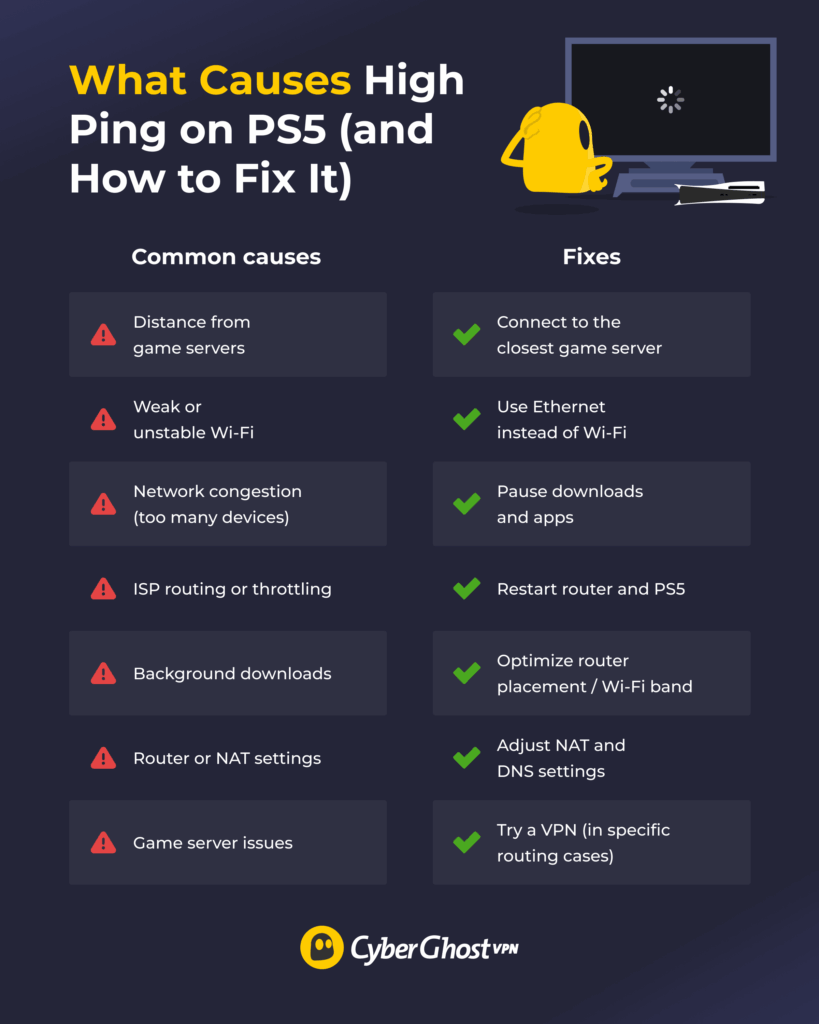
High ping causes delays between your console and the game servers, leading to slower responses and out-of-sync gameplay. Here are some common reasons your ping might increase on PS5:
- Distance from the game servers: The further you are from the PS5 game servers, the longer it takes for data to travel, translating into higher latency and lag.
- Weak or unstable Wi-Fi connection: Signal interference from other networks, electronics, or physical barriers can affect reception in wireless connections.
- Poor internet quality: A slow internet connection may not be able to handle intense action or cloud-based games.
- ISP activity-based throttling and routing issues: Your internet service provider may deliberately restrict high-bandwidth activities. Some also utilize inefficient routing paths, resulting in packet drops, jitter, and ping increases.
- Background apps and downloads: Other processes running simultaneously during gaming sessions can use up a lot of bandwidth resources.
- Router and PlayStation settings: Your device settings and misconfigurations can cause issues with gaming connections.
- Game server performance: Overcrowded or poorly optimized game servers can lead to lag even if your internet is working fine.
- Outdated software and hardware: Older PS5 versions or router firmware may result in poor gaming performance.
How to Get Better Ping on PS5
If you’re not sure what’s causing your ping spikes, you may need to try more than one of the solutions below. Though it’s impossible to cover every removal or prevention method, here are some typical remedies that help if your PS5 is lagging, but the internet is working fine.
Use a Wired Ethernet Connection
Connecting your PS5 directly to your router using an Ethernet cable is one of the most effective ways to improve ping. A wired connection is more stable than Wi-Fi and avoids interference from walls, nearby networks, or other devices. This can help reduce packet loss and latency spikes, especially in busy households where multiple devices share the same network.
Choose the Closest Game Server or Region
Check your game’s matchmaking settings to see if you can change servers. If the option is available, then you may want to select a game server that’s closest to your current location. The shorter the distance your data travels, the lower your ping will typically be.
If your game doesn’t allow manual server selection, it will usually assign one automatically. In that case, high ping may be caused by server-side issues or matchmaking limitations rather than your setup.
Reduce Network Congestion
High ping often happens when your connection is being shared or overloaded. Background downloads, streaming, and updates can all compete with your game for bandwidth. To improve your connection stability, pause downloads and updates on your PS5, limit activity on other devices during gameplay, and avoid playing during peak usage times. This helps ensure your connection is prioritizing real-time game traffic.
Restart Your PS5 and Router
Rebooting your devices can quickly resolve temporary network issues, especially if lag appears after an update. You can try turning off and unplugging your PlayStation and router for a few minutes before turning them back on. It’s a simple fix, but often effective if the issue appeared suddenly.
Improve Your PS5 and Wi-Fi Setup
If you’re using Wi-Fi, connection quality matters more than raw speed. You can adjust several PS5 and router settings to improve your connection. Start by making sure your devices are close together and that nothing is blocking the signal. If your home is large, you can use a mesh network to maintain stronger signals in areas with weak coverage.
Below are some of the settings you can modify to improve ping on your PS5.
Switch to a Higher Wi-Fi Frequency Band and QoS
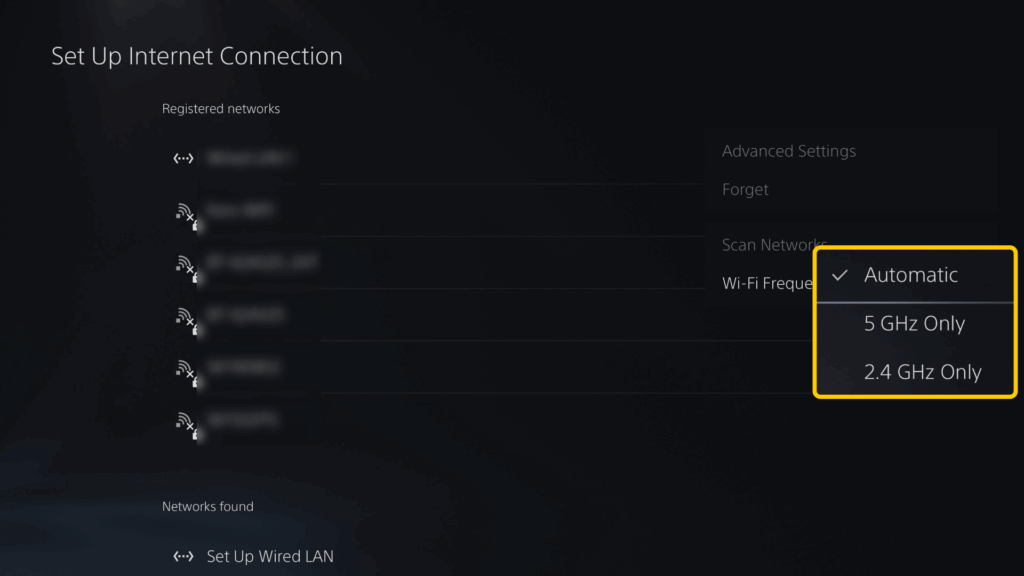
Configure your PS5 and router frequency band to 5 GHz, which tends to be faster and less prone to interference than 2.4 GHz. PS5 consoles may have the frequency band set to automatic, which can cause jitters. If you make this change, place your PS5 and router as close together as possible since the 5 GHz band has a smaller range than the 2.4 GHz band.
You can switch to the 5 GHz band on PS5 by doing the following:
- Open the PS5 start screen, go to Settings, and navigate to Network.
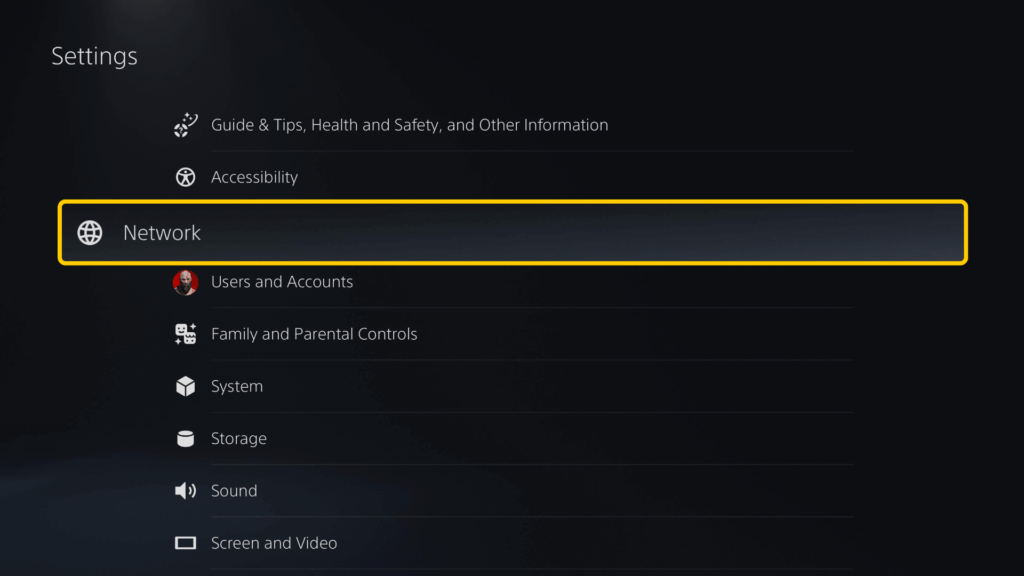
- Open Settings > Set Up Internet Connection.
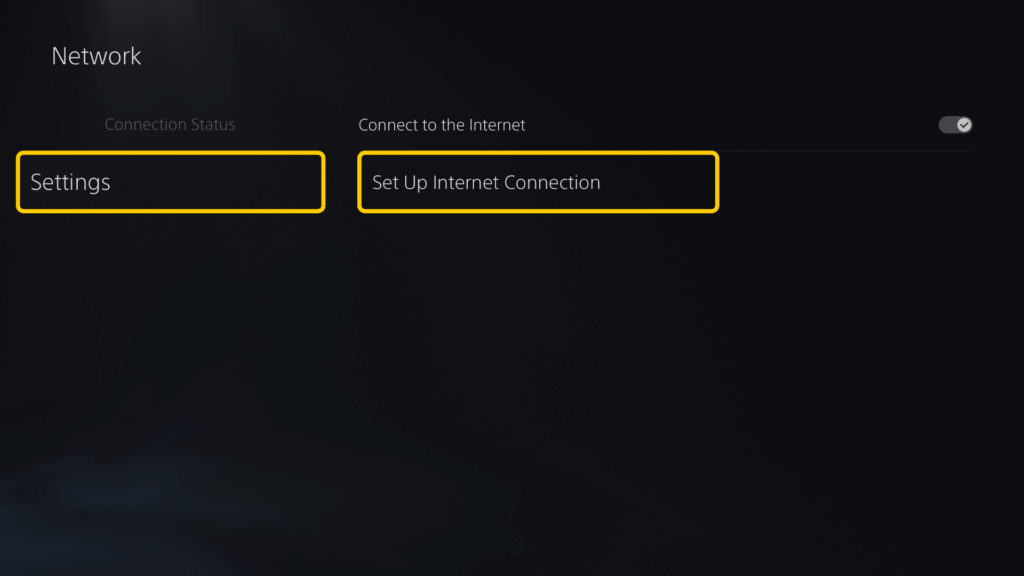
- Scroll and select your Wi-Fi network name.
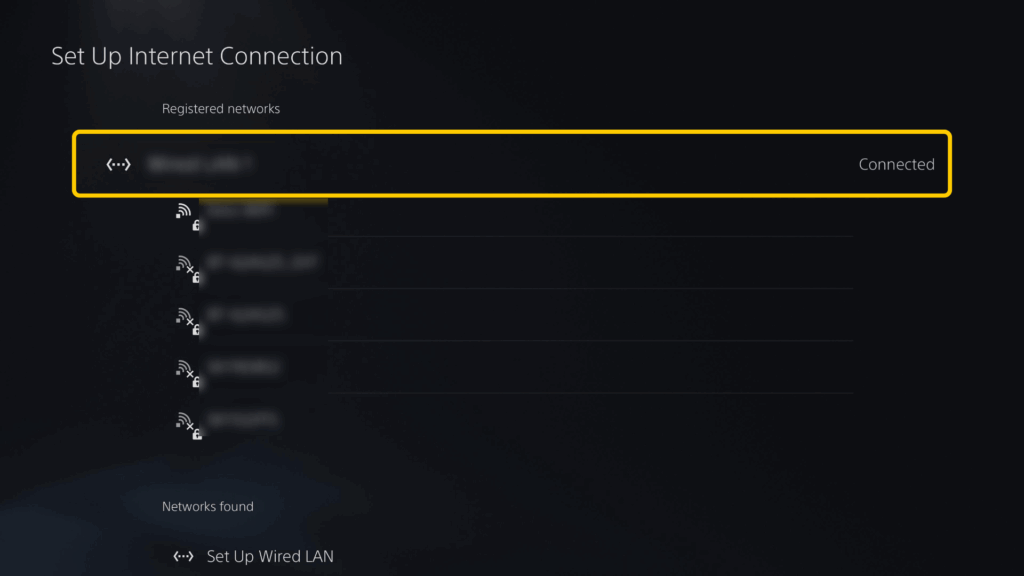
- Press the Options button on the PS5 controller and choose Wi-Fi Frequency Bands.
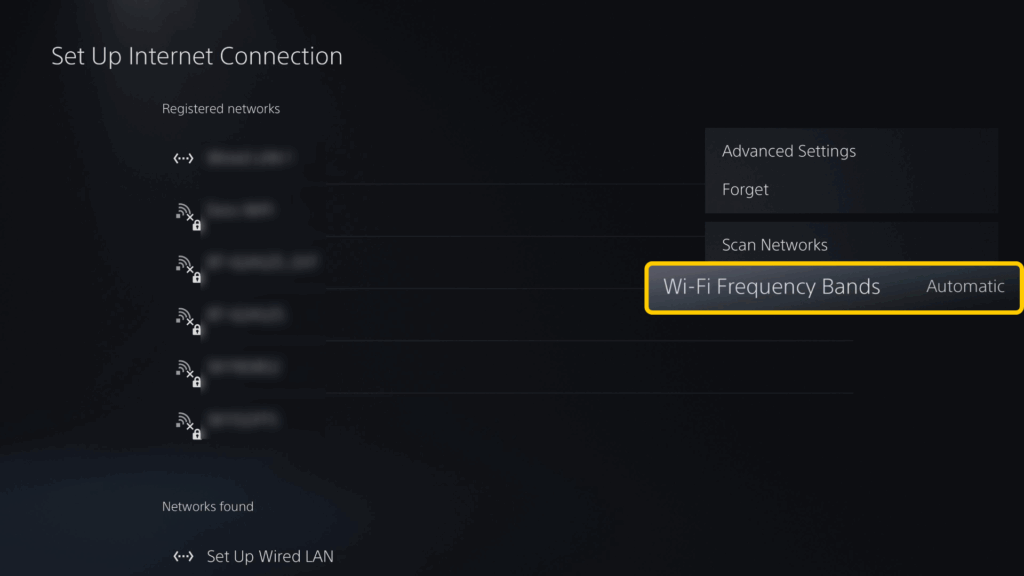
- Change from Automatic to the 5 GHz option.
- Restart and connect to the network.
Switch to a Faster Public DNS Server
Public domain name systems (DNS) can sometimes route requests more efficiently than your ISP. A DNS translates domain names into IP addresses when your PS5 communicates with game servers. ISP DNS servers can sometimes be slow or overcrowded, causing lag on PS5.
You can configure public DNS on PS5 with these steps:
- Open Settings on PS5.
- Navigate to Network > Settings > Set Up Internet Connection.
- Select your Wi-Fi network from the list and press the Options button on the controller.
- Choose Advanced Settings.
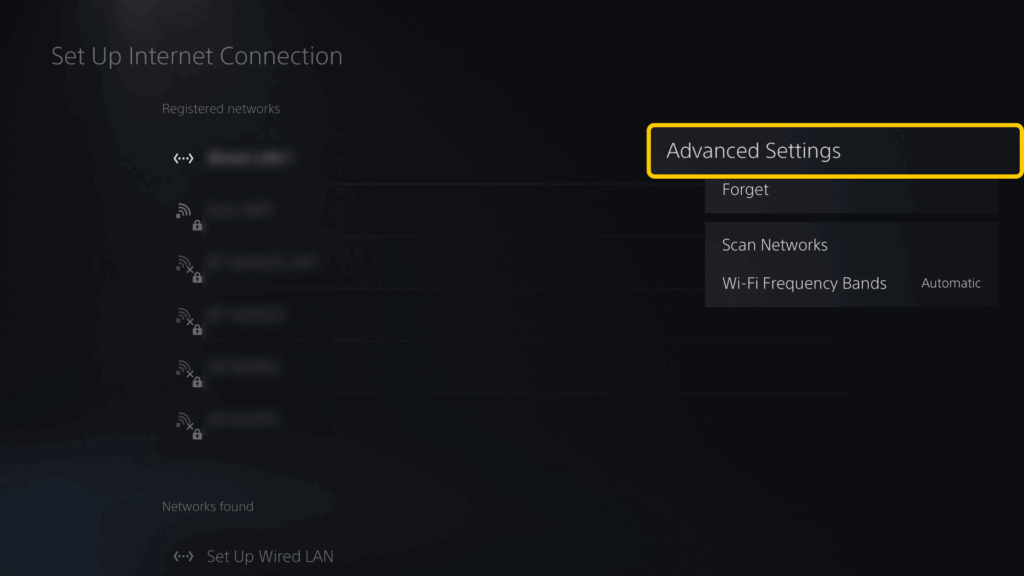
- Go to DNS Settings and select Manual and enter a public DNS, like Google DNS (primary: 8.8.8.8, secondary: 8.8.4.4) or Cloudflare DNS (primary: 1.1.1.1, secondary: 1.0.0.1).
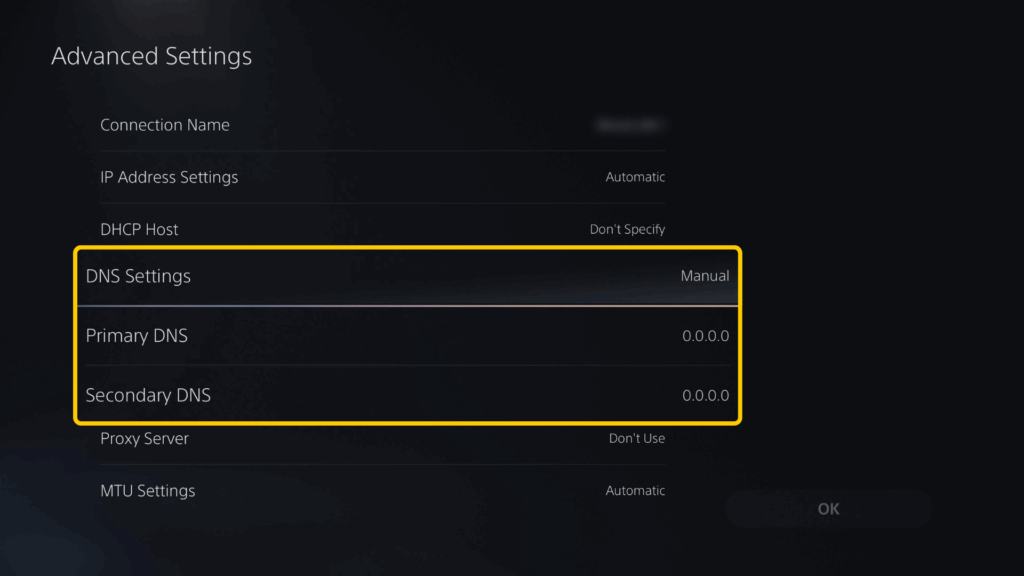
- Save the settings and test to see if there’s any impact on the gaming connection.
Change NAT Type Settings
Switching the network NAT Type to 2 or 1 can make it easier for your PS5 to communicate with game servers. The Network Address Translation (NAT) controls how your network communicates with external servers with different levels of security. NAT Type 3 is stricter (but more secure) than Types 2 and 1 and can limit multiplayer gaming connectivity.
You can change the NAT Type on PS5 by configuring the router settings. However, start by checking the PS5’s current NAT Type under Settings > Network > Connection Status. If the connection is NAT Type 3, consider changing it using these methods:
UPnP Method:
- Sign into your router admin panel by entering the default IP address in a browser.
- Scroll to the Advanced Settings section.
- Check if there is a UPnP (Universal Plug-and-Play) setting and enable it.
- Save the changes and restart your router and PS5.
Port Forwarding Method:
- Sign into the router admin panel.
- Go to the Advanced Settings section and activate Port Forwarding.
- Enter port address and range information below for either TCP or UDP.
- TCP: 3074, 3478–3479
- UDP: 3478, 3479
- Save the settings and restart your router and PS5 devices.
Adjust MTU settings
Maximum Transmission Unit (MTU) is a setting that determines the size of data packets being transmitted between the PS5 and the router. Configuring MTU size within the optimal range for gaming (around 1473–1475) can aid in reducing packet loss and latency spikes.
To modify MTU size settings on PS5, take these steps:
- Open Settings and tap Network.
- Go to Settings > Set Up Internet Connection.
- Select your Wi-Fi name from the list.
- Press the Options button on the controller and choose Advanced Settings.
- Select MTU Settings and change to Manual. Then, enter a value in the optimal range (1473, for example).
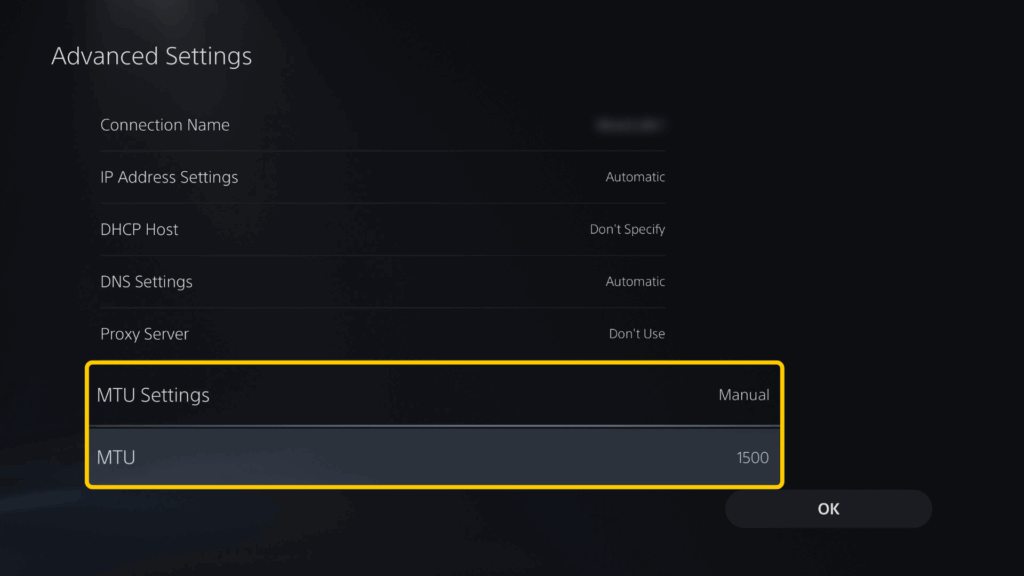
- Save and restart.
You can test different MTU size values to see what works best. If the connection deteriorates after these MTU size modifications, switch back to Automatic from Manual.
Use a Gaming VPN
A high-quality virtual private network like CyberGhost VPN may improve connection stability in certain routing scenarios. If your ISP network is using a longer route or is experiencing congestion, a VPN could provide a more reliable pathway to the gaming servers. It reroutes your traffic on private servers that may have fewer distractions and provide a more direct route to the game servers.
A VPN may also help to mitigate PS5 lag issues resulting from activity-based throttling by your ISP. It replaces your real IP address and encrypts your traffic, which might help protect your traffic from being easily inspected by your ISP.
PlayStation consoles don’t natively support VPN installation, but you can connect your PS5 to a VPN-enabled router. Here’s how you can set up a VPN on your PS5 device:
- Sign up for CyberGhost VPN.
- Configure the VPN on a VPN-compatible router.
- Connect to servers closest to the game servers.
- Connect your PS5 to the network.
- Test to see if the games have lower ping.
Using a VPN can also increase gaming ping, depending on server distance and encryption overhead. It also won’t produce better ping than a well-optimized ISP connection.
Contact Your Internet Service Provider
If a poor internet connection is the main reason for increased ping, consult your ISP to see if they are willing to resolve the issue. They can do line tests and configure their infrastructure to meet your gaming needs better. Even if the problem isn’t on their end, they may be able to direct you to further solutions.
How to Keep Your PS5 Ping Low and Stable
Lowering your ping on PS5 comes down to a few key moves: use a wired connection, connect to the closest game server, and limit network congestion at home. If you still see lag, you can fine-tune your setup by adjusting router settings or switching DNS to improve performance.
You won’t always control server issues or ISP routing, but you can control your setup. Focus on keeping your connection stable, and you may notice fewer spikes and more responsive gameplay when it counts.
FAQs
Can I get 0 ping on the PS5 console?
It’s not possible to achieve 0 ping, even with a well-optimized PS5, as slight delays always arise due to network routing or server-related issues. Your goal should be to maintain the lowest and most stable ping possible. If you are experiencing major spikes, you can try to optimize your connection by using a wired Ethernet cable or choosing a closer game server region.
How do I make my PS5 run more smoothly?
To improve PS5 performance, start by using a wired Ethernet connection for more stable gameplay and lower latency. Close background apps, pause downloads, and keep your system updated to avoid performance issues. You can also optimize your network setup by adjusting router settings or reducing congestion from other devices on your network.
Why is my PS5 ping high?
Your ping can increase on PS5 due to several factors, including your distance from the game servers and server or network congestion. Activity-based throttling by your internet provider can also cause ping spikes and lag during gaming. It’s generally recommended to use the closest game servers for your location to get a lower ping.
How do I check the ping rate on PlayStation 5?
PS5 doesn’t display ping data at a system level. The most reliable way to check your ping is through in-game network stats, which many multiplayer games show in their settings or performance overlays. If a game doesn’t display ping, you can run a ping test on a PC or phone connected to the same network to get an approximate idea of your connection latency.
Can disabling VRR or HDR quality reduce ping on PS5?
No, changing the screen refresh rate and display settings doesn’t directly lower ping. These settings don’t improve your network speed or your connection to game servers. However, they might help reduce input lag and screen stuttering during gameplay.
References:

Leave a comment